

Oil-sector risks mount amid higher demand-and-supply uncertainty

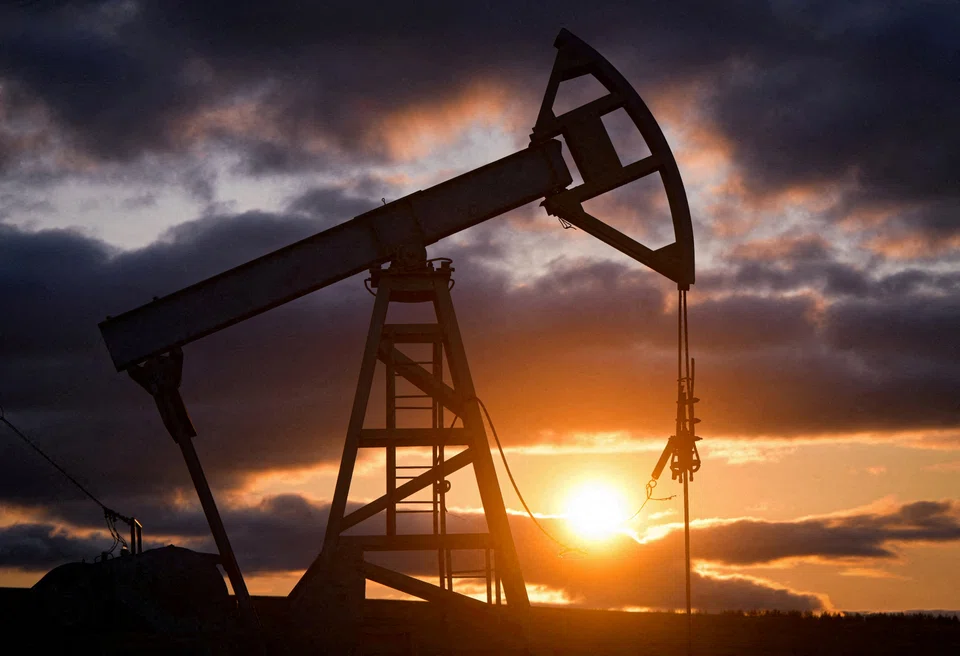
OIL prices may have pulled back from their recent highs, but observers warned that more risks await the industry against a backdrop of uncertainty related to the commodity’s demand and supply.
Prices of the commodity’s benchmarks, Brent and West Texas Intermediate (WTI), have so far this year been capped by voluntary output cuts by the Organization of the Petroleum Exporting Countries and allies (Opec+), as well as continued concerns about sluggish demand from the US and China.
Oil prices this year have also traded in a tighter range compared to the corresponding prior-year period, Bloomberg data showed.
Brent has traded in the range of US$75.89 to US$83.67 per barrel so far this year, while the range was wider at US$77.84 to US$88.19 per barrel in 2023.
Similarly, WTI has traded at prices ranging from US$70.38 to US$79.19 per barrel this year, compared with a range of US$72.84 to US$81.62 in the year-ago period.
Bank of Singapore (BOS) currency strategist Sim Moh Siong said that demand in the near term is uncertain. He noted that growth from China – one of the top buyers of crude oil globally – looks “lacklustre”.
On the supply front, geopolitical uncertainties – such as tensions in the Middle East and the recent Red Sea attacks – have led to the rerouting of the commodity, and this has also kept oil prices supported so far this year.
Supply from non-Opec countries is also increasing faster than expected, Sim added. The US, for instance, has historically had a “proportional relationship” between oil rigs and oil production.
Shale producers in the US have recently been enhancing their drilling efficiency through methods such as drilling longer horizontal wells, as well as focusing their attention and drilling capacities on the sites that show the most potential in terms of output.
“What we see right now is that oil rigs have largely remained stagnant but oil production continues to increase, which implies that productivity of oil rigs has increased – which means each oil rig is producing more right now,” Sim explained. “With oil prices holding up better than expected, the question is (if) Opec will extend the supply cuts (beyond the second quarter).”
He predicts Brent prices this year will average US$75 per barrel, down from US$85 previously. However, he expects the benchmark to stay around the US$80-per-barrel mark in the early part of 2024, and prices to soften by the end of the year.
Analysts at Rystad Energy are also expecting oil prices to stay around US$80 per barrel with strong growths in refinery runs, as well as the management of supply from Opec+. They said: “Given the geopolitical disruption in trade flows, all regions are expected to run higher from an energy-security perspective. The call to keep pump and air-travel prices in check in what is a significant election year in 70 countries would also add to the call for higher run rates.”
They also warned that the oil cartel must calibrate the unwinding of its production cuts to keep oil prices at the US$80 mark, and that supply scares from Europe could boost volatility in the market.
While they pointed out that oil-price volatility is currently “fairly low”, the net speculative length on the Intercontinental Exchange and the New York Mercantile Exchange has “crept up from extreme bearish levels” that were seen at the end of last year.
Ann-Louise Hittle, Wood Mackenzie’s vice-president for oil markets, forecasts global demand to rise by 1.9 million barrels per day this year, up from a gain of 1.7 million barrels per day last year. “The projected rate of demand growth is moderately supportive to prices in (the second half of) 2024 from present levels,” she said.
Wood Mackenzie expects Brent to average US$85.90 per barrel this year, which translates to a US$3.10-per-barrel rise in prices from 2023.
On the supply front, Hittle predicts global supply to increase by 1.3 million barrels per day this year, which “reflects moderate production restraint” from Opec+.
TRENDING NOW

Once staunchly pro-China, Malaysian Chinese businesses are now distancing themselves from Beijing
AI can become superior to humans in certain aspects: TikTok’s Chew Shou Zi

DBS, OCBC, UOB face rate hike reality check

‘The market has spoken’: DBS CEO Tan Su Shan says market is repricing AI financing risks

