

Oil settles up 3% on Venezuela news, supply worries in Russia, Iraq and Iran
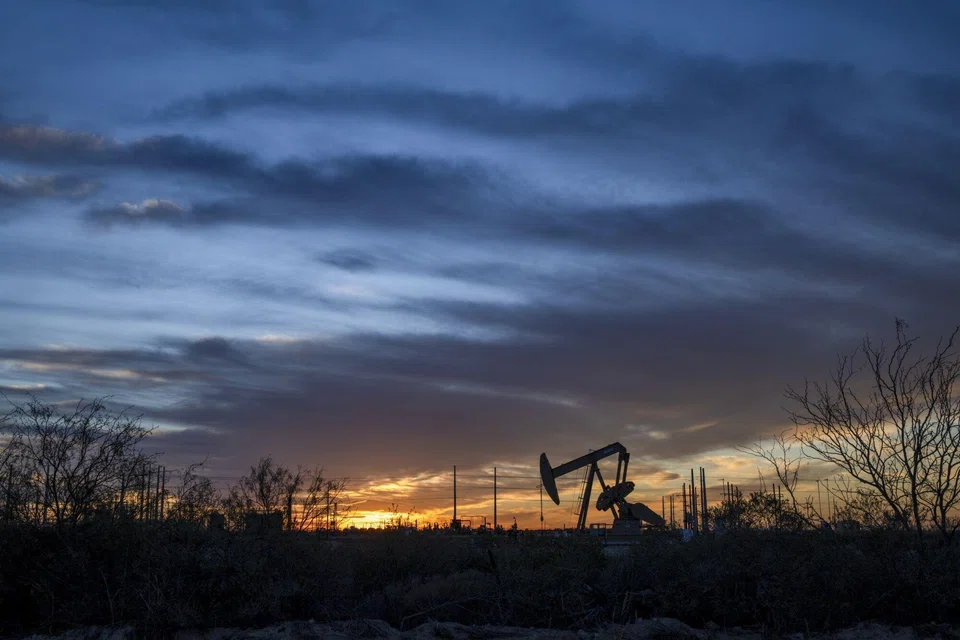
[NEW YORK] Oil prices climbed over 3 per cent on Thursday after two straight days of declines, settling at a two-week high as investors assessed developments in Venezuela and worried about supplies from Russia, Iraq and Iran.
Brent futures rose US$2.03, or 3.4 per cent, to settle at US$61.99 per barrel, while US West Texas Intermediate (WTI) crude gained $1.77, or 3.2 per cent, to settle at US$57.76.
That was the highest close for Brent since Dec 24.
Foreign embassies in Venezuela are beginning to arrange visits for next week that will include representatives for US and European oil companies, two sources told Reuters, following Washington’s announcement of a US$2 billion oil deal and the supply of US goods to the South American country.
The US seized two Venezuela-linked oil tankers in the Atlantic Ocean on Wednesday, with one sailing under Russia’s flag, as part of US President Donald Trump’s aggressive push to dictate oil flows in the Americas and force Venezuela’s socialist government to become an ally.
After capturing Venezuelan President Nicolas Maduro in a military raid on Caracas on Saturday, the US has been escalating its blockade of vessels that are under sanctions and traveling to and from the South American country, a member of the Organization of the Petroleum Exporting Countries.
Prices revert to pre-attack levels
“The complex is rebounding, with the crude benchmarks back to about levels of last Friday’s close prior to the US removal of Maduro,” analysts at energy advisory firm Ritterbusch and Associates said in a note.
“The fact that this major development is having little impact on the energy complex is not surprising since the arrival of a meaningful amount of Venezuelan crude into the (US) Gulf Coast region could be years away,” Ritterbusch said.
The US Senate voted on Thursday to advance a resolution that would bar President Donald Trump from taking further military action against Venezuela without congressional authorisation, even as Trump said US oversight of the troubled nation could last years.
US Energy Secretary Chris Wright said there was room to balance roles for both the US and China in Venezuela to allow for commerce, but that Washington would not allow Beijing to have major control over the South American country.
In an interview on Fox Business Network, Wright also said he expected to see Chevron quickly grow its activities in Venezuela, with other US oil majors ConocoPhillips and Exxon Mobil also looking to play a constructive role.
The Trump administration has invited the bosses of commodity trading houses Vitol and Trafigura to the White House on Friday for talks on marketing Venezuelan oil, four sources familiar with the matter told Reuters.
India’s Reliance Industries, operator of the world’s largest refining complex, said it will consider buying Venezuelan oil if permitted for sale to non-US buyers. Venezuela produces about 1 per cent of the world’s oil supply.
Russia, Iraq and Iran
A Russia-bound oil tanker suffered a drone attack in the Black Sea that prompted it to request Turkish Coast Guard assistance and divert from its course, according to a notice by Lloyd’s List Intelligence and a separate maritime security source on Thursday.
Ukrainian President Volodymyr Zelenskiy said on Thursday the text of a bilateral security guarantee between Kyiv and Washington was “essentially ready” to be finalised with Trump.
US Republican Senator Lindsey Graham said on Wednesday that Trump will allow a bipartisan sanctions bill targeting countries doing business with Russia, the second-biggest oil producer in the world behind the US, to move forward in Congress.
Iraq’s cabinet has approved plans to nationalise operations at the West Qurna 2 oilfield, one of the world’s largest, as the government looks to avert disruptions stemming from US sanctions imposed on Russian stakeholder Lukoil.
Iran’s President Masoud Pezeshkian warned domestic suppliers against hoarding or overpricing goods, state media reported on Thursday, as Tehran rolls out high-stakes subsidy reforms during nationwide protests against economic hardship.
“Iran has a long history of protests, and there is no sign that the regime is on the verge of collapse. But depending on how the situation evolves, Iranian oil exports - equating to 2 per cent of global supply - could be at risk,” said Pavel Molchanov, investment strategy analyst at Raymond James.
A nationwide internet blackout was reported in Iran on Thursday, internet monitoring group NetBlocks said, as protests over economic hardships continued around the country.
Iraq and Iran are among the biggest oil producers in Opec behind Saudi Arabia. REUTERS
Decoding Asia newsletter: your guide to navigating Asia in a new global order. Sign up here to get Decoding Asia newsletter. Delivered to your inbox. Free.
Share with us your feedback on BT's products and services
TRENDING NOW

Vietnam’s northern provinces, not Hanoi or Ho Chi Minh City, are powering near 10% GDP growth
VietJet hit with global asset freeze in FitzWalter dispute
Gridlock or growth? The Asean Power Grid faces a critical window of opportunity

LNG, stronger regional power links key to Asean’s energy resilience: Shell

