

Oil rises on intensifying US-Iran hostilities and threat of Red Sea closure
Iran has told Houthi allies to be prepared to close the Red Sea oil route if the US strikes Iranian power infrastructure

[PERTH] Oil prices inched higher on Friday (Jul 17) after the US and Iran stepped up attacks across the Gulf, with their broken truce limiting oil flows out of the Strait of Hormuz and with Teheran asking the Houthi movement to stand ready to shut the Red Sea export route.
Brent crude futures rose US$1.05, or about 1.25 per cent, to US$85.28 a barrel by 0118 GMT, and US West Texas Intermediate futures rose US$1.03, or 1.3 per cent, to US$79.98 a barrel, erasing losses from the previous session.
Both benchmark contracts have climbed nearly 12 per cent this week, with Brent on track for a third consecutive weekly gain and WTI for a second weekly gain.
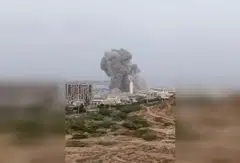
For the first time since a memorandum of understanding paused fighting last month, the US launched two big waves of air strikes in a single day on Wednesday, mostly on targets near Iran’s southern coast, and kept firing on Thursday.
“Oil security is still a critical issue,” International Energy Agency Executive Director Fatih Birol said on Thursday at a Council on Foreign Relations event in Washington.
“We should be worried, and I am worried, if the situation does not improve in the next few weeks,” he said.
In a statement, US Central Command said US forces began “a new wave of strikes against Iran for the sixth consecutive night to further degrade Iranian military capabilities” at 2 pm EDT (1800 GMT) or 9.30 pm in Teheran.
Teheran has countered with missiles and drones targeted at US military bases in neighbouring states, including a barrage at a recently expanded air base in Jordan.
Adding to oil supply concerns, Iran’s leadership has told its Houthi allies to be prepared to close the Red Sea oil route if the US strikes Iranian power infrastructure, three sources told Reuters.



IG analysts said technically, WTI could test the mid-US$80s if it holds above key support in the mid-US$70s.
Separately, Trump Media & Technology Group unveiled a paid-for, licenced data feed that will give banks and trading firms “the fastest” access to posts from influential Truth Social accounts, such as US President Donald Trump’s, whose posts often move oil markets. REUTERS
Decoding Asia newsletter: your guide to navigating Asia in a new global order. Sign up here to get Decoding Asia newsletter. Delivered to your inbox. Free.
Share with us your feedback on BT's products and services
TRENDING NOW

First Resources blames El Nino, outside fires for Kalimantan hotspots amid haze scrutiny

High Court rules against Julius Baer’s Singapore trust arm in US$50 million family trust dispute
Singapore key exports jump by higher-than-expected 68.4% in September, led by non-electronics
MSCI proposes downgrading Indonesia to standalone market status

