

Oil settles near 2014 high on Russia-Ukraine escalation
 Add BT as a preferred source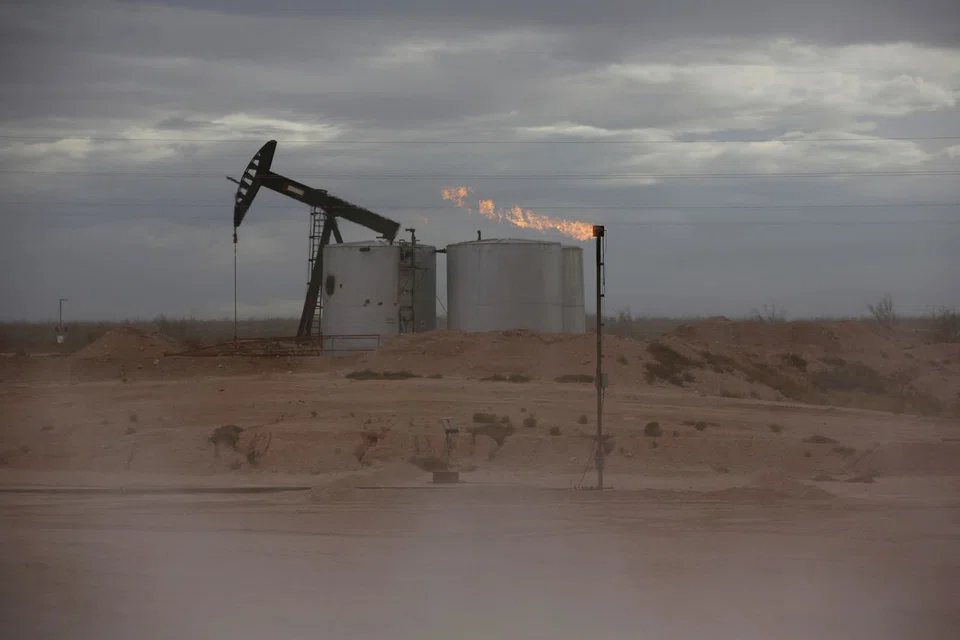
DeeperDive is a beta AI feature. Refer to full articles for the facts.
[BENGALURU] Oil edged close to US$100 a barrel on Tuesday after Moscow ordered troops into two breakaway regions in eastern Ukraine, but pared gains to end near 2014 highs following Western efforts to stop what they fear is the beginning of a full-scale Russian invasion.
The United States and Britain announced sanctions targeting Russian banks, while the European Union blacklisted more politicians and Germany put the brakes on the US$11 billion Nord Stream 2 gas pipeline project.
"The market obviously pumped in excess risk premium as Russia entered the separatists' portion of the Ukraine and this fear premium gradually dissolved," said Jim Ritterbusch, president of Ritterbusch and Associates in Galena, Illinois.
Global benchmark Brent crude traded as high as US$99.50 a barrel, its highest since September 2014, before settling at US$96.84 with a US$1.52, or 1.5 per cent, gain.
US West Texas Intermediate (WTI) crude also hit a seven-year high as it peaked at US$96 a barrel, before ending at US$92.35, US$1.28, or 1.4 per cent, higher from Friday. The US market was closed on Monday for a public holiday.
US President Joe Biden announced the first wave of sanctions against Russia, targeting Russian banks and sovereign debt, and vowed steeper punishments ahead if Russia continues its aggression. The sanctions did not include energy supplies.
Navigate Asia in
a new global order
Get the insights delivered to your inbox.
The Ukraine crisis has added further support to an oil market that has surged on tight supplies as demand recovers from the Covid-19 pandemic.
The Organization of the Petroleum Exporting Countries (Opec) and allies, together known as Opec+, have resisted calls to boost supply more rapidly.
Nigeria's minister of state for petroleum on Tuesday stuck to the Opec+ view that more supply was not needed, citing the prospect of more production from Iran if its nuclear deal with world powers is revived.
Talks on restoring a deal to curb Iran's nuclear programme and ease sanctions are near conclusion, a Russian envoy said, which could eventually boost Iran's oil exports by more than 1 million barrels per day. REUTERS
Decoding Asia newsletter: your guide to navigating Asia in a new global order. Sign up here to get Decoding Asia newsletter. Delivered to your inbox. Free.
Share with us your feedback on BT's products and services
TRENDING NOW
Autobahn Rent A Car directors declared bankrupt over S$50 million each owed to DBS

Higher costs, lower returns: Why are Singaporeans still betting on real estate?

Richard Eu on how core values, customers keep Singapore’s TCM chain Eu Yan Sang relevant

Loyang Valley sold for S$880 million to SingHaiyi-led consortium

