

Oil settles slightly higher, investors still wary
 Add BT as a preferred source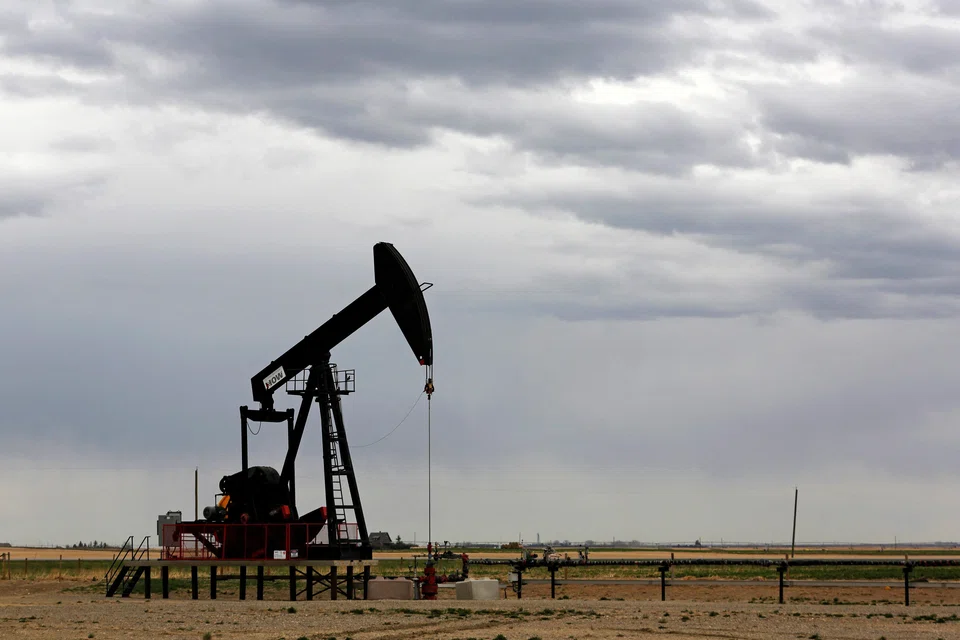
DeeperDive is a beta AI feature. Refer to full articles for the facts.
OIL prices settled up slightly on Monday as Opec+ production cuts failed to fully offset worries around crude oversupply and softer fuel demand growth next year.
Brent crude futures settled up 19 cents, or 0.3 per cent, to US$76.03 a barrel while US West Texas Intermediate crude futures settled up 9 cents, or 0.1 per cent, at US$71.32.
Both contracts jumped more than 2 per cent on Friday but were down for a seventh straight week, their longest streak of weekly declines since 2018, on lingering oversupply concerns.
“There is little doubt that the oil complex remains in a state of vulnerability,” oil broker PVM’s John Evans said in a note on Monday.
Despite a pledge by the Opec+ group, which comprises the Organization of the Petroleum Exporting Countries (Opec) and allies including Russia, to cut 2.2 million barrels per day (bpd) of crude oil production in the first quarter, investors remain skeptical about compliance.
“Members participating in the output curtailments are not only seeing reduced revenue from smaller volumes but also from the price plunge that developed subsequent to the last Opec+ decision,” said Jim Ritterbusch, president of Ritterbusch and Associates LLC in Galena, Illinois.
Navigate Asia in
a new global order
Get the insights delivered to your inbox.
Output growth in non-Opec countries is expected to lead to excess supply next year.
RBC Capital Markets expects stock draws of 700,000 bpd in the first half, but only 140,000 bpd for the full year.
“Prices will remain volatile and directionless until the market sees clear data points pertaining to the voluntary output cuts,” RBC analysts said in a note.
With cuts not implemented until next month, oil faces a volatile two months before clarity from any quantifiable compliance data, the analysts said.
The latest consumer price index data from China, the world’s biggest oil importer, showed rising deflationary pressures as weak domestic demand cast doubt over the country’s economic recovery.
Chinese officials on Friday pledged to spur domestic demand and consolidate and enhance the economic recovery in 2024.
This week, investors are watching for guidance on interest rate policies from meetings at five central banks, including the US Federal Reserve, as well as US inflation data to assess the potential impact on the global economy and oil demand.
Recent price weakness drew demand from the United States, which has sought up to 3 million barrels of crude for the Strategic Petroleum Reserve (SPR) in March 2024.
“We know the Biden Administration is in the market looking to refill the SPR, which will provide support,” IG analyst Tony Sycamore said in a note, adding that prices were also being supported by technical chart indicators.
Meanwhile, a draft of a potential climate deal at the COP28 summit on Monday suggested a range of options countries could take to reduce greenhouse gas emissions, but omitted the “phase out” of fossil fuels many nations have demanded.
UN Secretary General Antonio Guterres said a central benchmark of success for COP28 would be whether it yielded a deal to phase out coal, oil and gas use fast enough to avert disastrous climate change. REUTERS
Decoding Asia newsletter: your guide to navigating Asia in a new global order. Sign up here to get Decoding Asia newsletter. Delivered to your inbox. Free.
Share with us your feedback on BT's products and services
TRENDING NOW

Shelving S$5 billion office redevelopment plan proved ‘wise’ as geopolitical risks mount: OCBC chairman
OCBC is said to emerge as lead bidder for HSBC Indonesia assets

Middle East-linked energy supply shocks put Asean Power Grid back in focus

Eurokars Group introduces rental car franchises Enterprise Rent-A-Car, National Car Rental, and Alamo to Singapore

