Oil slides from decade-highs as Iran talks kindle supply hopes
 Add BT as a preferred source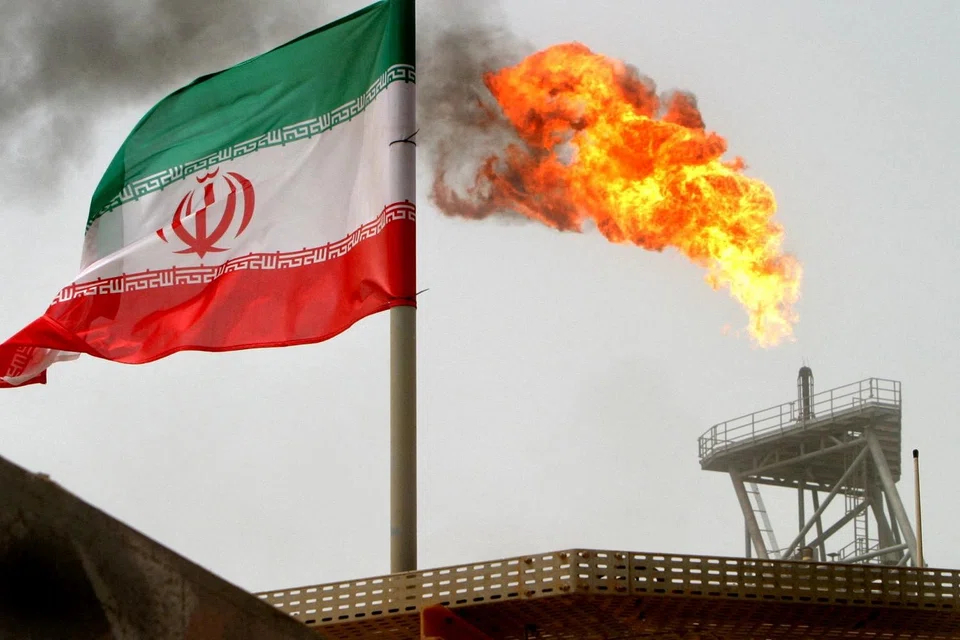
DeeperDive is a beta AI feature. Refer to full articles for the facts.
[HOUSTON] Oil slid 2 per cent on Thursday, after hitting prices not seen in roughly a decade, as sellers jumped on hopes the United States and Iran will agree soon on a nuclear deal that could add barrels to a tight global market.
Trade was volatile, with crude prices jumping early to multi-year highs on worries about Russia, which exports 4 to 5 million barrels per day (bpd) of crude, second-most worldwide behind Saudi Arabia.
Following Russia's invasion of Ukraine, companies are now shunning Russian supply and scrambling for barrels elsewhere.
Oil markets are in an "explosive mood" over increasing outrage against Russia said Phil Flynn, an analyst at Price Futures Group. "People in the world don't want to deal with a country that is committing these atrocities in Ukraine."
Brent futures were down US$2.47, or 2.2 per cent, to US$110.46 a barrel, while US West Texas Intermediate (WTI) crude fell US$2.93, or 2.6 per cent, to US$107.67.
Both benchmarks rose to multi-year highs during the session, with Brent soaring to US$119.84, its highest since May 2012 and WTI hitting its highest since September 2008 at US$116.57.
Navigate Asia in
a new global order
Get the insights delivered to your inbox.
Washington and its Western allies have imposed sanctions on Russia, but the measures have so far stopped short of targeting Russian oil and gas exports.
A new round of sanctions announced by the White House on Wednesday banned export of specific refining technologies, making it harder for Russia to modernise oil refineries.
Traders remain wary of Russian oil. At least 10 tankers failed to find buyers on Wednesday, market sources said.
Canada said it will remove Russia and Belarus's most favoured nation status as trading partners, and will provide additional military aid to Ukraine.
Global benchmark Brent has jumped nearly 25 per cent since the Russian invasion of Ukraine on Feb 24, an action Moscow calls a"special operation."
Brent's six-month spread LCOc1-LCOc7 hit a record high of over US$21 a barrel, indicating very tight supplies.
Media reports have suggested the United States and Iran have nearly completed a deal that could bring more than a million bpd of oil, or about 1 per cent of global supply, back to the market.
Negotiations to revive the pact have been going on for 10 months in Vienna. Diplomats are believed to be in the final stage of talks.
But on Thursday a report by the International Atomic Energy Agency (IAEA), the UN's nuclear watchdog, showed the stock of enriched uranium amassed by Iran was in breach of its 2015 nuclear deal, with the country nearing the ability to make a nuclear bomb.
The chief of the IAEA, Rafael Grossi will visit Tehran on Saturday in an effort to resolve outstanding issues.
"Grossi's trip increases the odds of the revival of the (nuclear deal) to 70 per cent from 60 per cent," consultancy Eurasia Group said, noting "a deal is likely this month and as soon as the next several days."
That supply relief may only end up filling part of a gap left by buyers curtailing purchases of Russian oil, which accounts for about 8 per cent of global oil exports.
"We expect that Russian oil exports will plunge by 1 million bpd from the indirect impact of sanctions and voluntary actions by companies," said Rystad Energy chief executive Jarand Rystad. "Oil prices are likely to continue to climb - potentially beyond US$130 per barrel."
The Organization of the Petroleum Exporting Countries, Russia and their allies, a group known as Opec+, on Wednesday stuck to an existing plan for a gradual output rise of 400,000 bpd a month, snubbing consumer calls for more. REUTERS
Decoding Asia newsletter: your guide to navigating Asia in a new global order. Sign up here to get Decoding Asia newsletter. Delivered to your inbox. Free.
Share with us your feedback on BT's products and services