

Oil stabilises as investors weigh US, Iran threats to facilities, sanctions lift
Analysts estimated a loss of 7 million to 10 million barrels per day of oil production in the Middle East
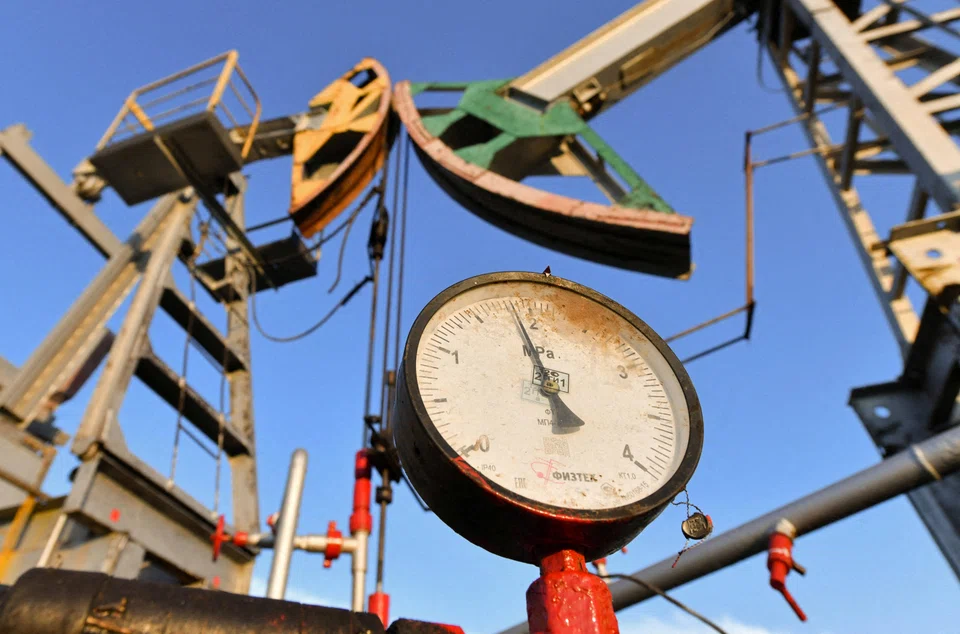
[SINGAPORE] Oil prices were little moved on Monday as investors weighed US and Iranian threats to target energy facilities that could escalate the war against the release of millions of barrels of Iranian oil at sea to global markets after Washington lifted sanctions.
Brent crude futures fell 1 cent to US$112.18 a barrel by 0202 GMT after settling on Friday at their highest since July 2022. US West Texas Intermediate was at US$98.75 a barrel, up 52 cents, after the previous session’s gain of 2.27 per cent.
The spread of more than US$13 a barrel between Brent and WTI is the widest in years.
Michael McCarthy, CEO of online trading platform Moomoo Australia, said oil prices were falling temporarily due to low liquidity and traders taking profit in the short term.
“Momentum clearly favours further upside, and a test of the recent highs near US$120 is a realistic scenario this week,” he added.
US President Donald Trump on Saturday threatened to “obliterate” Iran’s power plants if Tehran did not fully reopen the Strait of Hormuz within 48 hours, a significant escalation barely a day after he talked about “winding down” the war, now in its fourth week.
Iran’s Parliament Speaker Mohammad Baqer Qalibaf wrote on X that critical infrastructure and energy facilities in the Middle East could be “irreversibly destroyed” should Iranian power plants be attacked.
“It clearly means more escalation which means higher oil prices. Some are incorrectly thinking, however, that Iran may cave,” said Amrita Sen, founder of Energy Aspects. “Trump is trying to show he can out-escalate and that way ends in scorched earth for Gulf infrastructure.”
The war has damaged major energy facilities in the Gulf and brought shipping through the Strait of Hormuz - which handles about 20 per cent of global oil and liquefied natural gas flows - close to a halt.
SEE ALSO





Analysts estimated a loss of 7 million to 10 million barrels per day of oil production in the Middle East.
Iraq has declared force majeure on all oilfields developed by foreign oil companies, three energy officials said. Iraqi Oil Minister Hayan Abdel-Ghani said in a ministry statement that crude production at Basra Oil Company has been cut to 900,000 bpd from 3.3 million bpd.
To alleviate the supply crunch, Washington temporarily removed sanctions on Iranian oil at sea.
Indian refiners plan to resume buying Iranian oil while refiners elsewhere in Asia are examining such a move, traders said on Saturday. REUTERS
Decoding Asia newsletter: your guide to navigating Asia in a new global order. Sign up here to get Decoding Asia newsletter. Delivered to your inbox. Free.
Share with us your feedback on BT's products and services
TRENDING NOW

Once staunchly pro-China, Malaysian Chinese businesses are now distancing themselves from Beijing

Cliff Tan has 7 million followers and a 4-month waitlist. Why won’t he expand his business?

Could stablecoins be the future of money?

Grab CEO’s wife Chloe Tong on life with Anthony Tan and finding her purpose

