

Oil swings near five-month high on Mideast risk, diesel doubts
Signs of resilient oil flows temper a rally driven by Gulf region tensions
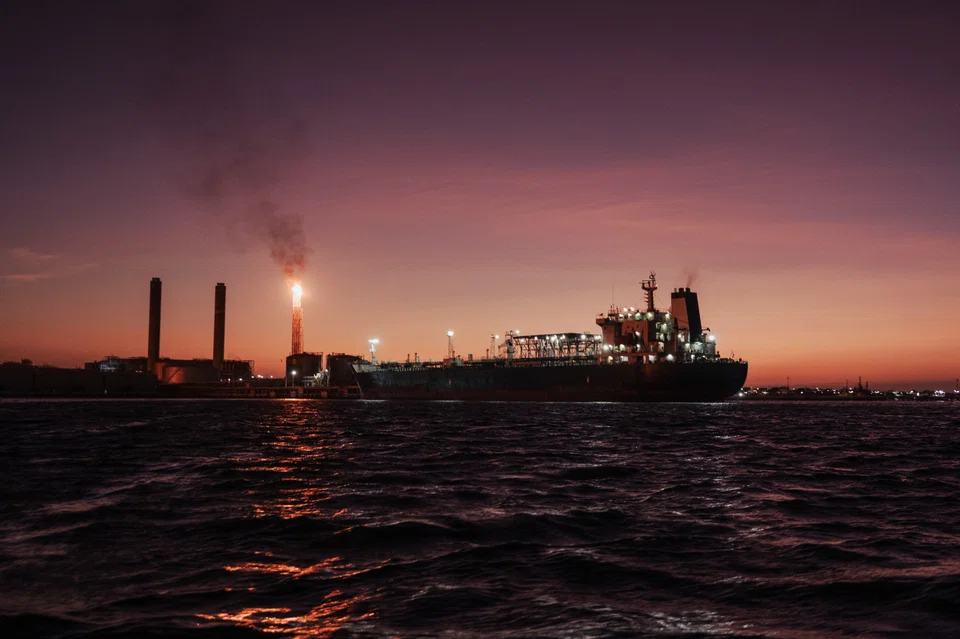
OIL fluctuated near a five-month high as technical resistance and signs of resilient Middle East supply flows tempered a rally driven by mounting geopolitical tensions in the Persian Gulf.
Brent crude settled above US$109 a barrel after jumping almost 4 per cent on Friday (Oct 16), when traders positioned for the risk of weekend escalations in the US-Iran war.
Prices briefly gained during the session before easing after Iran stated it has “no choice” but to assert control over the Strait of Hormuz, while US lawmakers continue to push back against US President Donald Trump’s diesel export deal with Russia.
Technical factors have helped keep the rally contained.
Friday’s sharp advance pushed prices into overbought territory on the nine-day Relative Strength Index (RSI), signalling a potential pullback.
Trend-following commodity trading advisers are currently sitting at maximum long positions in both Brent and WTI, suggesting they have largely exhausted buying capacity for now, according to energy data firm Kpler.
Physical oil markets are showing signs of loosening despite ongoing geopolitical threats.
The Dated Brent benchmark traded near US$117 on Monday, down nearly US$16 from the previous week.
US Energy Secretary Chris Wright noted that Persian Gulf crude flows have recovered to approximately 80 per cent of pre-conflict levels, though refined-product shipments remain constrained.

“Friday’s sharp move lower in Dated Brent, even as the paper market rallied, highlights just how many crosscurrents traders are trying to navigate,” said Rebecca Babin, senior energy trader at CIBC Private Wealth Group.
“More vessels are heading to China, flows continue through Hormuz despite escalating attacks, and Russia-Ukraine headlines are adding another layer of uncertainty.”
Global benchmark Brent has surged more than 75 per cent this year amid widening Middle East hostilities and the ongoing Russia-Ukraine war.
Refined products have seen steeper gains, with European diesel futures more than doubling year to date.
Over the weekend, a Saudi helicopter crashed near the Yemen border, Houthi rebels targeted the export hub of Yanbu, and UK Maritime Trade Operations reported two tankers hit in the Persian Gulf.
However, regional exports continue to move; Iraq has exported over 3.4 million barrels per day in October, approaching pre-war output.
To help curb energy prices, the Trump administration is allowing previously sanctioned tankers to undergo approval processes to legitimately transport crude, according to Wright.
“The markets seem unwilling to absorb the higher prices with the rest of the economy not looking rosy,” said June Goh, senior oil market analyst at Sparta Commodities, adding that Brent is likely to remain rangebound around US$100 a barrel.
Diesel outlook and political resistance
Trump’s deal to import Russian diesel and waive energy sanctions has met strong opposition from US lawmakers, who introduced legislation to block the purchases.
Critics argue any Russian fuel releases would offer minimal price relief while providing revenue to finance Moscow’s war effort in Ukraine.
The Congressional pushback poses another hurdle for the administration’s efforts to lower fuel costs ahead of November’s US midterm elections.
Meanwhile, Ukrainian strikes on Russian refining infrastructure have further tightened global refined-product supplies.
In an effort to end the four-year war in Eastern Europe, Russian President Vladimir Putin proposed a summit with Trump and Chinese President Xi Jinping in November, according to the Wall Street Journal.
While Moscow confirmed discussions are underway, a senior US official stated that Trump has not yet agreed to the meeting. BLOOMBERG
Decoding Asia newsletter: your guide to navigating Asia in a new global order. Sign up here to get Decoding Asia newsletter. Delivered to your inbox. Free.
Share with us your feedback on BT's products and services
TRENDING NOW

The only common thing in S-E Asia is that we all eat rice: Cisco’s Asean president

Philippine power giant First Gen rebuffs foreign offers, plans up to US$2.6 billion in expansion

Singapore to use ‘every legal and regulatory lever’ against companies linked to haze: Shanmugam

Once staunchly pro-China, Malaysian Chinese businesses are now distancing themselves from Beijing

