

Opec+ deal fails to sustain oil price rally; pandemic still the key driver for markets
Claudia Tan HS
Singapore
WHILE the unprecedented output cuts will provide temporary reprieve for oil prices, it remains to be seen whether the cut is sufficient to address the supply glut with mounting uncertainty surrounding the pandemic.
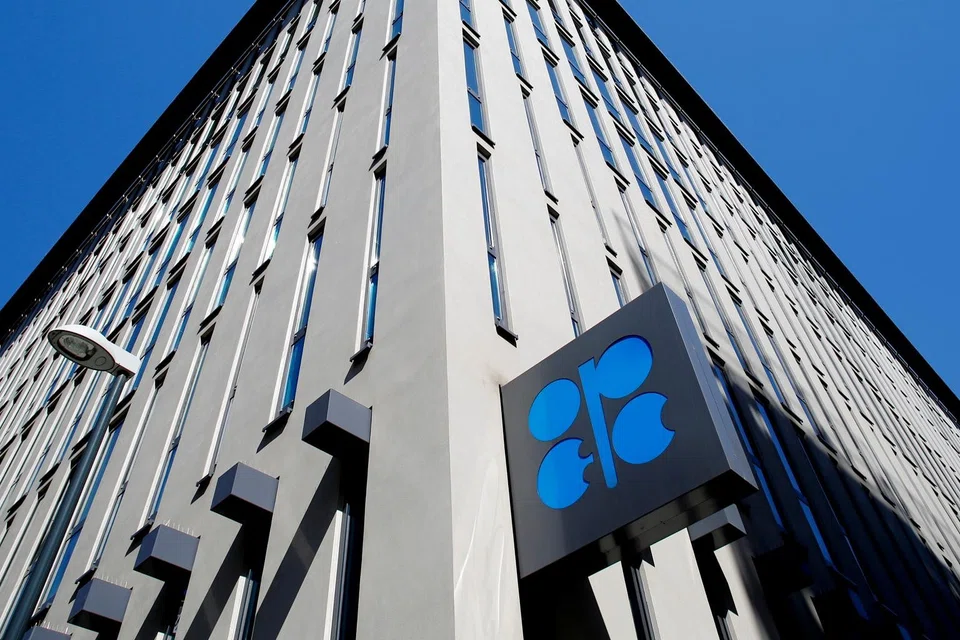
The Opec+ alliance agreed to slash production by 9.7 million barrels a day starting in May in a bid to support oil prices.
Oil prices jumped on Monday in early Asian trade with the US benchmark West Texas Intermediate (WTI) surging close to 8 per cent and Brent crude, the international benchmark, up 5 per cent before lunch.
The rally came after oil prices saw months of sinking prices with demand marred by the virus outbreak. But it was not sustained when both benchmarks eventually lost their gains.
As at 9pm Singapore time on Monday, the WTI was up 0.79 per cent or US$0.18 to US$22.94 per barrel while Brent was down 0.54 per cent or US$0.17 to US$31.31 per barrel.
Analysts pointed out that near-term oil prices are expected to remain muted, and recovery is still dependent on the Covid-19 situation.
"Oil prices should remain heavy in the short-term, but that could quickly change if optimism grows that the US and Europe could see major parts of their economy opening by June," said Edward Moya, senior market analyst at Oanda New York.
"For now, the demand outlook remains bleak, but these production cuts could support the argument that energy markets could see an implied stock draw in the second half of the year," he added.
Against such a backdrop, DBS analysts on Monday revised average Brent forecasts for 2020 to US$37 to US$42 per barrel from US$32 to US$37 per barrel. They have also revised their forecast for 2021 to US$55 to US$60 per barrel from US$40 to US$45 per barrel. This is assuming producing countries can remain compliant to the agreed production cuts, and demand recovers as projected, noted the report.
Meanwhile, Asia markets are unlikely to benefit substantially from the deal, given that most markets are still largely driven by the pandemic.
"The impact of this on oil will be muted as China, South Korea and India are beneficiaries of lower oil. Markets like Indonesia will benefit but are now more driven by the pace of the virus spreading and the direction of the USD," said Sean Taylor, Asia Pacific chief investment officer and head of emerging market equities at DWS.
Benchmarks in Asia were mostly down despite the deal.
The Straits Times Index ended Monday down 4.07 points or 0.16 per cent at 2,567.25 points while the FTSE Bursa Malaysia Kuala Lumpur Composite Index was down 1.47 points to 1,356.03. Seoul stock market's main KOSPI and the Nikkei 225 index fell 1.88 per cent and 2.33 per cent respectively. Mainland China's benchmark Shanghai Composite Index ended trade down 0.49 per cent.
This comes as traders remain cautious as they await key figures from the upcoming earnings season as well as China's first-quarter gross domestic product figures to alleviate some uncertainty. This will allow investors to "get a better sense of how bad the hit on global profits could be as the virus disrupts global economies", according to Mr Taylor.
But given that earnings are already expected to be "sharply negative globally", the main focus will be on balance sheet strength and free cash flow that may indicate how quickly earnings can recover, he said.
READ MORE: Big oil deal fails to energise SGX's oil and gas counters
TRENDING NOW

‘The next 40 years’: SingLand CEO Jonathan Eu on remaking Marina Square

SGX gold-linked counters lose their shine as the precious metal hits one-year low

Peter Kwee’s Ridley Park bungalow on the market with S$100 million asking price

Alibaba sued for allegedly hiding ties to suspected spy Alice Huang from Megaspeed

