
Opec+ technical committee drops IEA data
 Add BT as a preferred source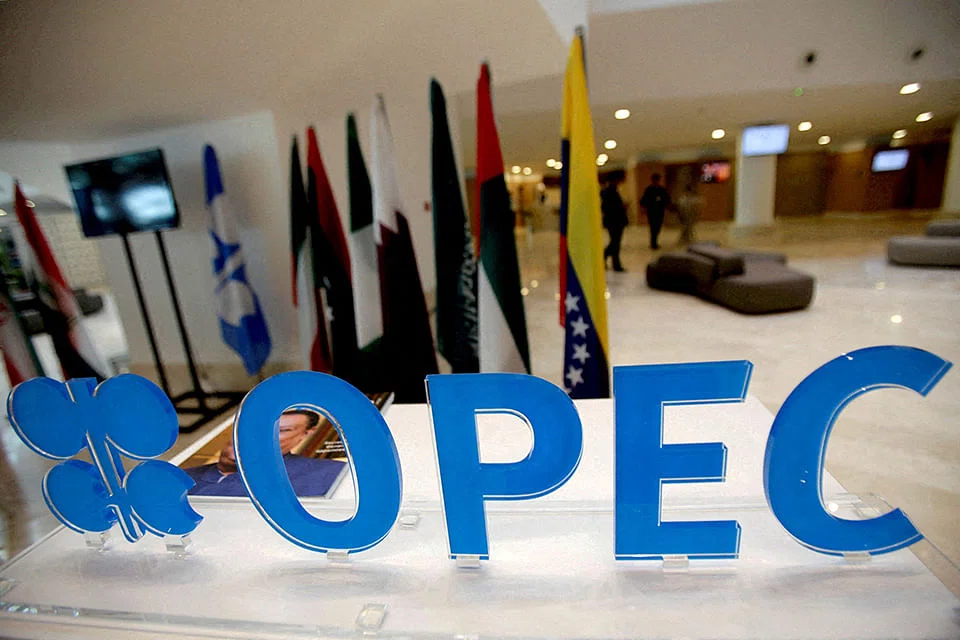
[DUBAI] The technical committee that advises the Opec+ group of oil producers will no longer use International Energy Agency (IEA) data, a source has told Reuters, reflecting tensions between the alliance and Western nations led by the United States.
The Paris-based IEA advises Western governments on energy policy.
The Joint Technical Committee (JTC) on Wednesday (Mar 30) decided with immediate effect to replace IEA data with reports from Wood Mackenzie and Rystad Energy to use as secondary sources, a source with direct knowledge of the matter told Reuters.
The JTC uses the data to assess crude oil production and the conformity of participating countries with agreed output curbs.
The decision was taken after analysis presented by the secretariat at the request of the JTC, the source said.
The IEA did not immediately respond to a Reuters request for comment.
Navigate Asia in
a new global order
Get the insights delivered to your inbox.
MAY OUTPUT MEETING ON THURSDAY
Opec+ is scheduled to hold a full ministerial meeting on Thursday where it is likely to stick to an existing deal to increase its May output target by about 432,000 barrels per day.
Opec+ includes the Organization of Petroleum Exporting Countries (Opec) members and others including Russia.
The group has resisted repeated calls by the United States and the IEA to pump more crude to cool prices.
The Biden administration is weighing the release of up to 180 million barrels of oil from the Strategic Petroleum Reserve (SPR) and the IEA is set to meet on Friday to decide on a collective oil release.
Some alliance members have been critical of IEA data, saying it was erroneous on several occasions and noted the IEA had advised against further investments in the hydrocarbon sector, failing to foresee growing demand.
Earlier this week, UAE energy minister Suhail al-Mazrouei told an industry conference that institutions like the IEA needed to be "more realistic" and not issue information that was"misleading".
Opec+ has come under increasing pressure to pump more crude since Russia invaded Ukraine on Feb. 24 and Western nations responded with sanctions that have curtailed Russian oil exports.
Saudi Arabia and the United Arab Emirates, which hold the bulk of spare production capacity within Opec, have resisted these calls, saying the group should stay out of politics and focus on balancing oil markets and satisfying customers. REUTERS
Decoding Asia newsletter: your guide to navigating Asia in a new global order. Sign up here to get Decoding Asia newsletter. Delivered to your inbox. Free.
Share with us your feedback on BT's products and services

