

Petrobras debt financing plans in doubt
Bribery probe hampers borrowing in international debt markets until producer provides audited results
Sao Paulo
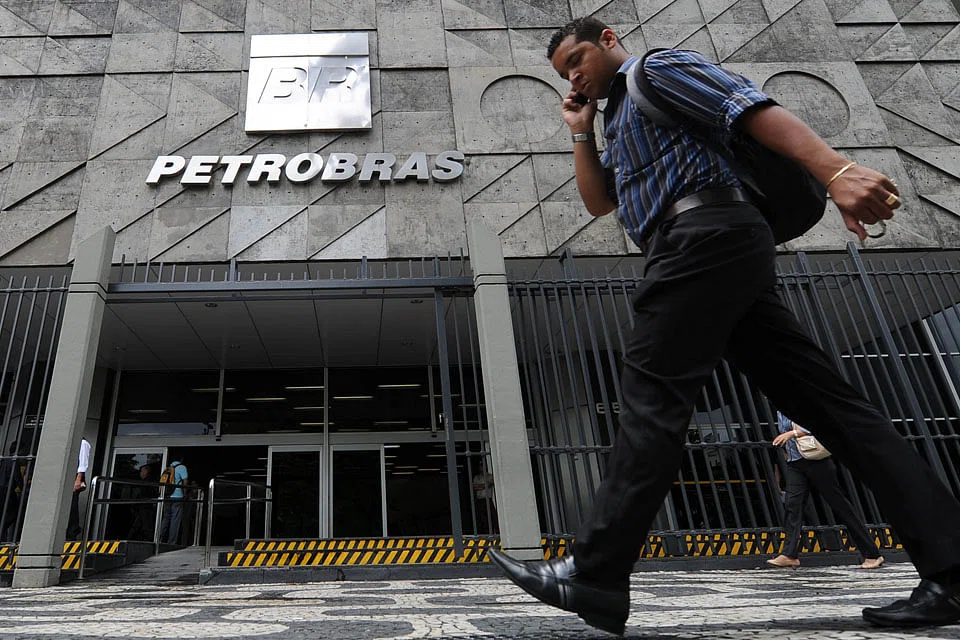
THE widening corruption probe at Petroleo Brasileiro SA is threatening to impair its ability to finance the world's biggest oil investment plan.
The state-controlled producer, which delayed releasing third-quarter earnings because of an investigation into alleged bribery involving contracts, has said on Nov 13 that it plans to publish unaudited statements within a month. Bank of America Corp said that Petrobras may have difficulties borrowing in international debt markets until it provides results that have been audited.
The producer's funding costs based on its benchmark bonds reached a 14-month high last week after police arrested officials at construction companies that allegedly formed a cartel to win contracts, including 59 billion reais (S$30.38 billion) from Petrobras.
While the company can turn to state-development bank BNDES in the short term, it won't be enough to cover the US$12 billion a year in financing that Petrobras says it needs, Oppenheimer & Co said.
Bond "markets would be shut for them without the presentation of audited results", Omar Zeolla, a corporate debt analyst at Oppenheimer, said in an email. "They may rely on more funding from BNDES in the short term, but will have to come to markets to continue funding its investment plan."
Petrobras has relied on overseas bond buyers for more financing than any company in emerging markets in the past three years, raising US$44.5 billion since 2011.
Petrobras's press office didn't reply to telephone or email messages seeking comment on its bond-sale plans. chief financial officer Almir Barbassa said on Nov 17 that the Rio de Janeiro-based company can fund operations for at least six months without having to issue more debt.
In an email, BNDES's press office declined to comment on whether it would provide financing to Petrobras.
The producer said in February that it was planning to add an average of US$12.1 billion of debt a year between 2014 and 2018 and that it wasn't "considering a new share sale".
It has sold at least US$9 billion of bonds overseas every year since 2011, data compiled by Bloomberg show. It has issued US$13.6 billion of notes this year, the most since at least 2006.
Petrobras is studying how to recover losses uncovered by a series of corruption probes and may have to lower the value of some assets where graft inflated costs, CFO Barbassa said. The company is going through a "painful process", chief executive officer Maria das Gracas Foster said on the same day.
BNDES, the Rio de Janeiro-based development bank, lent Petrobras 520.3 million reais in the first half of 2014, according to data on BNDES's website. The company borrowed at least 11.6 billion reais from the lender in 2013, the most since 2002 and more than 10 times the amount in 2011.
"Without audited statements, we think it would be difficult to access international debt capital markets," Frank McGann and Vicente Falanga Neto, analysts at Bank of America, said in a Nov 18 report. Petrobras's US$3.5 billion of bonds due in 2023 have slumped 3.3 per cent this month, more than six times the average decline in emerging-market corporate debt, data compiled by Bloomberg show. Yields on notes rose to 6.2 per cent on Nov 17, the highest since Sept 5, 2013.
"The negative reaction we see in the bonds can mostly be attributed to the delay," Ryan McGrail, an analyst at Loomis Sayles & Co, said by telephone from Boston. "No bondholder likes to hear that the financials are delayed and that we have to think about possible restatements." The reporting delay comes as oil prices have tumbled 28 per cent since June to a four-year low, threatening to crimp revenue.
"This type of news is not good for the market," said Brigitte Posch, head of emerging-market corporate debt at Babson Capital Management LLC in London, where she manages about US$1.8 billion. "Low oil prices don't help." BLOOMBERG
TRENDING NOW

Nvidia reinstates Jensen Huang as CEO; Trump says move poses no national security risk

Indonesia’s coal tycoon Low Tuck Kwong replaced as Bayan Resources president-director

Nvidia surges 33% after reinstating Jensen Huang, reviving AI trade; stocks soar in US and Europe

Consider lowering homeownership barriers for some non-resident foreigners

