

Prices of physical oil cargo plunge, with some buyers holding back in anticipation of US-Iran deal
Traders warn that the calm may be short-lived, raising the risk that physical prices may soar again
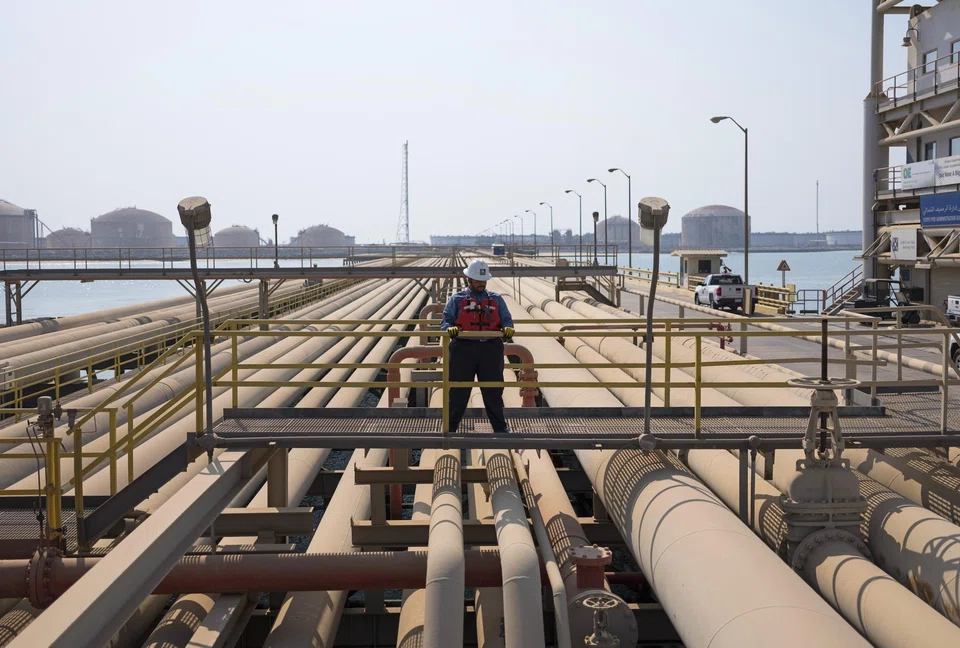
[SINGAPORE] The cost of a real-world oil cargo is dropping fast as buyers back away, in a dramatic reversal from last month’s bidding frenzy despite the ongoing closure of the Strait of Hormuz.
The sharp retreat provides a counterintuitive backdrop to warnings that the oil market is barrelling towards a crisis point, possibly in a matter of weeks. Still, traders cautioned that the calm may be short-lived, raising the risk that physical prices soar again as the industry relies on stopgap measures that cannot fill the gap indefinitely.
An easing that began in the second half of April accelerated over the last week. Premiums of major North Sea grades, which are used to set the global benchmark Dated Brent, have plunged by as much as 90 per cent over the past month to almost prewar levels.
Several cargoes for West African and Mediterranean CPC crude for prompt delivery have even traded at small discounts to the benchmark. While prices broadly are still indicative of a tight market, they are now within a normal range seen in recent years, before the Iran war removed more than 10 per cent of global supply.
Some traders suggested last week that buyers have held back as the US and Iran seemed closer to a deal, wary of paying elevated prices ahead of a crash if the Strait of Hormuz reopens. Others said that oil refiners are increasingly adapting to a world where the bulk of the Middle East’s crude is locked inside the Gulf – operating on a just-in-time basis for crude supplies, drawing down inventories, reducing run rates, or getting supplies from more distant producers.
Brent futures jumped above US$105 a barrel on Monday after US President Donald Trump rejected Iran’s latest response to his proposal to end the war, while a drone strike on Sunday briefly set a cargo vessel ablaze off Qatar.
The US, in particular, has sharply ramped up exports, while the top oil buyer China has been selling cargoes of crude into global markets in an unusual move, Bloomberg reported on Apr 22. Its imports have dropped sharply, adding to downward pressure on physical prices.
“The physical oil market in general is not pricing the catastrophic tightness,” said Neil Crosby, head of research at Sparta Commodities. But that’s due in part to import-reliant buyers in Asia getting by on the “bare minimum” of crude supplies, he said.
Millions of barrels remain trapped in the Persian Gulf and there’s little sign of a fast resumption of tanker traffic. But a week into the new monthly trading cycle, there’s no evidence of the kind of scramble to secure cargoes seen in the opening weeks of the war, according to more than a dozen traders who spoke to Bloomberg News.


Global oil markets have been able to tap into a number of buffers to temper or delay the impact of the closure of the Strait of Hormuz: Oil markets were well supplied going into the crisis, governments have announced a record release of strategic stockpiles, Saudi Arabia and the United Arab Emirates are exporting crude via pipelines and also sailing some tankers through the strait, while other exporters such as the US and Brazil have sharply ramped up shipments.
At the same time, global oil consumption has dropped sharply – in part because of forced reductions due to fuel supply shortages in parts of Asia or Middle Eastern petrochemical plant closures, and in part as a result of surging prices.
Eyewatering premiums
While prices remain at elevated levels, the eyewatering premiums that traders were bidding for immediately available barrels have largely disappeared. A cargo of West Texas Intermediate Midland sold at a premium of just US$1.50 a barrel on Friday in the Platts pricing window that helps set the North Sea benchmark, down from US$22 in April.
The steep backwardation, in which more-immediate derivatives fetch premiums over later-month ones due to a tight market, has also narrowed sharply. The six-week spread in Brent contracts for difference – derivatives that allow traders to hedge physical cargo prices – shrank to US$2.15 on Thursday, compared with about US$28 a month ago.
Oman crude, one of the few Middle Eastern grades still fully accessible to the global market because cargoes do not have to traverse the Strait of Hormuz, sold late last month for a premium of about US$15 a barrel to the Dubai benchmark, said traders who spoke on condition of anonymity. The premium was pegged at over US$7 a barrel on Friday. Equivalent cargoes traded around US$60 above the same marker earlier in the war.
With exports from the Persian Gulf still severely disrupted, this decline is the result of a behaviour change among refiners, primarily in Asia.
They have found some replacements for Middle Eastern supplies, for example, from the US and Latin America. The bigger driver has been a reduction in their purchases of oil – they are processing less crude into fuel and drawing down their inventories instead of seeking fresh supplies. And any procurement being done is for dates far more prompt than normal.
For the Dubai crude market, trading has shifted to dates so prompt that typical benchmark-setting mechanisms for supplies two months ahead have become devoid of activity, adding to the appearance of depressed prices even as the market is still dealing with unprecedented scarcity.
While the lower premiums for physical crudes are welcome news for refiners, their actions will prove to be a temporary fix if Hormuz does not reopen soon. The cyclical nature of the refining industry means upward pressure on premiums could return in the coming months.
Europe’s spring maintenance season is due to wrap up soon, potentially reviving demand for June cargoes, according to the traders, who asked not to be named as they are not authorised to speak publicly. In Asia, crude-processing rates in Japan and South Korea are slowly climbing after falling early in the war, according to Crosby.
Eventually, inventories will dwindle and if refiners want to keep fuel flowing to customers, they will need to acquire more crude in a market that’s lost a billion barrels of supply.
“The question is how long this lasts and how much of a problem do we build?” Shell CEO Wael Sawan said on a conference call on Thursday. “We have drilled a hole, a billion barrels worth of a hole, and we are going deeper and deeper.” BLOOMBERG
Decoding Asia newsletter: your guide to navigating Asia in a new global order. Sign up here to get Decoding Asia newsletter. Delivered to your inbox. Free.
Share with us your feedback on BT's products and services
TRENDING NOW

MAS allocates S$1.45 billion to five asset managers in third EQDP batch: Chee Hong Tat

‘My grandfather’s legacy’: Sherman Kwek lays out three-year plan for CDL to drive returns

He built the Vingroup empire. Now South-east Asia’s richest man is handing some key roles to his sons

‘How many will survive?’: Bubble fears arise as China’s humanoid robotics face reality check

