Putin helped save his oil giant. Now Rosneft returns the favour
Firm is helping fill a yawning budget gap at home and support the Kremlin abroad
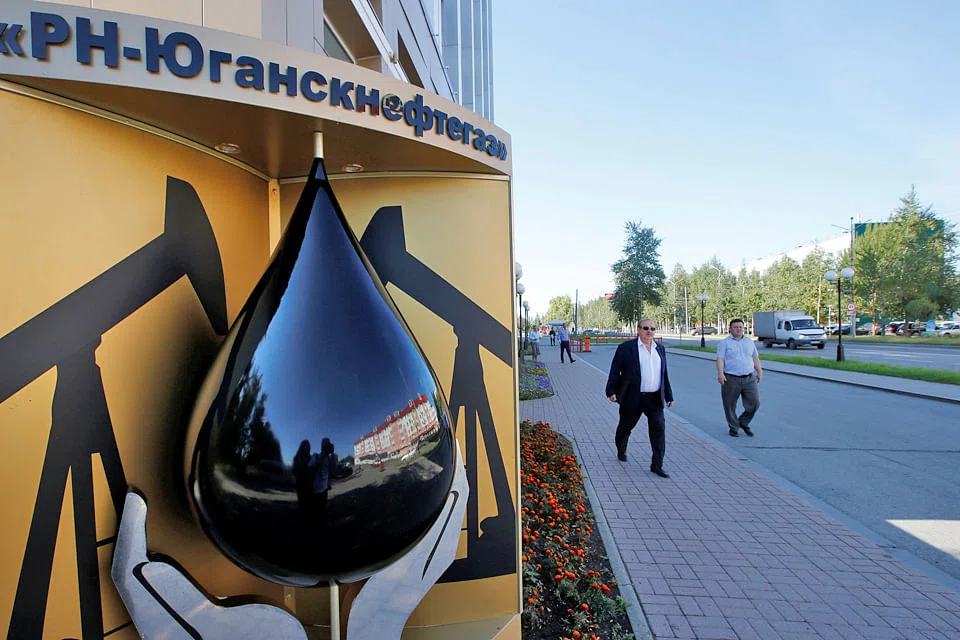
Moscow
TWO years ago, the Kremlin's oil flagship was foundering, hit by falling prices and international sanctions just as it faced US$20 billion in debt payments.
Short of cash, Rosneft got about US$15 billion of emergency aid with help from the central bank. But the deal spooked investors, requiring a massive rate increase to stem market turmoil. Chief executive officer Igor Sechin, the man Vladimir Putin had for a decade relied on to build Rosneft into a giant, faced rare disfavour from his patron, officials said at the time.
Now, Mr Putin is turning to Rosneft for help. Mr Sechin's energy colossus is helping fill a yawning budget gap at home and support the Kremlin abroad. The company's turnaround is a triumph for the Russian president, who vowed to protect the pillars of his state-dominated system from US and European Union (EU) pressure when they were slapped with sanctions two years ago.
Russia is among dozens of petro-states that are learning to make do with less as oil prices show no signs of major recovery. For some, like Saudi Arabia, the rout has provided an added impetus for economic overhauls, while others - including Mr Putin's Russia - the priority has been to paper over cracks with short-term fixes that don't reduce their reliance on petroleum.
"It's very important to the Kremlin that Rosneft is a strong company," said James Henderson, a former banker who is now a senior research fellow at the Oxford Institute for Energy Studies. "Russia's foreign policy as much as domestic policy relies on it."
Just a few days back, Rosneft spent 330 billion roubles (S$7.4 billion) to buy control of another oil company from the government, the biggest privatisation deal yet this year. Then Mr Putin backed a plan under which Rosneft could provide an even-bigger cash infusion, spending as much as US$11 billion to buy a chunk of its own shares from the government. On Oct 15, it announced a deal to buy a big refinery and other assets in India, under which it will pay US$3.5 billion for a 49 per cent stake. Mr Putin presided over the signing of that agreement on a visit to Goa, confirming that Rosneft remains a favoured Kremlin tool for binding political ties with business links.
Even Mr Putin seemed surprised at Rosneft's recovery. At a meeting with budget officials recently, he said he'd "instructed the appropriate agencies to check that Rosneft had the funds on its accounts" and wouldn't need to borrow to make the payments to the government.
The Kremlin, too, has managed to weather the worst of the pain so far, thanks to billions in petrodollars saved up when oil prices were high, the sharp devaluation of the rouble and help from China and other friends outside the West. His economy steadying, Mr Putin shows no sign of softening his confrontational approach to the US and Europe.
The key to Rosneft's turnaround - even as oil prices have languished - was a combination of financial engineering, the weakened rouble, political support and a little help from some friends: billions of dollars in advance payments from buyers in China. Rosneft's cash pile stood at more than US$22 billion at the end of the second quarter, almost double what it had early last year.
Once an also-ran made up of the scraps of the Soviet oil industry that the 1990s oligarchs didn't want, Rosneft's fortunes turned as Mr Putin moved to restore Kremlin control of the strategic sector in the early 2000s. He installed fellow intelligence veteran Sechin to lead the company in 2004. Rosneft took over the bulk of Yukos, a company the government seized from Putin critic Mikhail Khodorkovsky.
In 2013 Rosneft became the largest publicly traded oil producer on the planet when it purchased TNK-BP, a venture of the British company and a trio of Russian billionaires, for more than US$50 billion. It borrowed more than US$30 billion for that deal, one of the largest-ever financings by a Russian company.
But soon after the TNK-BP deal, Rosneft's proximity to Mr Putin became a liability. Eager to hit the Russian leader in his pocketbook after the March 2014 annexation of Crimea, the US announced sanctions targeting Mr Sechin, citing his "utter loyalty to Vladimir Putin". Later, the US and the EU slapped limits on Rosneft, restricting access to technology and capital markets.
Foreign lenders who'd once battled for Rosneft's favour couldn't do business with it. BP's CEO joked that Mr Sechin's new nickname was "Igor Sanction". By that autumn, Rosneft was again walloped as oil fell below US$100. Soon, it was asking the Kremlin for a US$43 billion rescue. Mr Putin baulked at the huge sum.
But just days before a US$7 billion payment to Western banks came due in December 2014, Rosneft got its lifeline. Through a complicated series of transactions that stretched over several months, it issued one trillion roubles in bonds that a local bank used as collateral to borrow as much as US$15 billion from the Russian central bank to lend on to the oil giant. The state bank that came up with the scheme couldn't participate because of sanctions, so Rosneft took the idea to another lender, according to a source. Apparently fearful the US could extend the curbs to squeeze the institution involved, Rosneft kept the nature of the deal a secret.
But when word of the bond issue leaked out, its huge size alarmed local investors, who dumped the rouble. Only an emergency 6.5-percentage-point rate hike and heavy Kremlin pressure on exporters to sell foreign currency were enough to stabilise the exchange rate. Mr Sechin publicly denied any role in the rouble's plunge, threatening to "deal with provocateurs" who alleged the company was involved. Rosneft's London-traded shares dropped to the lowest level since the 2008 financial crisis. The botched bailout angered top officials including Mr Putin, people familiar with the situation said at the time. Mr Sechin faced a rare public criticism from the president in a late-night meeting.
Mr Sechin tried to make amends, selling tens of billions of dollars earned from oil sales to buy roubles, helping steady the currency. He cut capital spending. To raise cash, the company pitched stakes in major Siberian projects to investors in China and India. The plunging rouble became a blessing, lowering Rosneft's costs in dollar terms and cushioning the blow of low oil prices, since crude is sold in dollars.
Further relief came when customers made US$15 billion in prepayments for future crude supplies in the third quarter of 2015. By early this year, Mr Sechin had reclaimed his traditional position in Mr Putin's good books, touting Rosneft's results in a personal meeting with the leader.
Rosneft's market capitalisation topped that of Gazprom, the state gas monopoly and its traditional rival for political affections, for the first time in April. In June, Mr Sechin said he thought his company could be worth as much as US$130 billion, twice its current value and more than BP. BLOOMBERG