

Rinehart looks beyond China to beat iron ore gloom
Melbourne
THE Asia-Pacific's richest woman is gearing up to start shipments from her US$10 billion iron ore project in Australia. Even with prices at 10-year lows, she's displaying no lack of confidence in the mine's success.
Her mine isn't relying solely on sales to China, the biggest iron ore buyer. This limits the project's exposure to a market where steel demand is judged to be peaking. Instead, she's locked in supply contracts with three of the largest iron ore consuming Asian nations outside of China.
"They feel very confident. Roy Hill has a massive advantage in that it has diversified its markets," Philip Kirchlechner, Perth-based director of Iron Ore Research Pty, said. "They have buyers from three of the other major iron ore importing markets."
Roy Hill, Australia's largest single iron ore mine, is on track to begin exports from September, adding 55 million tonnes a year of output to a market already saturated by a growing surplus. It's even accelerating the mine's schedule, seeking to hit its planned capacity at the fastest pace of any project built in Western Australia's iron-rich Pilbara region.
Her partners - South Korea's Posco, Japan's Marubeni Corp and Taiwan's China Steel Corp - have committed to take half of the mine's annual output, Barry Fitzgerald, chief executive of Roy Hill Holdings Pty, said. "We also have significant commitments from steel mills across Asia for a large portion of the remaining sales volume," he said.
Posco, which has a 12.5 per cent stake, expects to begin importing about seven million tonnes annually from Roy Hill in September, a Posco spokesman said on Wednesday. The mine's products "are in demand by steel mills, no matter what the pricing environment", Mr Fitzgerald said.
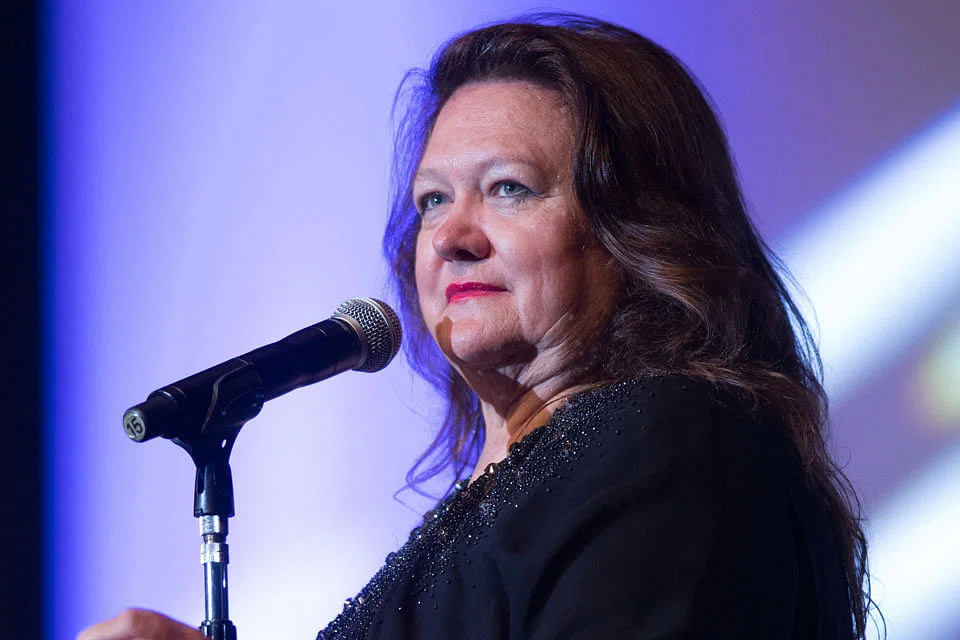
Ms Rinehart, with an estimated wealth of about US$12.1 billion according to the Bloomberg Billionaires Index, sold a 30 per cent stake in Roy Hill to the three partners.
Ms Rinehart's judgment on iron ore follows her acute call on thermal coal, agreeing to sell most of her assets in 2011 for US$1.26 billion. The fuel fell in 2012 to its worst annual price slump in seven years.
Iron ore prices had the largest quarterly loss since 2009 in the three months through March and plunged to a decade low of US$47.08 a dry metric tonne last week, before climbing back to US$48.06 on Tuesday, according to Metal Bulletin Ltd data. Last week's level was the lowest since 2004-2005 based on the data and on annual benchmarks compiled by Clarkson Plc, the world's largest shipbroker. The plunge prompted junior miner Atlas Iron Ltd to suspend its shares from trading on Tuesday while it reviews its operations and considers asset sales.
A forecast global surplus means those developing new mine projects face sharp revisions to revenue estimates, said Andrew Hodge, a Sydney-based analyst at Wood Mackenzie Ltd. The exit of higher cost production will probably see the iron ore market return to balance by 2023, according to Wood Mackenzie. Prices may rise from next year, the China Iron & Steel Association forecasts. BLOOMBERG






