

Shell to build Asia's largest pyrolysis oil upgrader unit that will transform plastic waste to chemicals
 Add BT as a preferred source
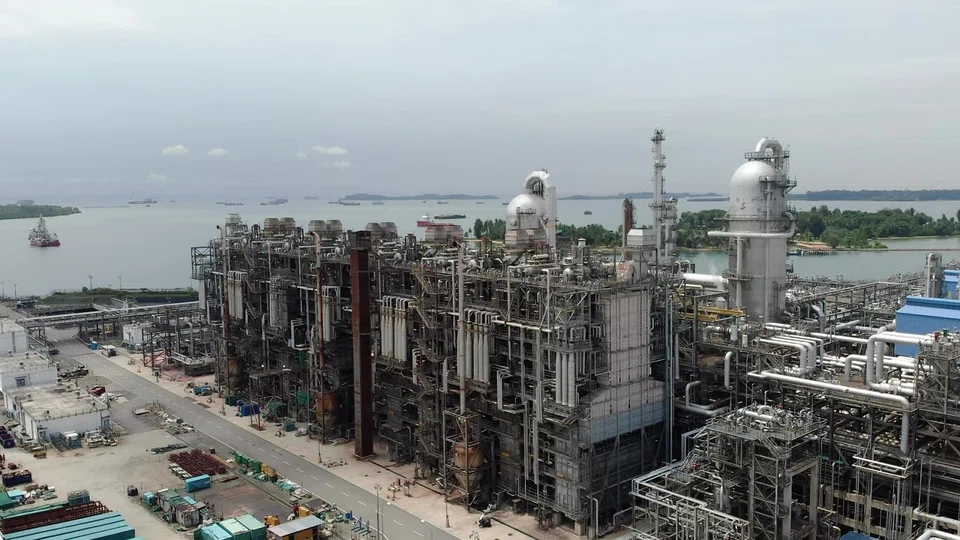
ENERGY giant Shell Eastern Petroleum on Tuesday (Nov 23) announced that it will be building a new pyrolysis oil upgrader unit, an investment that will support the growth of "plastic waste to chemicals" industry in the region.
The unit, which is set to start production in 2023, will be located at Shell's manufacturing site on offshore island Pulau Bukom, said the company in a press statement.
Speaking to reporters at the ground-breaking ceremony for the new unit on Tuesday, Aw Kah Peng, chairman of Shell Companies in Singapore, declined to comment on Shell's investment amount, citing commercial sensitivity.
The unit will be the largest in Asia and Shell's first such unit globally, with a capacity of 50,000 tonnes per annum. This is equivalent to the weight of about 7.8 billion plastic bags.
The new unit will improve the quality of pyrolysis oil, a liquid that is made from hard-to-recycle plastic waste that would have otherwise gone into a landfill, and turn it into chemical feedstock for the company's plants.
Shell will then use the treated pyrolysis oil to produce circular chemicals that are utilised in everyday products such as tyres, mattresses, furniture and cars.
The company said the move is a response to "growing customer demand". Shell has already signed its first circular chemicals agreement in Asia with chemicals company Asahi Kasei.
Aw stressed that the starting point for energy companies like Shell is no longer just crude oil, amid the ongoing global transition towards cleaner forms of energy.
She added that Shell Singapore is now looking at "other sustainable fuels" such as animal fats and used cooking oil, which can be turned into low-carbon fuels that include sustainable aviation fuel, renewable diesel for road transport or renewable chemicals.
This "upgrade" to sustainable fuels will cost Shell Singapore more, but the company is hoping that at some point, customers will be willing to pay a premium for these alternatives.
Minister for Trade and Industry Gan Kim Yong, who officiated at the ground-breaking ceremony for the new unit, said that "constant evolution and the pursuit of excellence" have allowed Singapore's energy and chemicals sector to transform from its humble beginnings as an oil storage facility to a "vibrant and competitive cluster of chemical plants".
"Shell's plans to transform its business in Singapore and become a net-zero emissions energy business are very much aligned with our vision for the energy and chemicals sector," he added.
Gan also said the government is looking to transform Jurong Island - which is widely known as the heart of Singapore's chemical and energy industry - into a "sustainable energy and chemicals park".
The Sustainable Jurong Island plan will focus on increasing the output of sustainable products such as bio-based fuels and chemicals, and enabling sustainable production to reduce carbon emissions and pollution.
It is hoped that the energy and chemicals sector will by 2050 increase its output of sustainable products by 4 times from 2019 levels, and achieve more than 6 million tonnes of carbon abatement annually from low carbon solutions.
The new pyrolysis oil upgrader unit is a key element in the transformation of the Pulau Bukom manufacturing site into the Shell Energy and Chemicals Park Singapore.
The transformation of Pulau Bukom is one part of Shell Singapore's 10-year roadmap that was unveiled last year to repurpose its core business and aim to cut its carbon dioxide emissions by about a third over the course of the decade.
In line with the company's global targets, Shell Singapore will also accelerate its transition and cut its own emissions from its operations by half in 2030 from 2016 levels.
As Shell reduces production of traditional fuels in Singapore, it is also developing plans to produce sustainable aviation fuel and set up a carbon capture and storage hub, which will capture and safely store emissions for Shell and its customers in the region.
Shell recently announced plans to reduce its refining capacity by shutting down 7 of its 13 refineries around the world, and cut the production of traditional fuels such as diesel and gasoline by 55 per cent by 2030.
In light of this, Shell Singapore is now eyeing opportunities in more sustainable fuels as part of the pivot towards cleaner energy, and Aw said the company is "nowhere near done" with its shift.
Shell's downstream director Huibert Vigeveno said that the new unit forms "part of Shell's aim to process 1 million tonnes a year of plastic waste" in its global chemicals plants by 2025.
Vigeveno said Shell Singapore is also looking at investing in a facility that could produce 550,000 tonnes of biofuels a year made from waste and vegetable oils.
He added that Shell, in order to play its part in transforming the global energy system, will have to work even more closely with others in order to "make change at the speed and scale needed".
Said Vigeveno: "For our part, Shell's target is to be a net-zero emissions energy business by 2050, in step with society's progress towards the goal of the Paris Agreement. This is a huge and long-term task for an energy business, and the business plans we have today will not get us there, so they are changing.
"Our transformation is all about our customers and how we work back from what they want and need to make change."
Decoding Asia newsletter: your guide to navigating Asia in a new global order. Sign up here to get Decoding Asia newsletter. Delivered to your inbox. Free.
Copyright SPH Media. All rights reserved.
TRENDING NOW
Think twice about rebuilding that old landed property into a super-big house to max out GFA
SpaceX’s US$1.75 trillion IPO: How retail investors, including those in Singapore, can buy shares

Private equity giant Carlyle can grow bigger but needs to stay on its toes: co-founder David Rubenstein
Battle for Asia’s ultra-rich: ‘Singapore can’t afford to keep losing clients to Dubai, Hong Kong’

