

Singapore well-placed to be Asean’s gold-trading hub as regional duties rise: analysts
Creating enough market depth and building the necessary infrastructure is thus a priority, they add
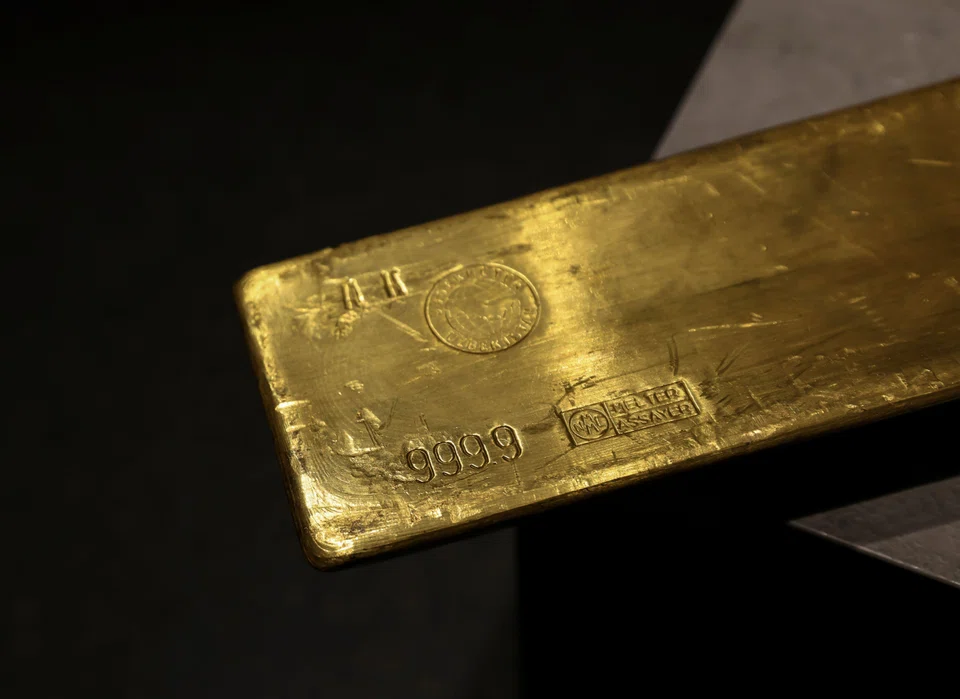
[SINGAPORE] Singapore is in a prime position to establish itself as South-east Asia’s neutral clearing and distribution hub for gold, industry observers told The Business Times.
Neighbouring Asean economies have been tightening regulations on precious-metals trading. Malaysia’s newly announced 10 per cent import duty on gold bar shipments – a wholesale standard for central banks – has left some inventory stranded at customs or redirected.
There is also Indonesia’s export duty on gold which aligns with its broader strategy of resource nationalism and downstream industrialisation across multiple commodities.
“Recent policy shifts in Asean create an opportunity for Singapore to position itself as a stable regional hub for gold flows,” said Robin Tsui, Asia-Pacific gold strategist at State Street Investment Management.
These moves also indicate the growing strategic importance of gold for both central banks and investors, noted Alexandra Symeonidi, senior corporate credit and sustainability analyst on William Blair’s emerging-markets debt team.
“This shift reinforces why building out Singapore’s gold infrastructure and market depth is a priority rather than an option,” she added. “Singapore’s open trade policy can facilitate the ambition of a clearing hub and perhaps also as the preferred re-export hub for Asean gold.”
Building capacity and a financial marketplace
Amid an evolving regulatory landscape, market watchers noted that building secure and sufficient bullion storage capacity is one of the first steps.
The Monetary Authority of Singapore and Singapore Bullion Market Association announced in March that they were working to deepen the Republic’s gold-trading infrastructure.
One area in particular that the city-state is focusing on is providing vaulting services for foreign central banks, as well as adopting internationally aligned vaulting standards.


State Street’s Tsui noted that, to attract central banks, Singapore needs to combine sovereign‑grade vaulting with policy certainty and geopolitical neutrality.
He cited the need for strong legal protections, transparency and, potentially, incentives around custody costs and operational efficiency.
In addition, Priyanka Sachdeva, senior market analyst at Phillip Nova, said that Singapore’s strength would lie in moving beyond its reputation as a safe vault to becoming a trusted marketplace where gold flows are financed, stored, hedged and settled.
“The challenge is not attracting investors to Singapore, but creating enough market depth and product innovation to ensure they actively trade, if we aim to compete with more developed gold hubs,” she pointed out.
“To deepen capital flows, Singapore needs a more vibrant ecosystem around stored gold, including collateralised lending and gold-backed financing,” she added.
“The more efficiently gold can be mobilised as a financial asset while remaining securely stored, the more attractive Singapore becomes.”
John Reade, senior market strategist for Europe and Asia at the World Gold Council, similarly noted: “The gold market is not just the gold price we see on the screen, as in spot trading. It is also an active forward, lending and borrowing market that sits alongside that.”
He added: “One of the big measures of success for this market will be when international central banks – not just the local central banks – are storing gold in… Hong Kong or Singapore, and whether they are taking part in the market as borrowers and lenders.”
Beyond Asean; looking at Hong Kong
Based on data from the World Gold Council, the London over-the-counter (OTC) market, the US futures market and the Shanghai Gold Exchange make up more than 90 per cent of global gold-trading volumes.
They are complemented by smaller secondary OTC and exchange-traded market centres around the world, which include Dubai, India, Japan, Singapore and Hong Kong.
Hong Kong is scheduled to launch its own clearing system in July in a bid to build the liquidity needed to influence regional pricing.
While Hong Kong benefits from its close proximity and thereby access to gold volume from China, analysts noted that Singapore can find its own niche, too.
The Republic has also committed to launching a clearing system, although it has not publicly announced a timeline.
“There is certainly room for both Singapore and Hong Kong,” said Reade.
“Markets work best with lots of participants and I would prefer to see more large liquid international OTC gold-trading centres, rather than just the one and a bit that we have at the moment: London and a little bit of Switzerland.”
He added that he expects to see more domestic banks, in both Hong Kong and in Singapore, to be active in the OTC market. This could result in more risk capital being deployed.
While Reade sees the role of both Asian financial hubs as “complementary”, he noted: “There is undoubtedly some element of national pride in both centres about who’s going to be the biggest, who’s going to be the best, but that sort of thing can also drive competition.”
Leveraging technology
While Singapore and Hong Kong are unlikely to leapfrog London’s OTC market any time soon, experts noted that implementing faster, cheaper and more technologically advanced settlement systems could give the Asian financial hubs a leg-up.
Currently, London clears OTC trades on a T+2 basis, settling transactions two business days after execution.
“Anything that (takes us) towards shorter settlement times would tie up less capital, make trading more efficient, and reduce credit and market risk. That could be… very attractive, initially regionally, but ultimately globally,” Reade added.
Sachdeva of Phillip Nova noted that Singapore already benefits from a “highly competitive framework”, particularly through the exemption of investment-grade precious metals from the goods and services tax.
Moving ahead, the country should focus on becoming the most efficient jurisdiction in Asia for gold trading because institutional investors value ease of execution and minimal currency friction, she added.
“This includes streamlining onboarding requirements for international investors, encouraging the development of gold-based financial products, and strengthening regulatory clarity around digital gold and tokenised bullion solutions.”
State Street’s Tsui, however, warned that while tokenised gold can play an important supporting role by improving accessibility, efficiency and cross‑border transferability, “it complements rather than replaces physical infrastructure”.
“Singapore’s competitiveness will still depend on deep liquidity, trusted custody, and strong institutional participation,” he noted.
Decoding Asia newsletter: your guide to navigating Asia in a new global order. Sign up here to get Decoding Asia newsletter. Delivered to your inbox. Free.
Copyright SPH Media. All rights reserved.
TRENDING NOW

DBS, OCBC, UOB rout lops billions off STI as inflation, rate concerns spook investors

Grab CEO’s wife Chloe Tong on life with Anthony Tan and finding her purpose

OCBC sheds S$8 billion in value as shares close nearly 6% down; analysts cautious on banks

Deal between tycoon friends sparks scrutiny of Philippine power sector

