

Singapore’s upstream energy plays in negative territory on economic worries

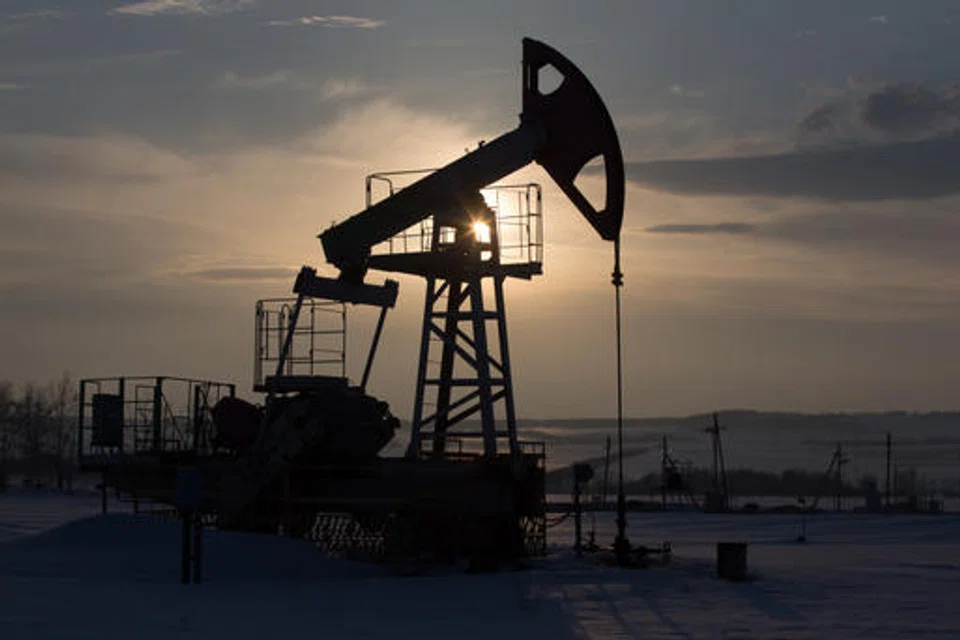
THE Singapore Exchange’s (SGX) favourite upstream energy plays – Rex International , Geo Energy Resources and RH Petrogas – began the year on the back foot, declining between 2 and 9 per cent so far.
Their declining market values against a backdrop of rising oil prices suggest that investors are growing concerned about execution issues and longer-term demand, as recessionary risks stack up.
Both Rex and RH Petrogas are exploration and production companies. The former has operations in Oman and Norway, and the latter operates in Indonesia. Geo Energy is an Indonesian coal miner.
All three stocks had been rising steadily from around the second quarter of 2021 to the first quarter of 2022, driven by the skyrocketing of oil prices from the pandemic lows.
Even as economic activities resumed and energy demand surged, oil prices were also buoyed in that period by tight market conditions.
The global crude benchmark Brent crossed the US$100 per barrel mark in March 2022 – the first time since 2014 – shortly after Russia invaded Ukraine.
That marked a high point, following which prices began to moderate. Brent spent last year safely below the US$100 per barrel mark, as energy demand turned out to be weaker than expected.
Crude pricing has lately begun to creep back up, as the conflict between Israel and Palestinian military organisation Hamas worsens. Yet, there has been little significant spillover for Singapore-listed energy stocks.
Of the three counters, only Geo Energy has drawn net institutional inflow this year – of S$6.3 million, SGX data indicated.
For the nine months ended September 2023, Geo Energy’s net profit fell 72 per cent to US$39 million, owing to a decline in both sales volume and the average selling price of coal. The company also reported a 34 per cent dip in revenue to US$351 million.
Geo Energy’s management believes that coal could gain importance this year as the Israel-Hamas conflict discourages investments in an Eastern Mediterranean pipeline that would transport natural gas to Europe.
In a press release accompanying its results, the company said that the outcome of such hesitance might be continued reliance on coal – a setback for the energy transition but a win for Geo Energy.
Shares of Geo Energy are down 2.8 per cent this year, sitting somewhere in the middle of the trio.
The worst performer has been Rex, down 9 per cent. The counter has been weighed by doubts over its diversification moves, as well as production stoppages at its Yumna oilfield in Oman.
In its latest production update this month, Rex said that production at Yumna resumed on Dec 10 last year following the replacement of a flowline.
In a report issued last November, UOB Kay Hian said that underperformance of the Yumna oilfield meant that Rex’s average production year to date stood at just over 9,000 barrels per day (bpd) – far from its 20,000 bpd target across various geographies.
Rex has booked a net institutional outflow of S$477,000 this year. Last year, it had an outflow of S$9.5 million.
The top performer among the three is RH Petrogas, down 1.6 per cent so far this year.
The company, which operates two production-sharing contracts in Indonesia, had a 24 per cent decline in revenue for the first half ended June 2023, to US$43 million, as oil prices fell.
Net profit fell 80 per cent to US$3.07 million over the same period, owing to higher production costs. There are expectations in the analyst fraternity over upside in its exploration and production endeavours over the course of this year, though.
The outlook for crude oil offers little excitement for shareholders of these three counters.
Oil prices could fare similarly to those in 2023 – when Brent averaged US$82.50 per barrel – the US Energy Information Administration (EIA) indicated in its recent short-term energy outlook report.
EIA warned that the Middle East conflict could disrupt supply and drive prices higher. If the United States Federal Reserve keeps rates higher for longer this year, however, the resulting slowing economy could hurt energy demand and drag oil prices back down.
TRENDING NOW

Once staunchly pro-China, Malaysian Chinese businesses are now distancing themselves from Beijing

Stocks to watch: HPL, Aims Apac Reit, Zico, Advanced Systems Automation, ComfortDelGro

‘How many will survive?’: Bubble fears arise as China’s humanoid robotics face reality check
Smaller board lots can’t fix a market run by three banks

