

South Korea to build nuclear plants to meet net-zero targets
 Add BT as a preferred source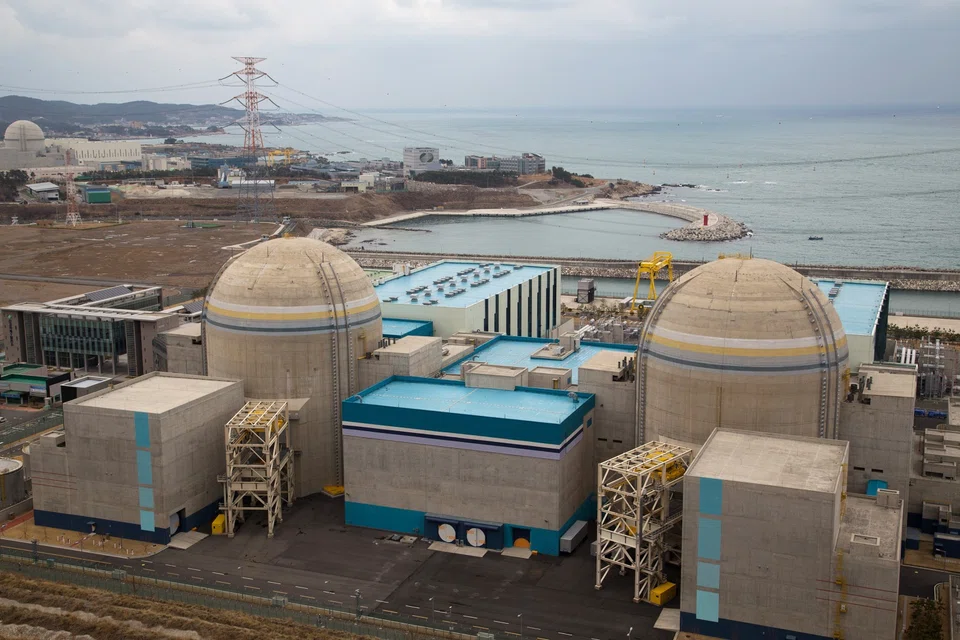
SOUTH KOREA will build 4 more nuclear reactors by 2030, and extend the life of 10 older units, as the new government backs atomic power as a key tool to zero out emissions.
Atomic energy will provide more than 30 per cent of the nation's electricity generation by the end of the decade, up from 27.4 per cent last year, the energy ministry said on Tuesday (Jul 5). The ministry didn't break down targets for the rest of the energy mix.
President Yoon Suk Yeol, who took office in May, was a staunch supporter of nuclear energy throughout his presidential campaign, claiming it should be utilised along with renewable sources to achieve emissions targets. While the country is maintaining the emissions goal set by the previous government, the ministry said on Tuesday that renewable energy's share will be "adjusted" from 30 per cent under the old roadmap and that a detailed plan will be formed in the fourth quarter.
"The fact that the new government is saying renewable energy will be adjusted at a 'reasonable level' basically means it will be lowering the renewable electricity target," Jang Daul, a government relations and advocacy specialist at Greenpeace East Asia based in Seoul, said by phone.
Under former President Moon Jae-in's administration, decarbonisation policies were set out along with plans to phase out nuclear energy, a policy that Yoon's office in April said could see electricity costs jump fivefold by 2050. The construction of the Shin Hanul No 3 and 4 reactors, which were scrapped under the previous government, will be resumed, the energy ministry said.
Separately, South Korea will expand its strategic reserves for oil and liquefied natural gas in a bid to increase price stability, according to Tuesday's statement. Crude stockpiles will increase to more than 100 million barrels by 2025, from 96.5 million barrels currently, while LNG reserves will rise to 18.4 million kilolitres by 2034 from 13.7 million, according to the statement.

The nation will also continue to diversify its oil and gas supplies by reducing its dependence on the Middle East, and push for more direct LNG imports by private companies, according to the ministry. BLOOMBERG
Decoding Asia newsletter: your guide to navigating Asia in a new global order. Sign up here to get Decoding Asia newsletter. Delivered to your inbox. Free.
Share with us your feedback on BT's products and services
TRENDING NOW

Buyer for England striker Harry Kane’s former mansion must pay £3.4 million after abandoning deal
Malaysian tycoon Vincent Tan’s sell-downs point to pruning rather than an exit plan
Asean must retain more value as its digital economy races towards US$2 trillion: Indonesian minister
EU and Asean at 50: time for bold action

