

South Korea refiners consider legal action over OW losses
Seoul
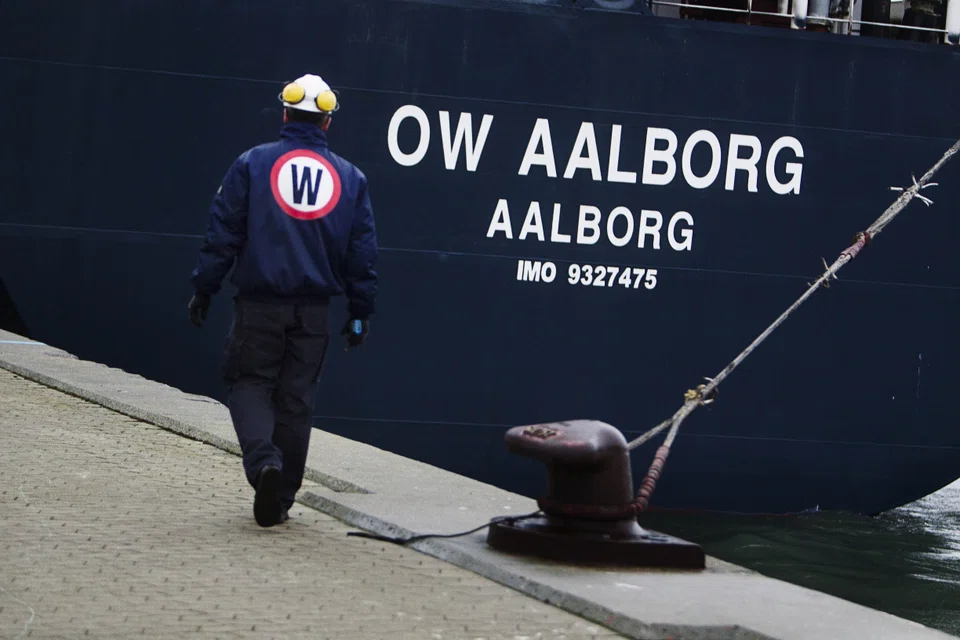
SOUTH Korea's two major refiners are considering legal action to recover losses tied to the collapse of the world's largest marine fuel supplier, Denmark's OW Bunker, which has started winding up its Singapore unit, industry sources said on Thursday.
OW Bunker filed for bankruptcy last Friday after an alleged fraud at a Singapore subsidiary, Dynamic Oil Trading, cost it at least US$125 million and banks refused to provide new credit lines, throwing the world's ship fuel market in turmoil. According to OW Bunker Far East Singapore's corporate records, Chay Fook Yuen, Bob Yap and Tay Puay Cheng of KPMG have been appointed as its liquidators.
OW Bunker and Dynamic Oil both listed ING Bank NV as a "chargee", meaning they have received some form of secured credit from the Dutch lender. This followed a series of legal actions by oil firms this week against the two Singapore units of OW Bunker, with the arrest of a ship fuel delivery barge Laguna on Wednesday and claims filed in the city state's courts totalling more than S$5 million. South Korean refiners are also contemplating legal action against OW Bunker.
"We are considering all possible legal actions . . . We don't have exact schedules over legal actions, though," a spokeswoman at SK Innovation Co Ltd, which fully owns South Korea's largest refiner SK Energy, told Reuters. She declined to comment on the size of the refiner's losses.
Another South Korean refiner GS Caltex Corp, a joint venture between GS Holdings and Chevron Corp, is also considering legal action, a spokesman said, without elaborating. He also declined to disclose the losses.
South Korea exports around 700,000 tonnes of bunker fuel oil a month on average, and OW traded and sold around 100,000-150,000 tonnes a month, according to traders estimates.
Fuel oil trading activity has slowed sharply in Singapore in the wake of the collapse of the world's biggest supplier, with sellers withholding credit and demanding guarantees of payment from customers, traders said on Thursday.
The bankruptcy of Denmark's OW Bunker, filed last Friday, has not only sent buyers scrambling for new stocks, but also caused sellers to tighten their credit policies to the extent of offering no credit at all, an unprecedented move in a market that relies heavily on open credit. "The whole market is on a credit lockdown. We used to give open account to a group of customers (and now) practically no one," said a trader at one of the major cargo sellers in the city state.
Traders said that buyers were now forced to provide letters of credit issued by banks, or pay cash upfront, squeezing thinly capitalised companies. The price of obtaining a letter of credit will vary from company to company, depending on its financial standing and relationship with its issuing bank. A trading source pegged the cost at about 0.04 per cent of the transacted value.
As a result of the credit squeeze, trade activity has slowed and even come to a standstill for some. "Credit is like the lubricants of businesses, without which things will slow down when companies start to clam up on it," said another Singapore-based fuel oil cargo seller. "It's similar to (what happened after) Lehman Brothers' (collapse)." REUTERS
TRENDING NOW

Nvidia reinstates Jensen Huang as CEO; Trump says move poses no national security risk

Indonesia’s coal tycoon Low Tuck Kwong replaced as Bayan Resources president-director

Nvidia surges 33% after reinstating Jensen Huang, reviving AI trade; stocks soar in US and Europe

Consider lowering homeownership barriers for some non-resident foreigners

