

Tanker operators first to gain from Iran's re-entry
But maritime players say there will also be pickings for offshore marine sub-sectors in the longer term
Singapore
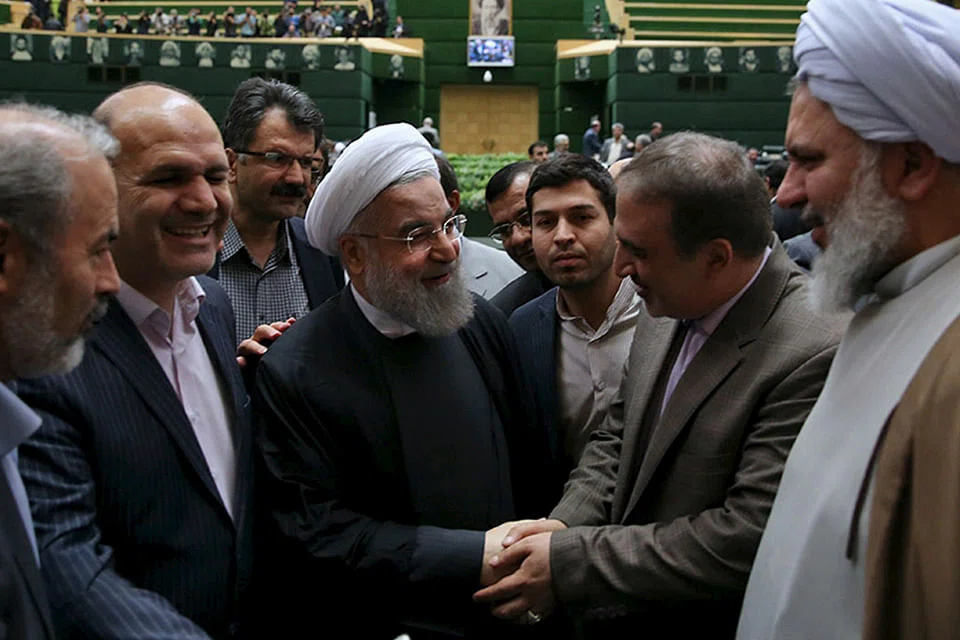
MOST maritime players speaking to The Business Times harbour hopes that the lifting of sanctions against Iran could turn out to be a boon for the sector.
Iran has taken the rap for the fresh slide in oil prices to under US$30 over the weekend, on fears that when the embargo on its oil exports and other trade sanctions are lifted, the market would be flooded with pent-up crude supplies.
However, the market had already been given a heads-up that sanctions against the Opec member would be lifted with the signing of the Iran nuclear framework deal last July.
Since the agreement was signed, 18.4 million barrels of crude have left Iran's Persian Gulf and 10.2 million were added to the floating reserves, translating to a net decrease of 8.2 million barrels, notes Ami Daniel, chief executive of vessel data analytics company Windward.
This lends weight to the view that the oil slump is likely to be temporary, since this development would have been priced in months ago.
However, Singapore Shipping Association's international committee chairman Rene Pedersen argues that the lifting of the sanctions will trigger further demand for oil tankers, ranging from Very Large Crude Carriers or VLCCs to small product tankers; these vessels will not just carry crude from Iran, but will also bring petrochemical products into the country.
This will open up additional charter opportunities for Singapore-flagged oil tankers, which make up about a third of the vessels under Singapore Registry of Ships.
Tanker operators are widely expected to be the first beneficiaries among maritime players with the lifting of the sanctions.
However, Synergy Offshore's chief executive Fazel A. Fazelboy has a more tempered view. He warns that operating day rates are already hitting US$100,000 in some tanker segments - matching the levels predicted by Morgan Stanley last March - levels which he says are not sustainable amid a developing global supply glut.
Mr Fazel, who has worked in the offshore and marine industry in the Middle East for 17 years, believes that the upswing in the tanker segment - deemed the last bright spot in international shipping - is unlikely to last beyond two more quarters.
Singapore-based offshore broker and consultancy M3 Marine's managing director Mike Meade expects those engaged in MMO (maintenance, modifications, and operations) or the supply of oilfield services to mature shallow-water field maintenance will be the first contractors to benefit from the lifting of the sanctions.
He also expects demand to pick up first for small- to mid-sized anchor-handling tug-supply vessels of between 5,000 and 8,000 bhp and for platform supply vessels of between 3,000 and 3,500 dwt.
However, he noted that Iran's Caspian Sea calls for deep-water and harsh-environment vessels and rigs. This land-locked body of water is also where he expects entrenched players such as Keppel Offshore & Marine's Caspian Shipyard Company to reap the gains as first-mover investors.
Mr Fazel, noting that the Chinese and Russian companies were active in Iran during the decade when the sanctions were still in place, said: "Sembcorp Marine and Keppel O&M, having established themselves as global centres of excellence, are considered favourably along with western-technology providers."
The lifting of sanctions will free up 14.1 million deadweight tonnes of Iranian tankers into the global trade network, said Vesselvalue Limited.
Iran's largest VLCC owner NITC, ranked sixth in the world, owns 37 VLCCs worth US$2.1 billion, Vesselvalue said.
More openings could crop up in the longer run for offshore marine players in upstream oil-and-gas activities; Iran has lined up US$130 billion of targeted investments in new oil-and-gas field developments in the country, said Mr Fazel. (Some US$100 billion will stem from foreign direct investments (FDIs); the government of Iran has pledged another US$30 billion.)
Iran's new petroleum contract, the terms of which are widely considered much improved from those offered in the pre-sanction 1990s, has already stimulated FDI interest. Shell, Total, Eni and Inpex have all expressed interest in investing in Iran, said BMI Research.
Notably absent from Iran's oil conference late last year were US majors such as Chevron and ExxonMobil, which, Mr Fazel remarked, are still being held back by certain sanctions against Teheran which the Obama administration has kept in place.
Between 50 and 70 projects - onshore, offshore, shallow and deep-water ones - have been identified for launch under the US$130 billion investment plan for the next three to five years, said Mr Fazel. These projects are expected to add 1 million barrels per day of crude output from new fields, and lift Iran's contribution to global crude supply to between 41/2 and 5 million barrels.
Aside from new projects, Iran will tap foreign expertise to extract oil and gas from existing fields such as the South Pars and Siri projects.
Mr Fazel said: "With oil at US$28, Iran realises it will not be effective to continue with their E&P (exploration and production) modus operandi."
However, he projects Iran's crude production cost to be between US$12 and US$15 a barrel, so it will remain economical even at the current prices.
Mr Fazel has attached caveats to investing in a country that is emerging from the decade-long sanctions. He describes Iran as a market still predisposed to lower-priced, older tonnage and which is still encumbered by a lack of a good banking system capable of handling international fund transfers.
This is still not stopping foreign investors from flocking to Iran.
As the Singapore Business Federation (SBF) said, nearly 20 per cent of its Middle East Business Group members have expressed interest in its upcoming business mission to Iran next month.
SBF's chief executive Ho Meng Kit said: "Singapore has been one of Asia's largest investors in Iran prior to the enhanced sanctions and we expect this to pick up in the longer-term."
SBF's members are also seeking business opportunities beyond the resurgent oil-and-gas sector in Iran.
READ MORE: Oil stumbles again as lifting of Iran sanctions adds to market woes
TRENDING NOW

What shattered Crystal Jade? How the culinary empire shrank from 120 to just 9 outlets

Thai brand Dr Pong takes T-beauty ambitions to Singapore as part of South-east Asia push
As Indonesia picks new vice-president to succeed Gibran, investors see risks and opportunities
Nvidia’s Jensen Huang fallout is a gift to billionaires Ambani and Adani

