Trump signals US will tap oil reserve to ease price shock
The Strategic Petroleum Reserve currently contains about 415 million barrels
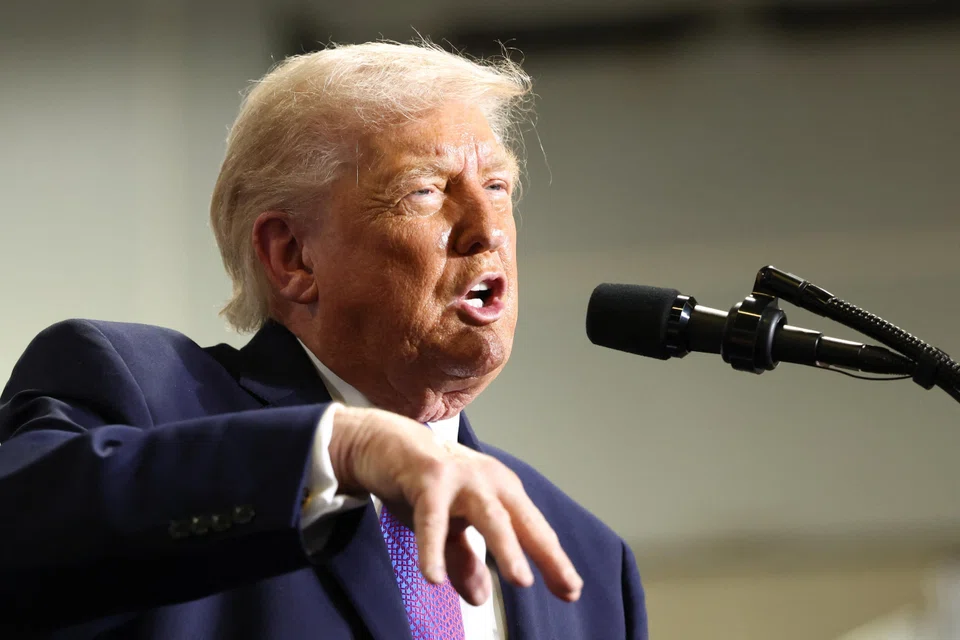
[WASHINGTON] US President Donald Trump indicated he would tap the US Strategic Petroleum Reserve to help ease oil prices that have soared amid the war with Iran and threaten to further squeeze American households worried about costs of living.
“I’m pleased to report that earlier today, the International Energy Agency (IEA) agreed to coordinate the release of a record 400 million barrels of oil from various national petroleum reserves around the world,” Trump said during an event in the Cincinnati area on Wednesday (Mar 11).
He said that the decision would “substantially reduce the oil prices, as we end this threat to America and this threat to the world”.
The announcement from the IEA, the largest-ever release, far exceeds the 183 million barrels that member states released in 2022 after Russia invaded Ukraine, as governments seek to contain the price spike driven by the Middle East war.
Trump did not specify how much oil he planned to release from the reserve. The president said that he would look to replenish the reserve after the drawdown in an interview earlier Wednesday with local station WKRC.
“We will do that – and then we will fill it up,” Trump said. “I filled it up once, and I will fill it up again. Right now, we will reduce it a little bit, and that brings the prices down.”
Trump is facing political pressure to address rising fuel prices that have been driven up by the spike in oil prices. November’s midterm elections will hinge in large part on Americans’ attitudes towards the cost of living, and the polls show the public giving the president poor marks for his handling of the economy.
The Strategic Petroleum Reserve currently contains about 415 million barrels, little more than half its capacity, following a series of drawdowns by the Biden administration. Those included a record sale of 180 million barrels to help lower petrol prices after Russia’s 2022 invasion of Ukraine.
The reserve was created after the Arab oil embargo in the 1970s in salt caverns across the US Gulf Coast. It has a maximum capacity of about 713.5 million barrels. On paper, the reserve has the capacity to release about 4.4 million barrels a day, according to the Energy Department’s website. It takes 13 days for oil from the system to reach the open market after the president orders a sale.

However, an analysis prepared by the Energy Department in 2016 said that the actual amount the reserve is capable of releasing may be limited to 1.4 million barrels to 2.1 million barrels per day.
During the 2022 release following Russia’s invasion of Ukraine, the amount never topped more than 1.1 million barrels a day, according to an analysis of Energy Information Administration data by ClearView Energy Partners.
So far, the IEA’s plan to bring down prices by releasing 400 million barrels of crude into the market is having a limited impact. US oil futures continued to rise on Wednesday after the agency announced the coordinated release, settling up 4.6 per cent at US$87 a barrel.
That’s in part because nations have provided few details about the plan, said Jason Bordoff, founding director of Columbia University’s Center on Global Energy Policy.
“Who’s doing what? How much?” Bordoff said. “And really importantly – how much will come per day into the market?”
The prices Americans pay at the pump have a unique role in how voters perceive inflation and the economy more broadly. And while Trump spent months hailing lower petrol prices, that advantage has been lost as the war sent global oil prices soaring.
Mixed messaging from Trump and his aides over the war has spurred volatility in equity and energy markets as traders struggle to make sense of conflicting comments on how long the conflict will last and the administration’s endgame. Trump on Wednesday reiterated claims that Iran’s military capabilities have been significantly reduced, but added: “We don’t want to leave early, right? We have got to finish the job”.
Trump has insisted that the price hike is temporary – casting the war as an “excursion” – and will ease after the conflict ends, but the administration has also floated other steps to help lessen the blow for US households.
Trump said that his administration is “working to keep the oil flowing”. The president has promised to lift oil sanctions and dispatch the US Navy to escort tankers through the Strait of Hormuz, a critical passageway all but choked off since hostilities began.
And he’s warned Iran against any attempt to lay mines across the strait, even as he said on Wednesday that he did not believe Tehran had done so yet. Trump said that the US had “knocked out” 31 mine-layers. BLOOMBERG
Decoding Asia newsletter: your guide to navigating Asia in a new global order. Sign up here to get Decoding Asia newsletter. Delivered to your inbox. Free.
Share with us your feedback on BT's products and services