

Trump’s ‘drill baby, drill’ push rattles oil markets, but economics may limit impact
The newly sworn-in president promised to export US energy ‘all over the world’, which goes against Biden’s climate-focused policies

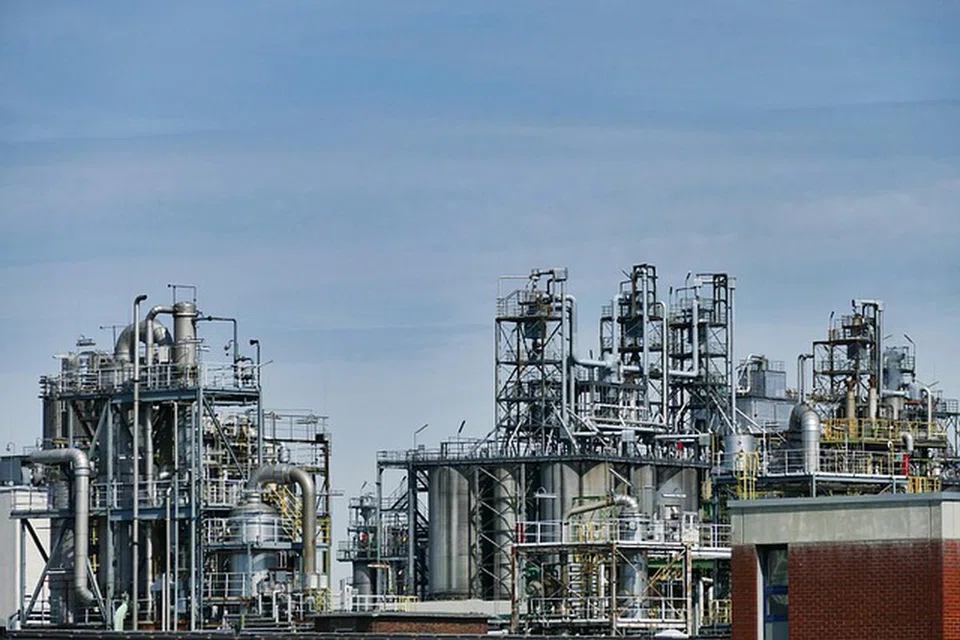
ENERGY markets are under pressure, with oil prices trending lower as traders continue to react to new US President Donald Trump’s pledge to ramp up US oil production, though market watchers say Opec+ production and global economic conditions remain the primary drivers of short-term price movements.
Since Trump’s inauguration on Monday, Brent, the global benchmark, has lost some 1.5 per cent to US$78.76 per barrel as at Thursday’s (Jan 23) morning session in Asia while West Texas Intermediate (WTI) was down nearly 2 per cent to US$75.22 per barrel.
The futures market also experienced a sell-off, which Ryan Fitzmaurice, senior commodity strategist at Marex, described as a negative knee-jerk reaction to Trump’s proposed tariff plans on oil imports.
“On the surface, the announcements were not fundamentally bearish, but the added uncertainty and market volatility led to a sell-off in oil futures as traders derisked,” he remarked.
Declaring a “national energy emergency”, Trump vowed to unleash America’s oil potential by ramping up production, refilling strategic reserves, and imposing tariffs on oil imports.
The newly sworn-in president promised to export US energy “all over the world”, which goes against previous president Joe Biden’s climate-focused policies. The move also reignited debate over the future of fossil fuels – though such plans are likely to face legal and political hurdles, as they did during his previous term in office.
“We will be a rich nation again, and it is that liquid gold under our feet that will help us to do it,” said Trump in his inauguration address, signalling his intent to roll back bans on drilling in US coastal waters.
His plans to impose tariffs on US oil imports from Canada, Mexico and potentially others, and to stop importing Venezuelan oil, reversing a Biden-era policy that eased sanctions on Venezuela have further unnerved traders already grappling with a volatile energy landscape.
The market reaction was swift, albeit measured with crude benchmarks Brent and WTI.
Sim Moh Siong, commodity and currency strategist at the Bank of Singapore, attributed the muted price retreat to the fact that markets had already largely priced in the anticipated shift towards fossil fuels under Trump 2.0 – a transition that will take time to materialise.
Furthermore, while Trump aims to simplify regulations to encourage more oil drilling under his “drill, baby, drill” mantra, whether companies actually drill – or not – is a function of economics, said Sim.
He noted that selling oil at lower prices at higher production would not be economically viable for companies if they do not see a rise in profitability, which would, in turn, limit any significant drop in oil prices.
Chai Jingjing, senior portfolio manager of Allianz Global Investors, echoed the sentiments. She said that the Trump administration’s production growth target of three million barrels per day, from the current annual average growth pace of 1.8 million barrels per day between 2018 and 2023, seems challenging in the short term for 2025.
Chai added that US oil producers lack incentives to increase capital expenditure and production, preferring instead to maintain record-high cash reserves and pay out dividends. This is on top of the long-term investment needed for oil-production infrastructure.
Tipping point
Priyanka Sachdeva, senior market analyst of Phillip Nova, noted that while Trump’s reversal of Biden-era restrictions to crank up production is likely to apply downward pressure on oil prices in the medium term, it may not affect supply immediately.
Instead, Macquarie strategists point out that the proposed tariffs and US sanctions on Russia’s energy sector are critical policy factors that could influence oil market fundamentals in a year when supply is expected to significantly exceed demand.
The team forecasts an FY2025 surplus of more than one million barrels per day – assuming no Russian disruption – as supply growth mainly from the Americas outweighs sub-trend demand growth of 1.1 million barrels per day.
Market watchers further suggest that production levels of the Organization of the Petroleum Exporting Countries and its allies (Opec+) and global economic conditions play a pivotal role in shaping oil prices in the short term.
“The interplay between US expansion and Opec+ discipline will define the trajectory of oil, with prices likely hovering between US$70 and US$85 per barrel, barring any major geopolitical shocks,” said Phillip Nova’s Sachdeva.
Rystad Energy’s global head of commodity markets Mukesh Sahdev noted that Opec+ policies and underinvestment are key in managing the supply-demand imbalance in oil markets.
Last year, Opec+ implemented supply cutbacks to support oil prices, but demand growth fell short of expectations, while non-Opec+ supply outpaced projections.
Rystad Energy projects that the unwinding of Opec+ barrels could push oil prices down by around US$20 per barrel, which it sees as the only way to curb the growth of non-Opec+ supply.
“The question is whether or not this is the strategy Opec+ will really want to take,” the team remarked, noting that 2025 is likely to be a tipping point when supply and demand could balance within the typical range of -1.5 million to 1.5 million barrels per day.
Whither crude prices
The market consensus for the year remains bearish due to a supply surplus, driven by spare capacity from Opec+ production, rising output from non-Opec+ countries, and sluggish demand growth.
Bank of Singapore’s Sim expects oil prices to stay range bound, with 12-month forecasts for Brent to settle at US$75 per barrel and for WTI to be US$71 per barrel.
Marex’s Fitzmaurice expects oil prices to trade between US$70 and US$90 per barrel for much of the year. While low stockpiles and the continuation of Opec+ cuts until at least April create a supportive price environment, ample spare capacity is likely to limit significant price growth.
“Looking at the big picture, we expect Trump’s energy policies to keep oil prices on the low end of recent history to help consumers, while keeping US energy producers’ profitability in mind,” said Fitzmaurice.
He added: “If Trump returns to a maximum pressure campaign against Iran and ratchets up oil sanction enforcement, then that would make room for the US and other Opec+ members to grow without tipping the market into a big surplus.”
Potential inflation on the horizon – again
Despite Trump’s pledge to boost US oil production, his proposed energy tariffs could ultimately drive up energy costs and contribute to inflationary pressures.
Chai from Allianz Global Investors noted that potential US tariffs on Canadian oil and gas imports could offset the long-term downward pressure on energy prices caused by anticipated increases in US production and exports.
“Given our belief that the US production target cannot be fully achieved immediately, immediate impacts from tariffs could lead to higher energy prices, with US consumers likely bearing the inflationary costs, at least in the short term, if energy production from other regions remains unchanged,” said Chai.
Phillip Nova’s Sachdeva noted that if Trump’s global tariffs and rising oil prices align, emerging markets could face heightened fiscal pressures and renewed inflationary trends, as seen with elevated oil prices in 2022.
While oil prices may contribute to inflationary pressures, Bank of Singapore’s Sim noted that if oil prices remain range-bound, the key drivers of inflation will be the performance of major economies.
“What drives core inflation is ultimately wage pressures that are tied to the strength of the health of the labour market,” said Sim, adding that commodity prices are inherently volatile and tend to even out over the long term.






