

US, allies discuss 60 million-barrel oil-reserve release
 Add BT as a preferred source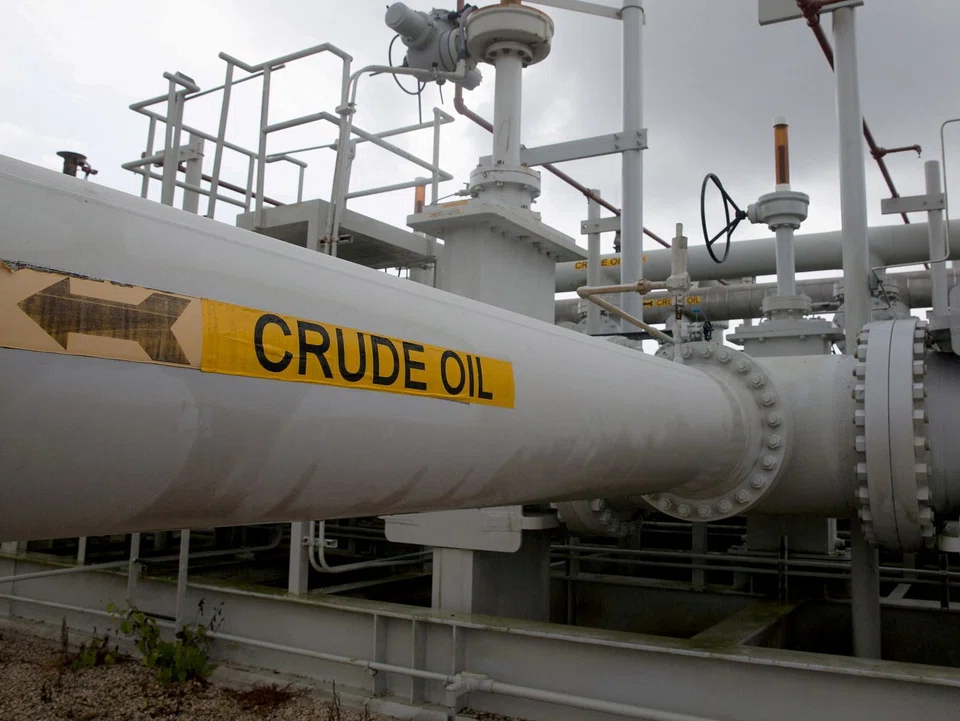
DeeperDive is a beta AI feature. Refer to full articles for the facts.
[WASHINGTON] The US and its allies are discussing a coordinated release of about 60 million barrels of oil from their emergency stockpiles after Russia's invasion of Ukraine pushed crude prices above US$100.
The deliberations are currently focused on a release of 30 million barrels from the US Strategic Petroleum Reserve and an equivalent amount from a group of other countries, according to three people familiar with the matter, who asked not to be identified discussing non-public deliberations.
No decisions have been made and the discussions could continue for several more days, with the US coordinating with other members of the International Energy Agency, the people said.
Crude prices shot above US$105 a barrel in London last week for the first time since 2014 on fears that oil and gas supplies from Russia could be disrupted, either by the conflict in Ukraine or retaliatory western sanctions. International benchmark Brent remained above US$100 on Monday, exacerbating an inflationary surge for energy-consuming nations.
European Union member states expressed readiness to take part in a coordinated release of oil reserves at an appropriate moment, EU energy commissioner Kadri Simson said on Monday after an emergency meeting.
"Releasing part of these stocks is a powerful tool that member states can use but the right conditions have to be in place," she said. The IEA will hold an extraordinary ministerial meeting on Tuesday. Simson will attend.
Navigate Asia in
a new global order
Get the insights delivered to your inbox.
The US Energy Department didn't respond to a request for comment. The IEA declined to comment.
The threat of a worsening cost-of-living crisis for millions has jolted the leaders of major energy-consuming nations, who are now considering the first IEA-coordinated release from emergency oil reserves since the Libyan civil war of 2011.
US officials who were involved in that action a decade ago are participating in the current deliberations, people said. Consultations have also included officials from Saudi Arabia, the United Arab Emirates and other Opec+ nations, two people said. A senior Opec official said the group had not been consulted on a stock release.
A decision is expected within days and US officials are also talking with allies about the possibility of discharging more stockpiled crude later, according to two people.
Russia's aggression has spooked a market that was already looking tight as a vigorous recovery in demand from the pandemic ran into supply constraints due to under-investment and disruptions around the world. Trading giants Vitol Group and Trafigura expect triple-digit prices to continue for a prolonged period.
Surging gasoline costs are a particular risk for US President Joe Biden, who faces midterm elections with slipping approval ratings. He already failed to tame fuel prices with an initial release of crude from emergency stocks announced last year.
Traders said that initiative was undermined by its limited scope, with most of the barrels being offered on condition of later return.
Previous deployments of IEA oil stocks also came during the 1991 Gulf War, and the onslaught of hurricanes Rita and Katrina in 2005, making this just the fourth such intervention in the IEA's five-decade history. The IEA's 30 members, drawn from the Organization for Economic Cooperation and Development, include the US, Japan, Germany and France. BLOOMBERG
Decoding Asia newsletter: your guide to navigating Asia in a new global order. Sign up here to get Decoding Asia newsletter. Delivered to your inbox. Free.
Copyright SPH Media. All rights reserved.
TRENDING NOW

Shelving S$5 billion office redevelopment plan proved ‘wise’ as geopolitical risks mount: OCBC chairman

Eurokars Group introduces rental car franchises Enterprise Rent-A-Car, National Car Rental, and Alamo to Singapore

20 photos that show how dramatically Singapore has changed in two decades
Singapore’s key exports up 15.3% in March from electronics surge, exceeding forecasts

