

US rare earth buyers still see China curbs despite Trump deal
The Asian nation’s overall exports of the raw materials have risen since last year
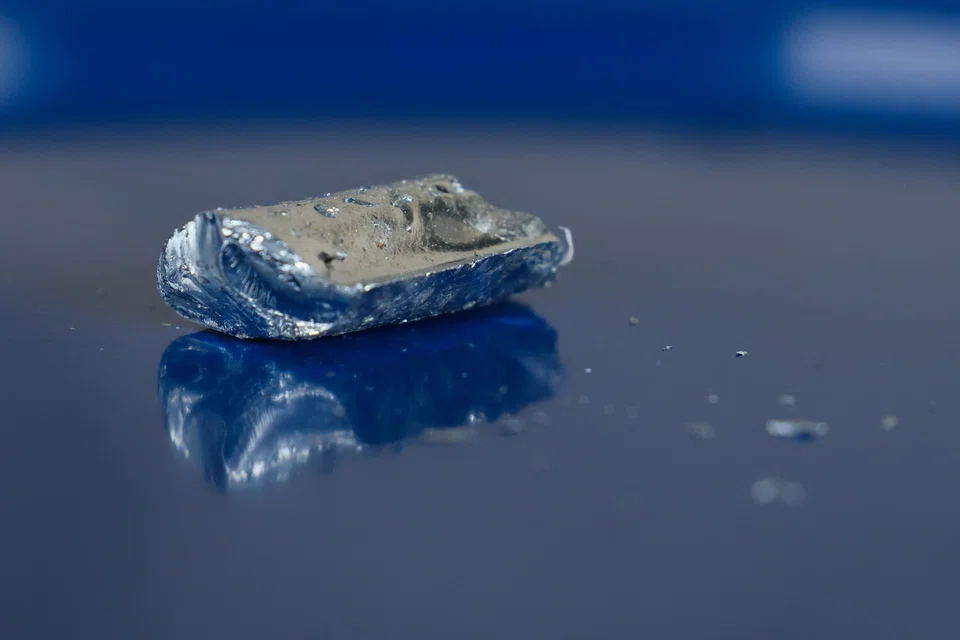
[NEW YORK] China is still restricting the rare earth elements that the US needs to produce its own permanent magnets and other products, even after US President Donald Trump reached a deal with his Chinese counterpart in October to lift restrictions on the supplies, according to market participants.
More than a dozen consumers, producers, government officials and trade experts said that while China has boosted deliveries of finished products, primarily permanent magnets, the US industry remains unable to acquire the inputs needed to make those items on its own, a key priority for the administration. The sources asked not to be identified, discussing matters that are not public.
The reduced trade highlights continuing tensions in the US-China relationship in the months since Trump and Xi Jinping hammered out a truce in South Korea on Oct 30, with the US cutting tariffs and China pledging to restore rare earth supplies. At the time, Trump said the deal amounted to the “de facto removal” of a range of limits China had imposed.
By restricting deliveries of raw materials, China is hamstringing US efforts to build its own industry to process rare earths into magnets used in everything from consumer goods to missile guidance systems. The Trump administration has made developing domestic production capacity for permanent magnets and other rare earth products a key priority after China spent years building a global monopoly.
The White House did not respond to a request for comment for this article. Administration officials have said in recent weeks that China is complying with the terms of the deal on rare earth supplies.
Official Chinese data released Dec 20 showed magnet supplies to the US dropped 11 per cent in November from the month before, but remain above the lows seen when Beijing restricted them in April. Overall, China’s exports of rare earth elements and products, including magnets, were up 13 per cent in November from the month before, according to Bloomberg calculations using official customs data.
A spokesperson with China’s Commerce Ministry said on Thursday (Dec 25) that fluctuation in monthly trade data is “normal”, adding the country is committed to maintaining the stability of global supply chains. Beijing has said it’s already approved some applications for rare earth exports, but continues to restrict supplies that could go to military contractors.
Industry officials and market participants said that the reality is different for US players.
“People aren’t getting materials out of China, you are not getting dysprosium metal or oxide if you are a US entity,” Scott Dunn, the chief executive of Noveon Magnetics, said, citing his contacts with others in the industry. Noveon is one of just a few US makers of permanent magnets. The company does not buy rare earth inputs from China, but Dunn said some of his customers do.

“Outside of China, the world can produce 50,000 tonnes of magnets, but there isn’t even close to the equivalent in rare earth minerals to support those tons outside of China,” Dunn said. “China restricts materials far beyond what it restricts in magnets to keep that dynamic in place.”
To be sure, Beijing’s easing of restrictions on products such as magnets made from rare earths has, for the moment, removed the risk that consuming industries such as autos and technology might have to shut down production, according to Gracelin Baskaran, director of the critical minerals security programme at the Center for Strategic and International Studies in Washington.
“Given we import further down the supply chain, companies don’t feel that interruption nearly as much,” she said. “Because we import more magnets, the impact is much softer.”
China’s overall exports of the raw materials have risen since last year, but the US has not received a similar uptick, according to government data. The stasis for US firms continues even as the European Union said Dec 15 that China started granting licenses with lengthier terms to allow European companies to obtain rare earths.
The US and China still have not reached an agreement on key details of how Beijing will free up sales of rare earths, according to a source familiar with the negotiations. Bloomberg News reported last month that the two sides had given their teams until the end of November to agree on terms for so-called “general licenses” for exports. This has left market participants worried that the truce could collapse.
“We reached various temporary agreements in London, in Geneva, in South Korea and they were reneged,” Baskaran said. “So no agreement so far has proved to be final, and that gives industry a level of skittishness that’s justified.”
The looming expiration of six-month temporary export licenses China approved in early summer also means US companies will be seeking renewals at the same time, potentially creating a backlog of applications. Buyers worry that China, as it did in May and June, could slow approvals, a move industry players view as a form of export control.
“In discussions with Chinese counsel, the recommendation is to proceed with license applications before the pause expires,” said Mark Ludwikowski, the chair of Clark Hill’s international trade practice. “They could pull the plug on this at any point if this goes south.” BLOOMBERG
Decoding Asia newsletter: your guide to navigating Asia in a new global order. Sign up here to get Decoding Asia newsletter. Delivered to your inbox. Free.
Share with us your feedback on BT's products and services
TRENDING NOW

The only common thing in S-E Asia is that we all eat rice: Cisco’s Asean president

Philippine power giant First Gen rebuffs foreign offers, plans up to US$2.6 billion in expansion

Singapore to use ‘every legal and regulatory lever’ against companies linked to haze: Shanmugam

Once staunchly pro-China, Malaysian Chinese businesses are now distancing themselves from Beijing

