

Vietnam plans cut in environment tax on fuel as prices soar
 Add BT as a preferred source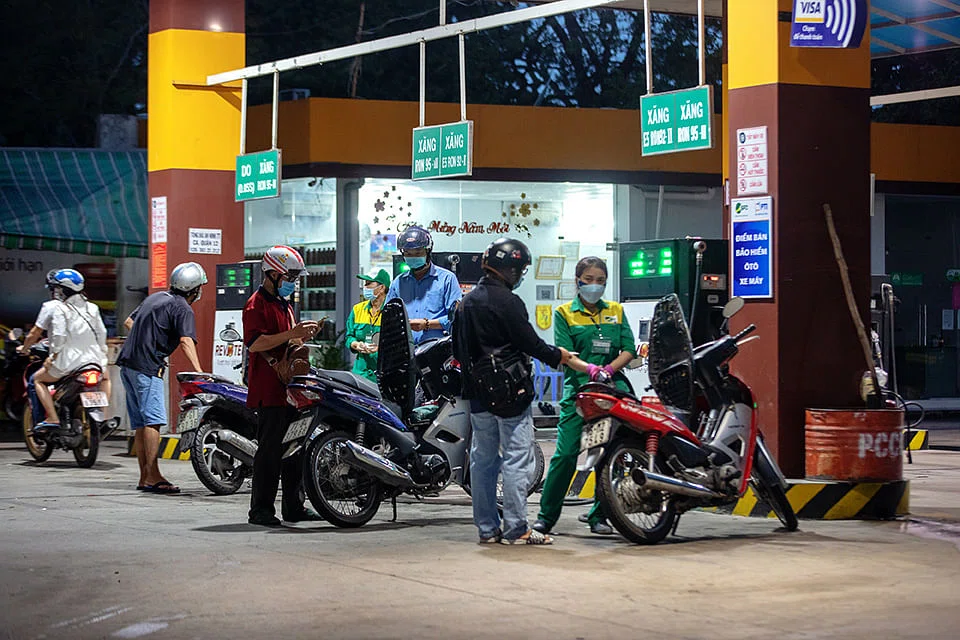
DeeperDive is a beta AI feature. Refer to full articles for the facts.
[HANOI] Vietnam's finance ministry on Thursday (Mar 3) said it would propose to the government a cut in environment tax on fuel, amid soaring energy prices globally.
The ministry is seeking approval to lower the tax by 25 per cent on petrol to 3,000 dong (S$0.18) per litre, and reduce the tax on diesel fuel and lubricants to 2,000 dong per litre. Tax on kerosene would be cut by half to 500 dong per litre.
"Domestic petrol prices recently rose in line with a global surge in energy prices but that has caused great impacts on businesses and people's spending, and put pressure on inflation," the ministry said in a statement.
Vietnam's consumer price index in the first 2 months rose 1.68 per cent from a year earlier, led by an increase in transport costs, official data showed, with petrol prices up 45.3 per cent.
On Tuesday, Vietnam raised its RON92 petrol price by 2.1 per cent to a record high 26,071 dong ($1.14) per litre.
The ministry estimated that with a cut in effect from April to year-end, environment tax collection would be reduced by about 12 trillion dong ($525.42 million) and the average consumer price index would be 0.67 per cent lower.
Navigate Asia in
a new global order
Get the insights delivered to your inbox.
The South-east Asian country aimed to keep inflation below 4 per cent for 2022.
Vietnam had earlier cut environment tax on jet fuel to help the airline industry until the end of 2022. REUTERS
Decoding Asia newsletter: your guide to navigating Asia in a new global order. Sign up here to get Decoding Asia newsletter. Delivered to your inbox. Free.
Share with us your feedback on BT's products and services
TRENDING NOW

China pips the US if Asean is forced to choose, but analysts warn against reading it like a sports result
Beijing’s calculated silence on the Iran war
Shelving S$5 billion office redevelopment plan proved ‘wise’ as geopolitical risks mount: OCBC chairman
Vietnam formalises new state leadership, redefining ‘four pillars’ power balance

