

Vietnam's rice policy taking a toll on farmers
Can Tho, Vietnam
VIETNAM'S drive to become one of the world's leading rice exporters is pushing farmers in the fertile delta region to the brink, with mounting costs to the environment, say some scientists.
The communist country is already the world's second- largest exporter of the grain, but intensive cultivation, particularly the shift to producing three crops a year, is taking a toll on farmers and the ecosystem. "Politicians want to be the world's No 1 or 2 rice exporter. As a scientist, I want to see more being done to protect farmers and the environment," said Vo Tong Xuan.
A major famine in 1945 and food shortages in the post-war years led to the government adopting a "rice first" policy. This now generates far more of the crop than is needed to feed Vietnam's 90 million population and has catalysed a thriving export industry.
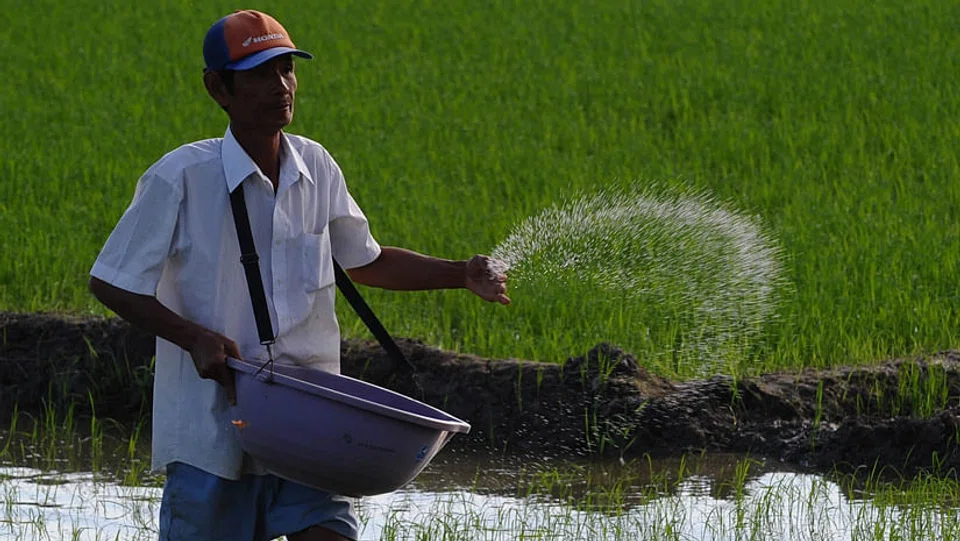
Rice yields have nearly quadrupled since the 1970s, official figures show, thanks to high-yield strains and the construction of a network of dykes that allow farmers to grow up to three crops a year. The amount of land under cultivation in the Mekong Delta has also expanded and quotas are in place to prevent farmers from switching to other crops.
But scientists are questioning who really benefits. According to Mr Xuan, farmers don't reap the rewards of the three-crop system - the rice is of low quality and farmers spend more on pesticides and fertilisers, which become less effective year by year. He argues that the delta would be better off if farmers cultivated a more diverse range of crops, including coconuts, with just the most suitable land used to grow rice.
The country should consider abandoning the third crop and focus on improving quality and branding to sell Vietnamese rice at higher prices, he said.
The bulk of Vietnam's rice is exported at cut-price costs on government-to-government contracts through state- owned enterprises (SOEs) like the Southern Food Corporation, known as Vinafood 2. "Over the last five years, the trend is towards lower-quality rice," admitted Le Huu Trang, deputy office manager at the firm.
Some argue that such SOEs have a vested interest in maintaining the status quo as they earn lucrative kickbacks from the huge contracts.
But even as saltwater intrusion, drought and flooding are on the rise in the delta - to say nothing of agricultural chemical pollution - it is also hard to convince farmers to change. "The prevailing mindset is to grow three crops . . . we have to explain two crops is better," said Nguyen Tuan Hiep of the Co Do Agriculture company.
Over the last 20 years, Co Do - which is state-run but a flagship model of how the industry could evolve - has identified the best rice-growing land in the delta and helped farmers expand their farms. It now works with 2,500 families on 5,900 hectares of land, enough for each family to make a living - typically the average rice farm in the delta spans less than one hectare.
The firm invests heavily in high-quality seeds and improving irrigation, while also advising farmers on the best chemicals to use. "Two crops is more sustainable long term - the soil is not degraded, the environment isn't polluted, and value of the rice increases," Mr Hiep said.
Climate change is another factor threatening the delta, according to the World Bank Group's vice-president and special envoy for climate change, Rachel Kyte. Ultimately, Vietnam has tough choices to make, including whether to help people transition from a rice- based economy to aquaculture (fish or shellfish farming) or other crops, she said.
The environmental costs of maintaining Vietnam's level of rice production are also rising. The system of dykes, which blocks flood water, is preventing soil nutrients from flowing freely and over time "soil fertility will fade", said Tran Ngoc Thac, deputy director of Vietnam's Rice Research Institute. AFP
TRENDING NOW

Nvidia reinstates Jensen Huang as CEO; Trump says move poses no national security risk

Indonesia’s coal tycoon Low Tuck Kwong replaced as Bayan Resources president-director

Nvidia surges 33% after reinstating Jensen Huang, reviving AI trade; stocks soar in US and Europe

Consider lowering homeownership barriers for some non-resident foreigners

