

World Gold Council chief aims to make gold as attractive and liquid as swaps
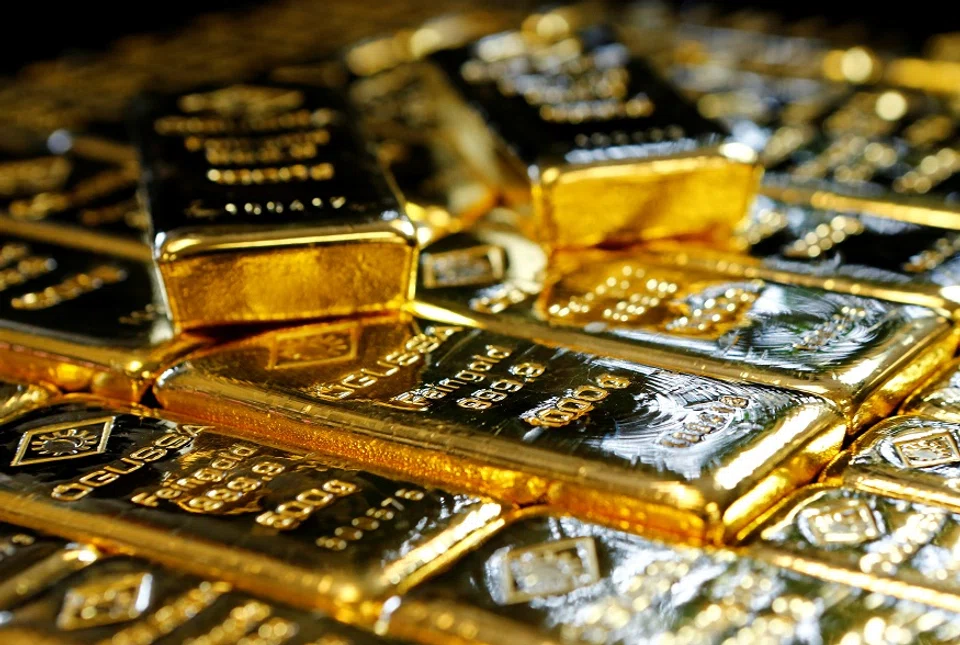
WHILE gold is often considered to be a safe-haven asset, the precious yellow metal falls short of being classified as a “high-quality liquid asset”, which is a key factor deterring investors, said the World Gold Council’s (WGC) chief executive David Tait.
In an interview with The Business Times in Singapore on Tuesday (Mar 26), he noted that one key determinant for investment managers is the return on capital. The funding ratio for gold currently stands at around 85 per cent, he said.
Funding ratio
For instance, if a bank wanted to lend US$100 million worth of gold, it would have to keep aside cash or Tier 1 capital to the tune of US$85 million.
“This will cost you tons to do nothing really, so your return on capital is derisory. For other assets, you have to keep no capital aside, so your return is 100 per cent,” Tait added.
Bringing gold’s funding ratio down to the equivalent of fully liquid cash is quite a stretch, but Tait said lowering the ratio to about 50 per cent would be “a massive step”.
Prior to assuming his role at the WGC in November 2018, Tait held senior trading roles at Credit Suisse and UBS Investment Bank.
As an investment banker, he had shuttered the commodities division at Credit Suisse because he felt that the cost of trading gold and other commodities then was significantly higher than the cost of trading other asset classes.
Visible, usable gold
When he entered the gold market, Tait observed several issues, including the absence of trade reporting. This led to a significant time gap between delivery and payment stages in transactions, sometimes as long as five hours. This stood in stark contrast to the efficiency of the US dollar swaps market, he noted.
Other key issues included low trust in the over-the-counter markets and the retail sector, the lack of transparency, and the overall accessibility of gold to investors.
Now at the helm of the WGC, one of Tait’s top priorities is to make gold “as visible and usable as possible”.
He compared gold to credit cards today, which do not toggle between different currencies and instead convert certain amounts “backwards and forwards” from one currency to another.
“My goal is really to try and find a mechanism where you can transfer a gold unit that doesn’t require a conversion mechanism,” he said.
“My intention is to make it a low-capital, low-risk, easily usable financial asset. If this happens, it (might) bring a gazillion dollars to the gold market, which is what I think will happen.”
Currently, the way gold is transacted in a market requires a conversion to another unit like a fiat currency or actual cash, which Tait said is a “barter or leap of faith”.
Regional initiatives
The WGC has regional initiatives with organisations such as the Singapore Bullion Market Association, International Indian Bullion Exchange, Shanghai Gold Exchange, and UAE authorities.
Under such partnerships, the council aims to, among other things, make gold and fungible markets more accessible, and help make processes in the industry more transparent, standardised and easy.
On the corporate end, the council has also been working to raise awareness on the positive impact of large-scale gold mining in local communities.
Gold has had a good run so far this year, hitting a new record high of US$2,200 per ounce last week after the US Federal Reserve’s latest meeting last week renewed dovish market sentiments.
Tait said that as things stand, he is unable to envision a “scenario where gold (prices) do not increase”.
He reckoned markets should pay attention to geopolitical and geo-economic factors such as the possibility of countries in the European Union printing debt to finance a massive rearmament, and investors in China turning to gold because of the depreciation of its other asset classes such as currency, real estate and equities.
TRENDING NOW
Motoring tycoon Peter Kwee is back in court: Here are his previous legal battles

Demand, tech capabilities position Apac and AI as Skyscanner’s next growth frontiers: CEO Bryan Batista
Beyond the greenback, Vietnam’s big borrowers turn to Asian-currency bonds
Nvidia’s outlook cut to stable by Moody’s on governance concerns

