The world’s copper squeeze is set to intensify on AI and defence spending: S&P
Newer sources of demand are also gaining scale
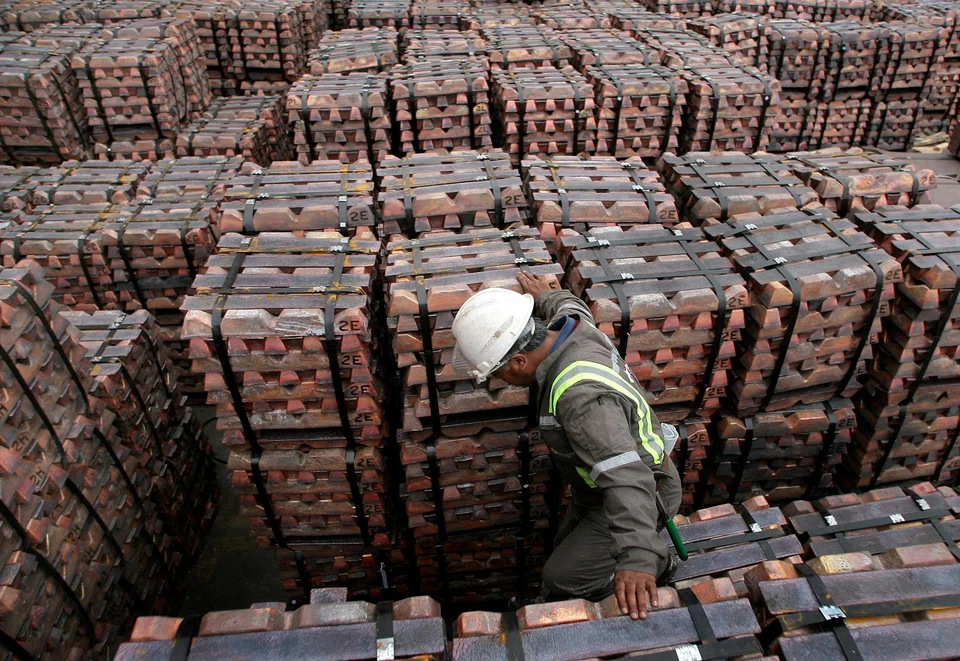
[NEW YORK] The race for artificial intelligence (AI) and surging defence spending are set to intensify a projected shortage of copper as producers struggle to expand, according to a new study by S&P Global.
Demand growth is accelerating just as mine supply faces structural limits, raising the risk that copper becomes a bottleneck for economic growth and technological expansion, S&P Global wrote on Thursday (Jan 8) in a report backed by the mining industry.
Copper has soared to record highs above US$13,000 a metric tonne in London, driven by a slew of mine outages and traders’ moves to stockpile the metal in the US ahead of possible Trump administration tariffs. While the flow of copper into US warehouses has sent prices beyond levels implied by underlying consumption, new areas of demand signal an even tighter market in the longer term.
“AI and data centres really weren’t even on the radar three years ago,” Aurian De La Noue, head of energy transition and critical metals consulting at S&P Global, said. “What this study shows is that the world is tracking towards a supply deficit even before you consider these new growth vectors.”
S&P Global sees global copper demand rising 50 per cent from today’s levels to 42 million metric tonnes by 2040. While traditional sources such as construction, appliances, transportation and power generation continue to account for most copper demand, the biggest share of growth is coming from energy-transition uses, including electric vehicles, renewable power, batteries and grid expansion.
Newer sources of demand are also gaining scale. Copper consumption tied to data centres and AI infrastructure is expected to surge as global installed data-centre capacity increases almost fourfold by 2040.
Demand from AI, data centres and global defence spending could roughly triple by 2040, adding four million tonnes of consumption combined, the study found.
S&P Global also identified another potential source of demand: humanoid robots. Although the technology is in the early stages, one billion humanoid robots in operation by 2040 would mean about 1.6 million metric tonnes of copper required annually, or about 6 per cent of current consumption, according to the study.
But worldwide copper production is expected to peak at about 33 million tonnes in 2030 as ore quality deteriorates at existing mines and new projects struggle with permitting, financing and construction hurdles.
That would leave a 10-million-tonne gap, the study finds, even after accounting for a sharp increase in recycled copper, which is expected to more than double to 10 million tonnes over the period.
To be sure, such a supply deficit is largely hypothetical, with consumption limited to what’s available. As prices rise, copper could be engineered out of some products and supply expansion projects could become more profitable.
The supply challenge is compounded by long development timelines, rising costs and a highly concentrated supply chain, leaving the market increasingly vulnerable to disruptions as demand accelerates, S&P wrote.
Sky-high prices are a boon for the industry. But there are no guarantees they will remain at those levels, said S&P Global vice-chairman Daniel Yergin, who co-chaired the study.
“We would be reluctant to say that this proves now that prices are on a stable higher plane,” Yergin said.
The study received financing from the biggest names in mining, such as BHP Group and Rio Tinto Group, as well as traders Trafigura and Gunvor and even Google. BLOOMBERG
Decoding Asia newsletter: your guide to navigating Asia in a new global order. Sign up here to get Decoding Asia newsletter. Delivered to your inbox. Free.
Share with us your feedback on BT's products and services