

WTI June futures in spotlight after US crude's crash

Singapore
ANXIETY over inadequate oil storage that led to a historic crash in US crude West Texas Intermediate (WTI) last month has yet to ease but experts reckon that there is no need to brace for a renewed carnage in the lead-up to next week's expiry of WTI June futures.
It's a case of once bitten, twice shy.
"Availability of storage remains tight in the US and, in theory, WTI could go negative again this month. However, people should have learnt their lesson from last month's experience and, unless able to take delivery, will avoid being caught long in the days up to expiry," S&P Global Platts global director of analytics Chris Midgley told The Business Times.
As the WTI June futures closes in on its settlement on May 19, the pace of contract unwind is being closely watched after last month's price collapse of the WTI May contract to negative territory - once deemed unimaginable - which will be hard to forget for very long.
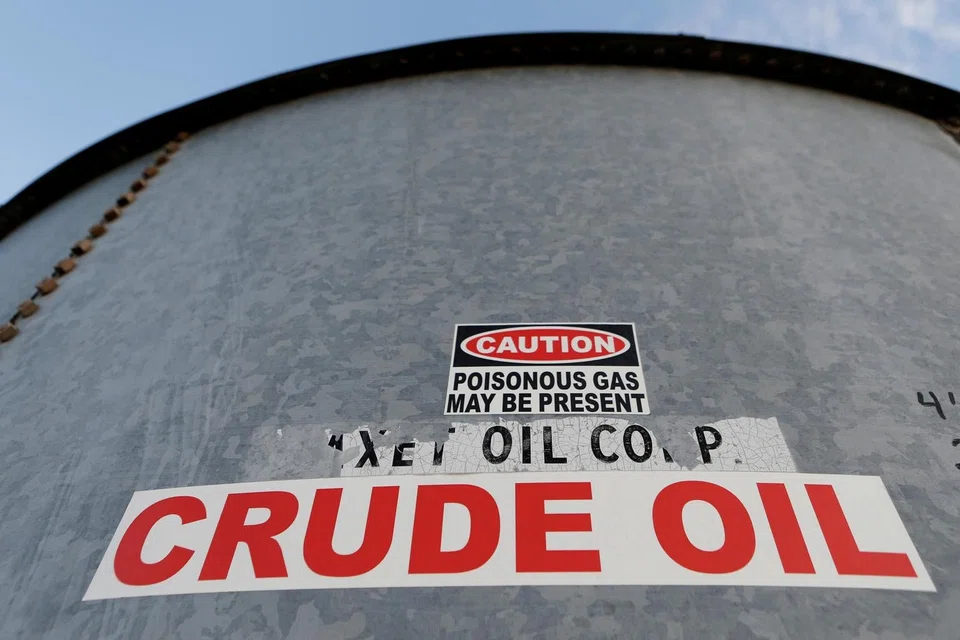
Then, as the May oil contract was expiring, physical buyers of the crude were caught cold that there was no where to store the crude after a glut led by the Covid-19 pandemic bruised energy demand and filled US storage to the brim. As a result, traders were paying someone to take that oil off their hands, driving prices on the front-month contract to, at one point, an extraordinary bottom of minus US$40.32 a barrel.
"It is unlikely that we will see a repeat," ING's head of commodities strategy Warren Patterson contended. Lending some credence to that is the open interest levels in the WTI June-20 contract which is more than 50 per cent below the levels seen at the same stage in the lead-up to the WTI May contract expiry.
"Most non-physical players would have rolled their position into contracts further down the board already, and so it is less likely that you will have a player who is so desperate to close out a long position in the final days, that they would be willing to accept a negative price," Mr Patterson said.
WTI May's plunge was also led by the US Oil Fund or USO - a popular exchange-traded security - which had received two record money inflows and had to execute a high volume of rollover from May to June within a short span of a week, OCBC economist Howie Lee pointed out.
That is no longer the case now as the USO has not only suspended new issuances but has also spread its holdings up to 12 months ahead which eases the selling pressure on the front-month contract, Mr Lee added.
The "substantially less" open interest in the front-month futures contract is partly led by this shift away from the short-term oil futures market by USO as well as S&P GSCI - a key oil index - given the unprecedented events in the oil market.
Oanda's market analyst Jeffrey Halley said: "WTI is likely to be its own man as the futures cut-off nears. WTI could easily trade in a ten-dollar range as last-minute position adjustments are arranged. However, it would not surprise me in the least, if the expiry passes with a whimper."
Indeed, the backdrop for oil is less gloomy than it was a month ago. As lockdowns ease and oil majors including Saudi Arabia pledge further output cuts, analysts expect the rate of oil inventory accumulation to fall. This will lessen the strain on storage capacity and lower the steepness of the oil contango (where prices for future delivery are above spot prices).
On the back of that, crude prices have seen some recovery lately, although Wednesday's correction in the WTI and the global benchmark Brent underscores that any optimism will be punctuated by worries of new outbreaks as economies gradually re-open for business.
"Supply and storage is only one part of oil's dilemma. Demand needs to recover to sustain any gains in price," said Phillip Futures' Avtar Sandu in a note. That hinges squarely on how quickly the global economy will recover from the pandemic-led recession. He added: "The oil market coming back to balance would also quite largely depend on how fast consumer demand can come back to some sort of normal."
READ MORE: More than 280,000 tonnes of petrol stored on Singapore, Malaysian waters
TRENDING NOW

South-east Asia has lost Nvidia’s best salesman

Demand, tech capabilities position Apac and AI as Skyscanner’s next growth frontiers: CEO Bryan Batista

Peter Kwee’s Ridley Park bungalow on the market with S$100 million asking price

Beyond the greenback, Vietnam’s big borrowers turn to Asian-currency bonds

