Energy infrastructure player Yinson sees blue ocean in green tech
The Malaysia-listed company wants to ramp up startup collaborations and renewable energy projects.

Singapore
MALAYSIA-LISTED Yinson Holdings may serve the traditional oil and gas sector, but the energy infrastructure company has an ambitious goal: to become a frontrunner in green technology.
The company specialises in the design, construction and operation of production assets for the offshore oil and gas industry - in particular, for FPSO (floating production, storage and offloading) units.
But in the past two years, Yinson has made notable moves into the green space. In 2019, it set up a renewables division that has several solar power projects in India.
In September last year, Yinson established a new "green technologies division" to invest in companies innovating sustainable solutions within the marine, mobility and energy segments. This ties in with Yinson's long-term goal of achieving a net carbon-zero business.
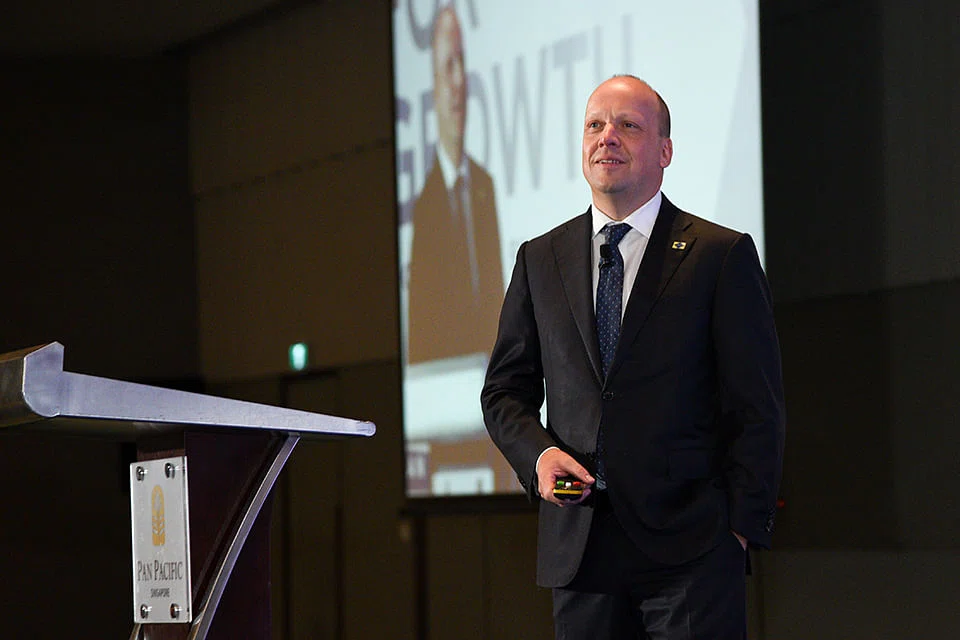
Why is Yinson going green? It is all about getting ready for the future of energy, said Eirik Barclay, the company's executive vice-president for new ventures and technology.
"We have been looking for a long time at the transition from fossil fuels to clean energy. Building on our investments in renewables, we also want to follow more of the technology area and look at where the big growth opportunities are," he explained.
With its green technologies division, Yinson wants to collaborate with startups tackling big-picture issues such as the electrification of transport and autonomous vehicles.
"We are investing in companies that we can work together with to develop their business. We are putting a little bit of investment there to help them accelerate their development, with a view to partnering them to develop new markets and products," said Mr Barclay.
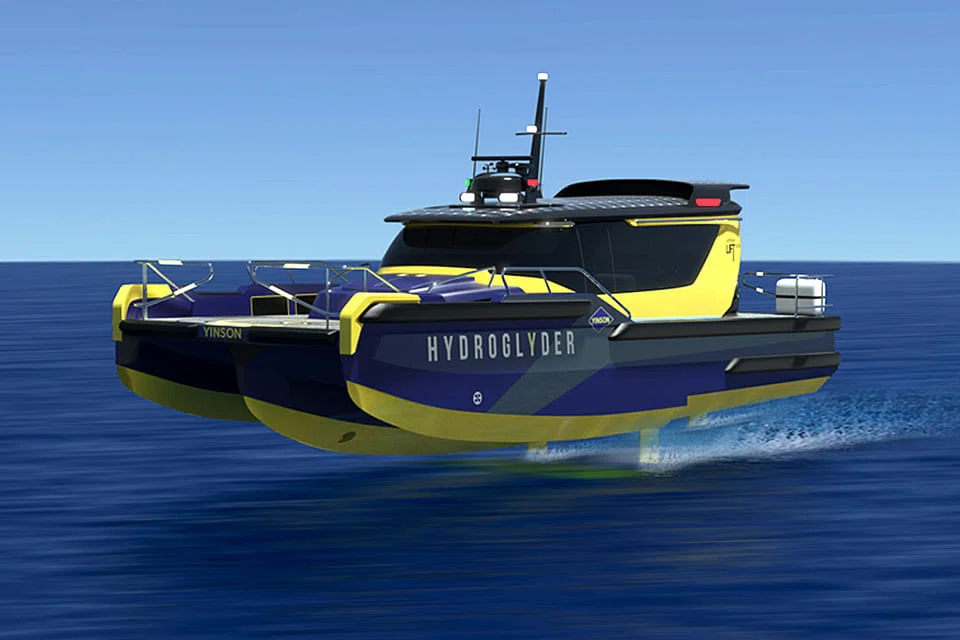
One such effort is Yinson's collaboration with Norwegian startup Lift Ocean, in which it invested in February. Since then, both companies have worked together to come up with an electric harbour craft called the Hydroglyder.
Energy-saving harbour craft
With its streamlined body and ability to glide above the water surface, the Hydroglyder would not be out of place in the set of an action movie. It was designed specifically for Singapore ports, to transport crew and cargo with less energy consumption.
"This can replace many of the current diesel-powered vessels which are operating in the harbour at the moment. It can be hugely efficient; we are looking at the possibility of reducing energy costs by 70 to 80 per cent," said Mr Barclay.
The Hydroglyder project is now in the "detailed design phase". Yinson hopes to undertake fabrication in the first half of 2022, and have the Hydroglyder operational in Singapore by the middle of next year. It is exploring swoppable batteries for these vessels, to make charging easier.
While busy with this project, Yinson's green technologies division is also on the lookout for more investment opportunities - whether in South-east Asia or beyond.
Its recent investments into Singapore-based startups have drawn attention. In June, Yinson and SMRT Ventures, the corporate venture arm of the Singapore transport giant, invested in autonomous vehicle startup MooVita.
That same month Yinson also backed Oyika, a startup that builds battery swop infrastructure and offers eletric motorbikes bundled with battery swops on a subscription plan.
Oyika is targeting major motorbike markets such as Indonesia, where electric motorbike usage is still limited.
"The potential for growth is really enormous in that market; we saw that as a very exciting prospect and an area that we believe in," said Mr Barclay.
But he also emphasises that Yinson is no venture capitalist. Rather than pure financial returns, it is focused on strategic value. The company is set to unveil more of such investments.
"There are a number that are on our radar at the moment and we hope that we will be able to announce at least one or two more investments in the rest of 2021," he said.
Even as it invests in new and developing green technologies, Yinson is making inroads into the renewables space while keeping an eye on its core business.
Founded as a transport and logistics business in Johor Baru by executive chairman Lim Han Weng, the 38-year-old company has shifted its focus over the years.
In 2014, it acquired Norweigian FPSO company Fred Olsen Production. By 2016, it had divested its non-oil and gas units.
Yinson now earns most of its topline from the offshore production and offshore marine businesses. Despite the pandemic, earnings have held steady.
For Q1 FY2022 ended April, Yinson's revenue nearly trebled year on year to RM992 million (S$318 million), thanks to EPCIC (engineering, procurement, construction, installation and commissioning) works for an FPSO vessel, the Anna Nery, for which the charterer is Brazil's Petrobras.
EPCIC activities contributed RM652 million in revenue, while another RM320 million came from other segments of the offshore business.
But Yinson is also working to diversify its revenue mix with renewables. Last year, it acquired 95 per cent of Rising Sun Energy, an India-based company with two operational solar plants in the Bhadla Solar Park of India's Rajasthan state. In March, Yinson won a project to develop and operate a 190MW solar power facility in Rajasthan's Nokh Solar Park.
The numbers for the renewables business are still modest. The segment posted RM19 million in revenue for Q1 and RM8 million in segment results, reversing the year-ago loss of RM1 million.
Mr Barclay believes the renewables business holds much promise.
"India is one of the world's fastest-growing markets in renewable energy; the country has 40 gigawatts of solar capacity installed at the moment. But they have a target to reach 450 gigawatts of (renewable) power by 2030. These ambitious targets provide a huge opportunity," he said.
The renewables division is also looking at other markets. In June, it entered into an agreement with Chile-based renewable energy developer Verano Capital for 800MW of utility scale solar projects in South America.
Analysts optimistic
Citi analyst Kwok Wei Chang believes Yinson may be aiming for internal rates of return in the low-to-mid teens for the South American venture.
In a June 27 report, he reiterated his 'buy' call for Yinson. He is optimistic about the company's "solid earnings", while noting the inroads it has made with renewables. Other analysts have also lauded Yinson's green technology efforts after its Oyika investment.
Whether retail investors are similarly enthusiastic about Yinson's moves remains to be seen. The company's share price performance has been mixed.
While it seemed to recover to the RM5.70 mark in March, the price has since been on the downtrend. It closed at RM4.51 on Friday, or about 12.9 times earnings.
The pandemic has certainly had an impact on operations. For instance, Mr Barclay said moving crew around the world has become complicated. But he is also optimistic about the year ahead: "We are looking at how we can be nimble enough to operate in the current environment."