

ESG can drive out-performance, and is not just a feel-good factor: Credit Suisse director
 Add BT as a preferred source
DeeperDive is a beta AI feature. Refer to full articles for the facts.
INCORPORATING environmental, social and governance (ESG) metrics when investing can be a key driver of out-performance in a portfolio, instead of being merely a "feel-good factor", a director in Credit Suisse said on Thursday.
Clement Florentin, who heads investment-solutions structuring for Asia ex-Japan in the investment bank, said that this is because companies that are ESG-compliant have access to more financing options, and ESG-related products have attracted large inflows in recent years.
Speaking at a virtual panel during the Asia Securities Industry & Financial Markets Association's ESG and Sustainable Finance Week, he said: "One thing that we've seen globally over the last two years is really very, very large flows into ESG-labelled investment products - ETFs (exchange-traded funds), mutual funds, structured products - and those flows have driven out- performance of stocks, which tend to be seen as ESG-compliant."
Institutional investors in Asia are also taking interest, starting with countries such as Australia and Japan, he noted. This stands in contrast to around five years ago, when people were more concerned if ESG compliance was affecting their returns.
Apart from capital inflows, Mr Florentin said that companies which are seen as ESG-compliant or respecting the environment would most likely be able to issue green bonds, have cheap access to financing, and therefore have better metrics and better performance.
He noted that derivative and trading desks in the financial sector are working with index providers to build ESG-compliant indices, which can be used in order to access markets.
Navigate Asia in
a new global order
Get the insights delivered to your inbox.
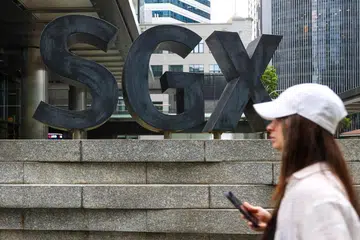
Suchitra Subramanian, ESG product lead for equities at the Singapore Exchange, said that currently, ESG investing mostly involves active management, but there has been growth in passive instruments, such as index funds, ETFs or even in the futures space.
She noted that there is a variety of index variations, as ESG adoption is not standard, with different parties having their own approach to ESG adoption. Some may be based on simple exclusion; other indices may be based on best-in-class selection of ESG leaders to the index.
Earlier this year, the bourse launched four ESG index futures in partnership with FTSE Russell. (FTSE Russell is a subsidiary of the London Stock Exchange Group; it produces, maintains, licenses and markets stock market indices.)
Ms Subramanian said: "The theme or the commonality across these contracts is the fact that they provide an improvement in the ESG rating or the ESG profile, while also giving you that market beta exposure."
Given that the various providers may weigh ESG factors differently, the moderator of the panel discussion, Peter Zaman, partner at law firm HFW, asked if companies may choose providers that would rate them more favourably, based on their profile.
Ms Subramanian acknowledged that there could be more subjectivity in ESG metrics as opposed to measures such as credit ratings. However, she noted that providers such as FTSE Russell have a methodology for rating, where the rules are transparent and clear, and in alignment with international standards.
As standards develop over time, alignment in standards among rating providers will improve, she said.
"I think exchanges have a supremely important role in this when it comes to listed companies - a lot depends on what the company discloses."
Decoding Asia newsletter: your guide to navigating Asia in a new global order. Sign up here to get Decoding Asia newsletter. Delivered to your inbox. Free.
Copyright SPH Media. All rights reserved.
TRENDING NOW

Air India asks Tata, Singapore Airlines for funds after US$2.4 billion loss
‘Boring’ is the new black: The stars are aligning for a Singapore stock market revival

From 1MDB to ‘corporate mafia’: Is Malaysia facing a new governance test?

South-east Asian markets account for 8.8% of global capital inflows from 2021 to 2024: report

