

EuroSports Global revs up for electric growth
It has been working on an electric motorcycle under its electric vehicle brand Scorpio Electric for nearly three years.
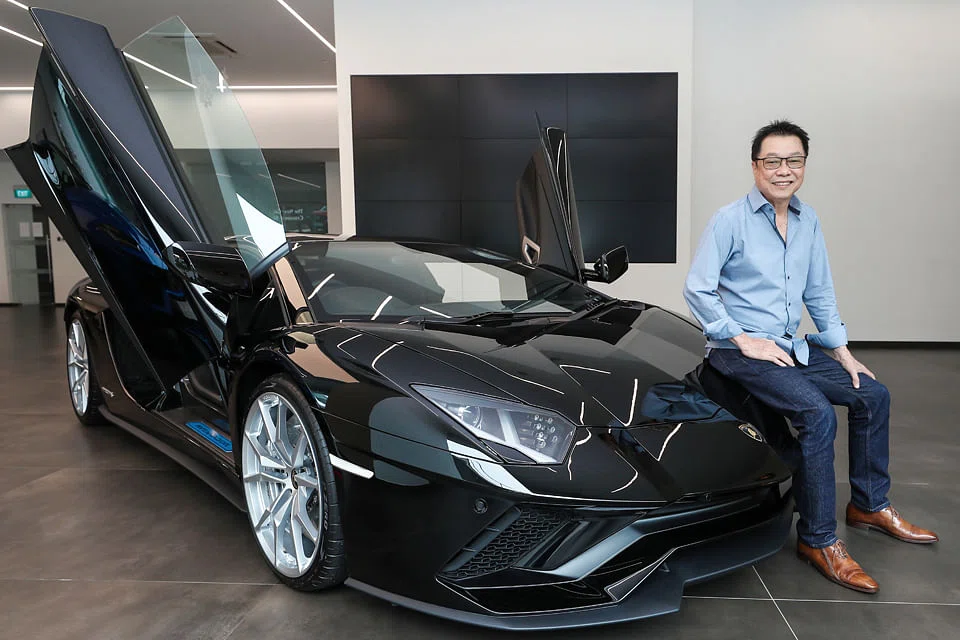
THE future is electric for EuroSports Global, even as it continues to focus on its luxury car business in Singapore.
Known for the Lamborghini, Alfa Romeo and Touring Superleggera brands it distributes here, the Catalist-listed group has been working on an electric motorcycle under its electric vehicle (EV) brand Scorpio Electric for nearly three years.
Scorpio Electric is parked under the group's technology arm EuroSports Technology, which was formed in end-2017. EuroSports Technology in November raised US$6.3 million to develop prototypes and pre-production builds of the motorcycle, as well as to complete its local assembly plant and headquarters at Teban Gardens.
Chief executive Melvin Goh is certain that an EV-only future is on the horizon, as major brands vow to reduce or eliminate their fossil fuel vehicle models, and countries including the United Kingdom and Denmark aim to ban new diesel and petrol car sales in 2030.
"Most of the big brands are talking about not making gasoline or diesel engines anymore," Mr Goh said. "Minimum, they have to be hybrid. That tells us we're going away from dirty gasoline. It gives us a window to build a brand."
Scorpio Electric is working on its second motorcycle prototype now, and Mr Goh estimates that the prototype should be close to production-ready and good to use for quality and durability tests by June 2021. This deadline could shift, however, due to unforeseen developments brought on by the pandemic.
Meanwhile, the company's luxury car business has been on the up in recent years and could emerge from 2020 in fairly good shape.
Although sales took a hit in the initial months of the pandemic, Mr Goh said the overall impact for FY2021 ending March could be smaller than expected.
EuroSports Global's overall numbers have improved in recent years. It had reported net losses of S$3.9 million in FY2018 but managed to narrow its losses to S$178,000 in FY2019. For FY2020, the group posted a S$2.3 million profit.
Shares of EuroSports Global hit a 52-week low of S$0.11 in April. They have since recovered to close at S$0.17 on Friday, down 5.6 per cent this year.
Steady demand for luxury cars
"If you asked me (how things were) in March or April, I'd say, 'We're in trouble.' We didn't know what was happening. There was a lockdown. The first thing that comes to mind is, everybody is in trouble, who's going to spend money on cars?" Mr Goh said.
"But it turned out it wasn't as bad as I first anticipated. The Singapore economy is very resilient, and maybe this didn't affect the people who can afford such cars. Also, they're not travelling, so they can't spend money anywhere else. Maybe that's the reason why they are spending on big-ticket items."
It certainly helps that EuroSports Global has managed to bring down some of the costs of purchasing a luxury car, following a price jump shortly after the group listed in 2014.
At that time, the Singapore government introduced an Additional Registration Fee (ARF) that raised luxury car prices by S$250,000 to S$450,000 per car. EuroSports Global's business dived 65-70 per cent in 2015 when the tax took effect, and the company struggled to turn a profit until 2019.
The turnaround was partly achieved by bringing down the cost of insurance and freight, which yielded a more competitive price to mitigate the ARF's impact.
As time passed, customers have also adjusted to the price hike, Mr Goh said. "After a couple of years, people forget. Anyway, you can't do anything about it. This is the price, and it's not just Lamborghini. Because it's a tax structure, everybody is affected."
He believes the luxury car distribution arm will remain strong, continuing to win and keep business by cultivating strong relationships with new and existing customers.
Vehicles of the future
EuroSports Global will be actively looking for new dealerships to expand in Singapore and the region, but with a new focus on EV brands. Mr Goh noted that the Singapore government's plans to deploy up to 28,000 EV charging points in public carparks by 2030 affirm the EV's place in the the country's future.
Although infrastructure for motorcycles has not been explicitly mentioned as part of these plans, Mr Goh is confident that such infrastructure will develop in due time.
"Imagine 120 years ago, when Henry Ford made his first car. If he was worried about where his customers were going to get petrol from, he wouldn't start," Mr Goh said.
"Electricity is everywhere. I don't have a clear indication of what the government is going to do, but if it is encouraging electric vehicles, are they going to say no motorcycles on the road? It's impossible."
Even if motorcycles are left out of the picture in Singapore, overseas markets in the region and further afield, such as Europe, will offer more than enough demand to sustain the business.
Said Mr Goh: "Singapore is a very small market, with only 8,000 to 10,000 new motorcycles a year. Indonesia, you have 6.5 million. Vietnam, you have three million. Can Indonesia go without motorcycles?"
He picked motorcycles for EuroSports Global's EV plans instead of cars because the latter would be too costly an investment. EuroSports Technology's recent fundraising success has led to more calls from potential investors, relieving Mr Goh's worries about the business being too dependent on the parent company.
"One part of my concern is taken off the table. With this US$6.3 million, we'll be able to show the final prototype or even be close to production by the middle or third quarter of next year, and have a business case with appointed dealers or some pre-sales. I think we will have no problem raising the rest of the money for rolling out the business to the world."
Scorpio Electric is aiming for a premium market positioning to start, and will eventually expand to a premium-mass market since the premium market alone may not provide the volumes needed.
"We won't compete with (other brands) on prices. Depending on which segment, we could be 20-40 per cent more expensive than the competitors," Mr Goh said.
The pandemic is now the biggest question mark over how quickly these plans can proceed, as Scorpio Electric has been unable to visit overseas suppliers and potential partners to discuss details and strike deals.
"Don't be surprised if you speak to me a year from today, and I say it's still the same," he warned. "If we can't travel, it's a huge problem."
Mr Goh is cautiously optimistic about how much difference the upcoming vaccines will make, noting that there could still be complications when the vaccines are administered outside a lab.
For now EuroSports Global will press on as best it can, but play it safe amid the uncertainty.
"If I'm a pilot now, I would say let's fly a bit lower, let's go a bit slower in case there's a mountain in front," Mr Goh said. "Without a radar, we've got to be careful and look at shorter forecasts, on a six-month basis rather than one to three years."
TRENDING NOW

Philippine power giant First Gen rebuffs foreign offers, plans up to US$2.6 billion in expansion
Vietnam’s data-centre investment rush faces reality check on power and site constraints

Singapore should prepare for prolonged haze until November, says Grace Fu
Is stagflation returning? That mostly depends on the Iran war

