Evercore Asia, Dymon-backed Hwa Hong take fees dispute to court

Raphael Lim
Published Fri, Mar 3, 2023 · 08:35 PM
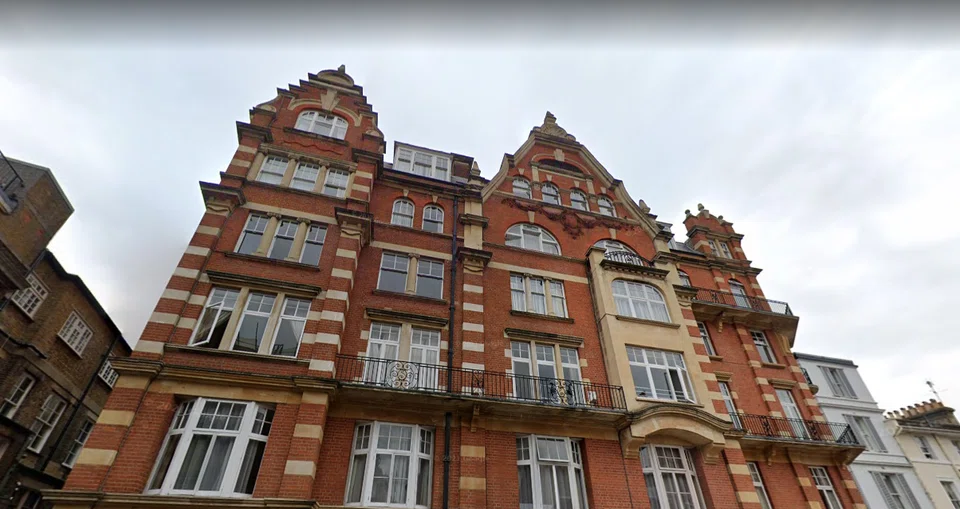
    • Allen House, one of Hwa Hong's properties in London. Hwa Hong on Feb 1 filed a legal action against Evercore and four former company directors.
    • Allen House, one of Hwa Hong's properties in London. Hwa Hong on Feb 1 filed a legal action against Evercore and four former company directors. PHOTO: GOOGLE MAPS

    CORPORATE finance adviser Evercore Asia (Singapore) and former mainboard-listed Hwa Hong Corporation are in a legal dispute involving, among other things, fees Evercore is claiming as Hwa Hong’s financial adviser (FA).

    The parties have two pending cases before the Singapore High Court.

    Evercore on Feb 6 filed to wind Hwa Hong up. The case was mentioned in court on Friday (Mar 3).

    Meanwhile, Hwa Hong on Feb 1 filed a legal action against Evercore and four former Hwa Hong directors. A cause book search by The Business Times shows the suit involves claims of around S$8.7 million, and includes “disputing claim for success fee by financial adviser in connection with acquisition of shares”.

    In addition, Hwa Hong has made allegations of “negligence” and breaches of “fiduciary duties of company directors”.

    The four former directors named as defendants are Ong Eng Hui David, Ong Eng Loke, Ong Eng Keong and Ong Mui Eng. All are related to Hwa Hong’s late founder Ong Chay Tong.

    Hwa Hong’s current group managing director, Ong Eng Yaw, is also a relation.

    This case conference is scheduled for Apr 5.

    During Friday’s hearing on the winding-up application, Jaikanth Shankar from Davinder Singh Chambers – who is representing Evercore – sought additional time to respond to a 70-page affidavit that was filed on Feb 23, and requested a full-day special hearing for the case.

    But senior counsel Jason Chan from Allen & Gledhill, who is representing Hwa Hong, asked for minimal delays given the pressures a winding-up petition might place on the company.

    Justice Hoo Sheau Peng said it is important to have all matters before the court, and set the next hearing for Mar 20.

    In a statement to BT, Ong Eng Yaw said Hwa Hong disputes that the success fees are payable to Evercore. Hwa Hong’s position is that the letter of engagement with Evercore is “void, unenforceable or is liable to be set aside”.

    “It is business as usual for Hwa Hong and our subsidiaries. We have ample liquidity for our working capital purposes and to meet our financial obligations,” he added. “Hwa Hong will take all steps necessary to protect our interests in both our claim against Evercore and in the winding-up petition.”

    Hwa Hong was previously listed on the Singapore Exchange mainboard. It was delisted last September following a hostile bid by Sanjuro United.

    The parties behind Sanjuro included Hwa Hong’s former group managing director Ong Choo Eng and his son Ong Eng Yaw, as well as Dymon Asia Private Equity.

    Hwa Hong’s board at the time comprised five directors, including the four Ong directors who are now being sued by Hwa Hong.

    The four, together with their immediate family members, controlled 29.3 per cent of Hwa Hong at the time. They had initially said they intended to reject Sanjuro’s offer, and argued that the maximum shareholder value may be “best achieved outside the timeline and constraints imposed by a general offer”.

    When the Sanjuro offer was made, the Ong directors said on the same day that they had appointed Evercore Asia as a FA to assist in “unlocking and maximising shareholder value”.

    The directors said they had been deliberating to do so even before the offer, as they believed the shares were “undervalued”.

    But the fifth director at the time, Huang Yuan Chiang, disagreed, and said in a bourse filing that the appointment of an FA was a “rare and unnecessary step”.

    Hwa Hong’s former directors disclosed in a subsequent bourse filing that Evercore would receive a success fee based on the aggregate value of consideration received by shareholders.

    If any offer became unconditional at a price per share equal or above S$0.40 but less than S$0.50, the fees would be 3 per cent of the consideration.

    An offer price of S$0.40 per share would result in fees of S$4.2 million to S$8.4 million.

    In the end, none of the potential competing offerors made a bid. The Ong directors and their related parties eventually accepted the offer from Sanjuro.

    The offer closed with the offeror crossing the 90 per cent threshold required for Sanjuro to exercise its rights of compulsory acquisition, and Hwa Hong was privatised.