

Exxon to buy Denbury for US$4.9 billion in carbon dioxide pipeline push
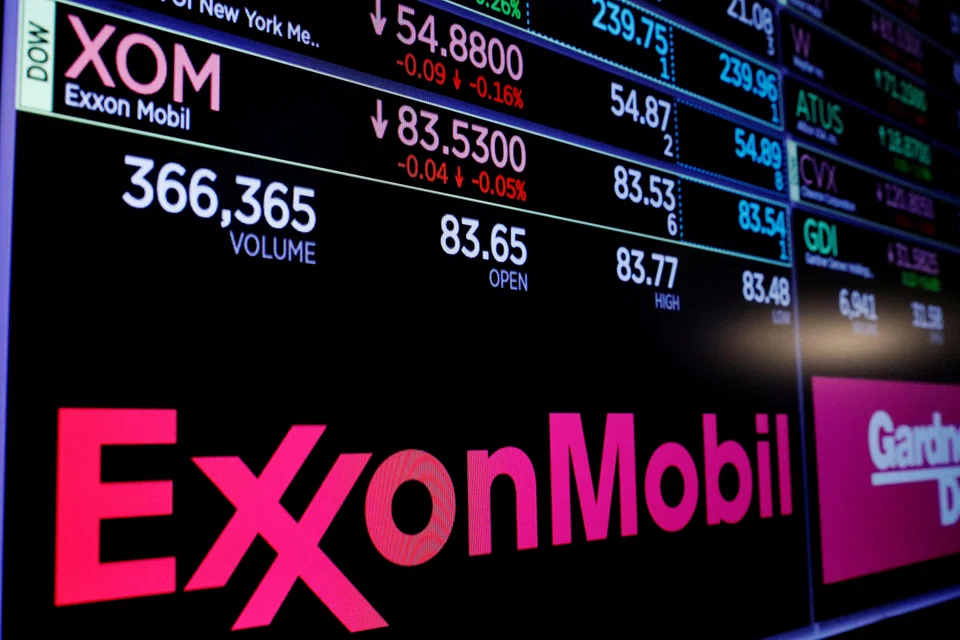
EXXON Mobil agreed to buy Denbury for US$4.9 billion, its biggest acquisition in six years, in a deal that will provide the oil giant the largest network of carbon dioxide pipelines in the US.
The all-stock transaction values Plano, Texas-based Denbury at US$89.45 a share, the companies said on Thursday (Jul 13) in a statement. Denbury’s key asset is 2,092 km of pipelines dedicated to transporting carbon dioxide, critical infrastructure if the US is going to be successful in capturing carbon emissions from heavily-polluting facilities like refineries and chemical plants.
Exxon’s deal is its biggest since buying its core Permian Basin acreage position from the Bass family for about US$6.6 billion in 2017 and is the largest single carbon-management investment since the Inflation Reduction Act passed in August. The law included landmark climate provisions, providing substantial tax incentives for companies to capture carbon dioxide emissions and store them underground rather than pollute the atmosphere.
More than 70 per cent of Denbury’s pipeline network is on the Gulf Coast, home to the largest concentration of industrial emissions in the US. Historically, Denbury has used carbon dioxide for enhanced oil recovery, a process which squeezes more crude out of old wells, but the company has recently been repurposing its assets to become a leader in the low-carbon space.
“The goal here is to help accelerate the world’s path to net zero,” said Dan Ammann, president of Exxon’s Low Carbon Solutions business. “This is additive and accelerative to those efforts.”
Carbon capture is the bedrock of Exxon’s climate strategy, which targets net-zero emissions by 2050 from its operations, and buying Denbury would give the oil giant critical and hard-to-replicate infrastructure as it pursues that goal. Exxon has pledged to spend US$17 billion on lower-carbon investments through 2027. Capturing carbon from its own operations and third parties in hard-to-decarbonise sectors is a priority.

Denbury’s Rocky Mountain assets are connected to Exxon’s Shute Creek gas facility near LaBarge, Wyoming, which has captured more carbon than any other asset in the US.
The Inflation Reduction Act is a key catalyst for carbon capture, increasing tax credits 70 per cent to $85 for every ton of carbon dioxide. Executives, including Exxon chief executive officer Darren Woods, have praised the legislation for its financial support for carbon capture, which Morgan Stanley says could be highly profitable thanks to the tax incentives.
The deal will also provide Exxon with about 47,000 barrels a day of oil, about 1 per cent of its overall production. BLOOMBERG
Decoding Asia newsletter: your guide to navigating Asia in a new global order. Sign up here to get Decoding Asia newsletter. Delivered to your inbox. Free.
Share with us your feedback on BT's products and services
TRENDING NOW
‘We don’t want to stay as we are’: CEO Patrick Ng builds a more resilient Huationg

URA to review guidelines on floor space to give developers more design flexibility: Chee Hong Tat

He built the Vingroup empire. Now South-east Asia’s richest man is handing some key roles to his sons

32 companies, 6 individuals bag accolades at Singapore Corporate Awards 2026

