

F&N looks to increase market reach, build on growth in dairy products

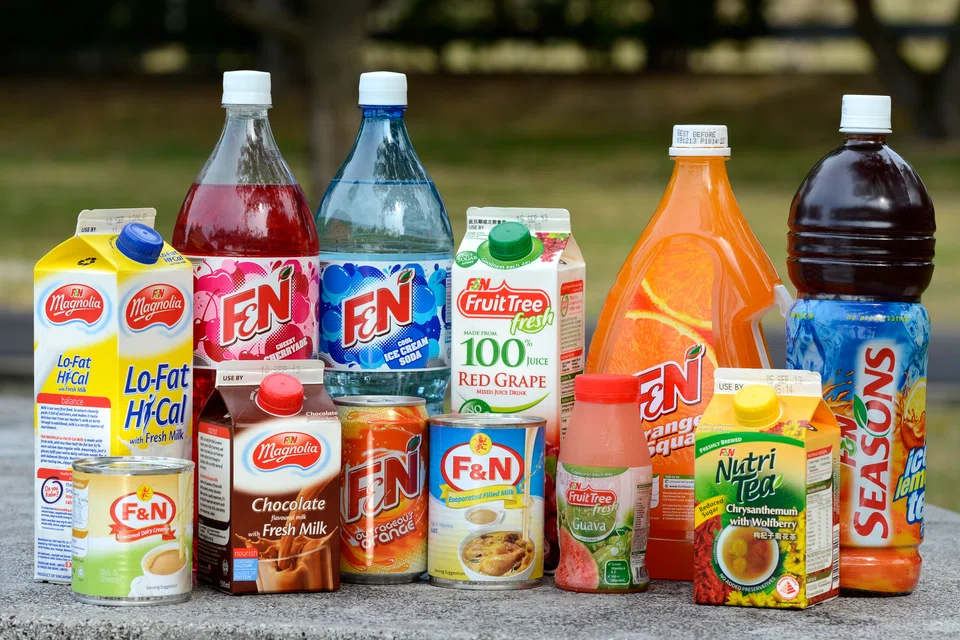
SINGAPORE-LISTED beverage giant Fraser and Neave (F&N), owned by Thai billionaire businessman Charoen Sirivadhanabhakdi, has built a name for itself on the back of its array of canned soft drinks.
While F&N already has a sizeable market share, the company “keeps on evolving and developing new products” to maintain and grow its slice of the pie, chief executive Hui Choon Kit told The Business Times in a recent interview.
“As some of F&N’s products have reached maturity or are on the decline, we need to add new products that better address consumer needs,” he said. “We are always very cognisant of what consumers want in their daily lives.”
Behind the scenes
But Hui reckons the brand is one that people consume more often than they realise, as its products are mostly “behind the counter” and not customer-facing.
In Singapore, there are rare exceptions. He said that brands such as BreadTalk and Toast Box are “friendly” with F&N and allow the company to display its products – such as cans of evaporated milk – on counters.
“We operate in quite a number of countries, but often under the radar,” Hui added. “I guess we are more ‘in your face’ in Singapore, Thailand and Malaysia.”
Most of the company’s other customers, however, operate like “a big industrial and supply chain”. F&N’s products in places such as bakeries, coffee chains and restaurants are not as visible, he noted.
One example is Kopi Kenangan, Indonesia’s largest coffee chain that has close to 1,000 stores in Indonesia and is looking to enter Singapore.
Hui said that F&N is Kopi Kenangan’s exclusive supplier – it has a “special formulation” for the chain, and supplies products to all of Kopi Kenangan’s outlets in Indonesia. F&N continued to supply products to the chain when it entered Malaysia.
If a customer is large enough, F&N also customises recipes for it based on the “properties” that the customer is looking for, Hui said. The company does research and development and also works with ingredient houses to tailor recipes or products for its largest customers.
Research is an important portion of F&N’s business, Hui noted. But, the company knows that developing products, testing them and bringing them to markets successfully is tough, expensive and can take a long time.
Partnerships are key in this area, he added. F&N partners with ingredient houses that have a global reach, as well as institutions of higher learning to develop new products.

Dairy: a growing industry
For a home-grown company that has its roots in canned drinks, F&N appears to be switching its focus to other areas that it believes has potential for growth and profits.
Hui is especially focused on the regional dairy industry – an area that he believes is “going to be a very big business” for the group.
Today, F&N’s revenue consists of a number of segments – soft drinks, beer, dairies, ice cream, as well as printing and publishing.
“When people look at F&N, they don’t realise we are actually a very big dairy company,” Hui said. A “huge chunk” of the chilled sections in supermarkets today feature F&N’s products, such as juice, yogurt drinks and milk.
F&N works with partners such as farmers’ unions and other companies to ensure that it is “well-represented in a certain section of the supermarket”.
“We’re doing a lot more,” he said. “(People) are going to consume this product anyway; so we want to enhance these products to ensure they are even better for consumers.”
While F&N has been in the dairy business since the 1960s, there were a couple of “big triggers” that made the segment a key one for the group, Hui said.
In 2007, F&N became the largest canned milk producer in South-east Asia after it bought over Nestle’s canned and liquid milk business in Malaysia and Thailand. The acquisition gave F&N a “big footprint” and the company has invested significantly in developing that business, Hui noted. As a result, F&N is a “very strong market leader” in Thailand for canned milk.
The group also made multiple investments into growing its dairy segment.
In Malaysia, F&N’s Malaysian unit Fraser & Neave Holdings Berhad (F&NHB) last year began work on an integrated dairy farm that would make the company one of the largest milk producers in the country.
Over in Cambodia, F&NHB in February also leased an industrial land parcel for 50 years to build a dairy manufacturing facility. The total cost of setting up the manufacturing facility is estimated to be US$37.5 million.
Outside of dairy, Hui said the group is moving away from “sugary coloured drinks” and looking at healthier alternatives such as carbonated water, and drinks that help athletes recover after intensive exercise.
Stronger financials, higher dividends possible
For the first fiscal quarter ended December, F&N’s earnings rose 52.9 per cent to S$43.8 million from the corresponding prior-year period. This was despite a 0.2 per cent decline in its top line to S$531.6 million on the back of unfavourable foreign exchange conversion rates.
In constant currency terms, top-line contributions from the group’s food and beverage segment rose 3 per cent, due chiefly to higher soft drink volumes and beer selling prices, as well as improved canned milk sales.
At the end of FY2023, F&N’s board proposed a final dividend of S$0.04 per share to commemorate the company’s 140th anniversary. This took the group’s total dividend for the fiscal year to S$0.055 per share from S$0.05 per share in the previous year.
But the local stock market appears to have been more cautious about F&N. Year to date, the stock is down about 5.7 per cent, closing at S$1 on Apr 19. The counter is also down 9.9 per cent from a year ago. At current prices, F&N has a market capitalisation of about S$1.5 billion.
Asked whether shareholders can expect more generous dividend payouts and stronger earnings for the current fiscal year, Hui said that the company’s board of directors made the decision to raise its total dividend payout last year because it believes it can sustain it at that level.
“We believe we have a responsibility to the shareholders of the company to grow the bottom line for them,” he said.
“We tend to be conservative in promising things, but, if things are better, we are not shy in making sure shareholders are rewarded. So when we think about the dividends, shareholders should feel assured that next year, (the payout) won’t be less,” he added.
Looking ahead, Hui said that F&N will work to deliver a stronger bottom line for its current fiscal year. The company will also not hoard money, because it will wind up with a “very lazy balance sheet”.
“The good thing about our business is that we spin off a lot of cash,” he noted. “We will ensure that shareholders get a good proportion of the cash that we generate from the business.”
TRENDING NOW

Malaysian king buys stake in Singapore-listed mining firm expanding into rare earths

Grab CEO’s wife Chloe Tong on life with Anthony Tan and finding her purpose

Once staunchly pro-China, Malaysian Chinese businesses are now distancing themselves from Beijing

Longer wait times expected as S’pore healthcare institutions report system disruptions

