Digital tools, decades of know-how: How this family rice business has grown by backing its veterans
At Tong Seng Produce, a second-generation leadership reskilled its longest-serving staff on its digitalisation journey, so their decades of experience could carry the business forward
FOR decades, “if it ain’t broke, don’t fix it” could have summed up how many established businesses viewed their operations. But in a digital economy, the ways that always worked can become the very thing holding a business back.
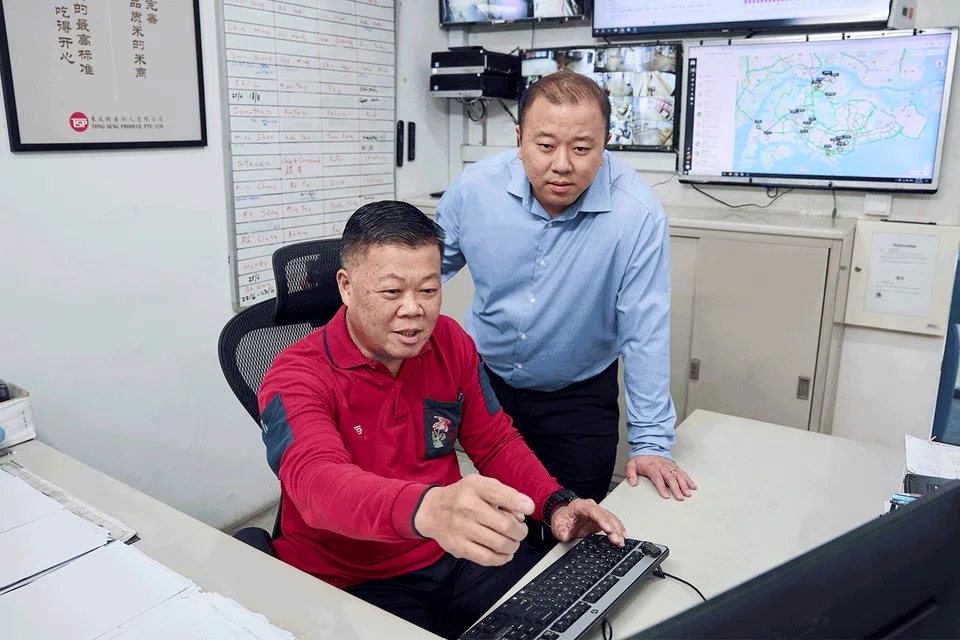
When Tong Seng Produce, the company behind household rice brand SongHe Fragrant Rice, began its digital push, operations manager Choo Cheng Peng felt he was being asked to start over.
Learn how legacy businesses can guide their people through change on their digital transformation journey in this Suite Talk episode.
For the 60-year-old veteran employee, that meant discarding the pen-and-paper system he had mastered over 30 years. Stock movements written in ledgers and delivery schedules drawn up route by route.
Even the weight of goods loaded into each lorry had to be carefully calculated and recorded by hand on delivery sheets.
“It required a lot of logic, planning and operational experience,” he recalls.
But that also meant much of the warehouse’s daily rhythm lived in one man’s head. Whenever Choo went on leave, operations would stall.
For executive director Max Ng, a second-generation leader who joined the family business 12 years ago, that was a clear sign: The company had to modernise if it wanted to keep growing across Singapore and the region.
Ng began moving the business away from manual workflows, bringing in new software, computerised systems and redesigned processes to help the warehouse and logistics teams work more efficiently.
When Choo had reservations about the changes, Ng convinced him to give the transition three months. During that time, the company paired Choo with younger, tech-savvy colleagues who walked him through the new systems step by step.
Choo says: “They taught me from the basics, and their patience gave me confidence throughout my learning journey. I also shared my operational experience and practical knowledge accumulated over many years.”
The ledgers and handwritten lists are no longer part of the daily workflow. Choo runs the entire operation on screen, where orders, picking lists and truck allocations are generated at a click.
With work organised around a clearer process, the team has moved order cut-off time from 4pm to 3pm, giving staff more room to plan deliveries. Warehouse workers can therefore finish earlier, clocking off at 6pm, instead of 8pm, in time to get home for dinner with their families.
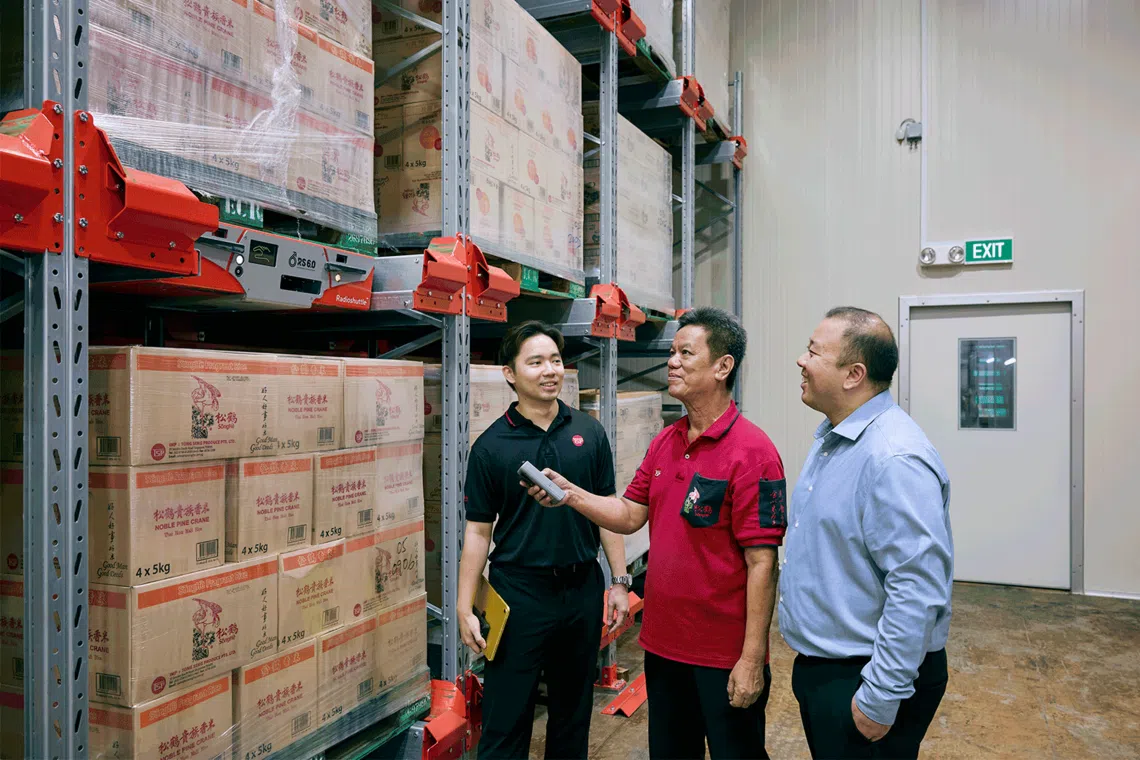
The changes have extended onto the warehouse floor. An automated shuttle system moves pallets from deep storage to the forklift, taking over a task that once required more time and physical effort from staff.
“Technology now handles many repetitive tasks, allowing us to focus on communication, coordination and solving operational issues,” Choo says.
Keeping people at the centre of digital transformation
The family-run company has come a long way from its early days, when Ng’s father and current chairman Ng Aik Cheng went door to door asking shopkeepers to stock his rice.
Today, it sources from more than 10 countries, runs contract farms and mills of its own, and handles import, processing and distribution across the region. Six of the founder’s seven children now run the business.
The question now, for Ng, was whether a company built on more than 35 years of relationships and experience could keep growing in an age of digital tools, data and AI.
“Rice is a very people-centric business,” he says. “We still have to know how to do quality checks, and manage suppliers and farmers. These are things where people are still relevant.”
That is why modernising the business also meant helping long-serving staff understand why processes had to evolve, and to know that mistakes would be part of the transition.
“They are not scared of technology. They are scared of unlearning what they have been mastering for the last 20 years,” Ng says.
For Ng, the point was not to have staff master every system immediately, but to help them become confident enough with digital tools to run operations more efficiently.
The lesson he draws is that change is not just about deploying technology or AI. It is about creating the kind of environment where employees can learn new ways of working without feeling that their past experience has lost value.
Case in point: One of the executives who shadowed Choo is now an assistant manager leading the company’s sustainability work, a career path that did not exist before.
Modernising a business built on decades of experience
The company now captures daily operational data, but Ng says it is “only touching the surface”. The next step is to use that data more deliberately – including through AI-assisted reporting – across sales, accounting and operations.
Last year, Tong Seng Produce embarked on a career conversion programme with support from Enterprise Singapore, the Singapore Business Federation and Workforce Singapore (WSG). Since July, WSG and SkillsFuture Singapore have merged to form the new Skills and Workforce Development Agency.
The company-wide effort looked at its systems, processes and teams, and identified where staff needed stronger capabilities, including in data analytics and AI-assisted decision-making.
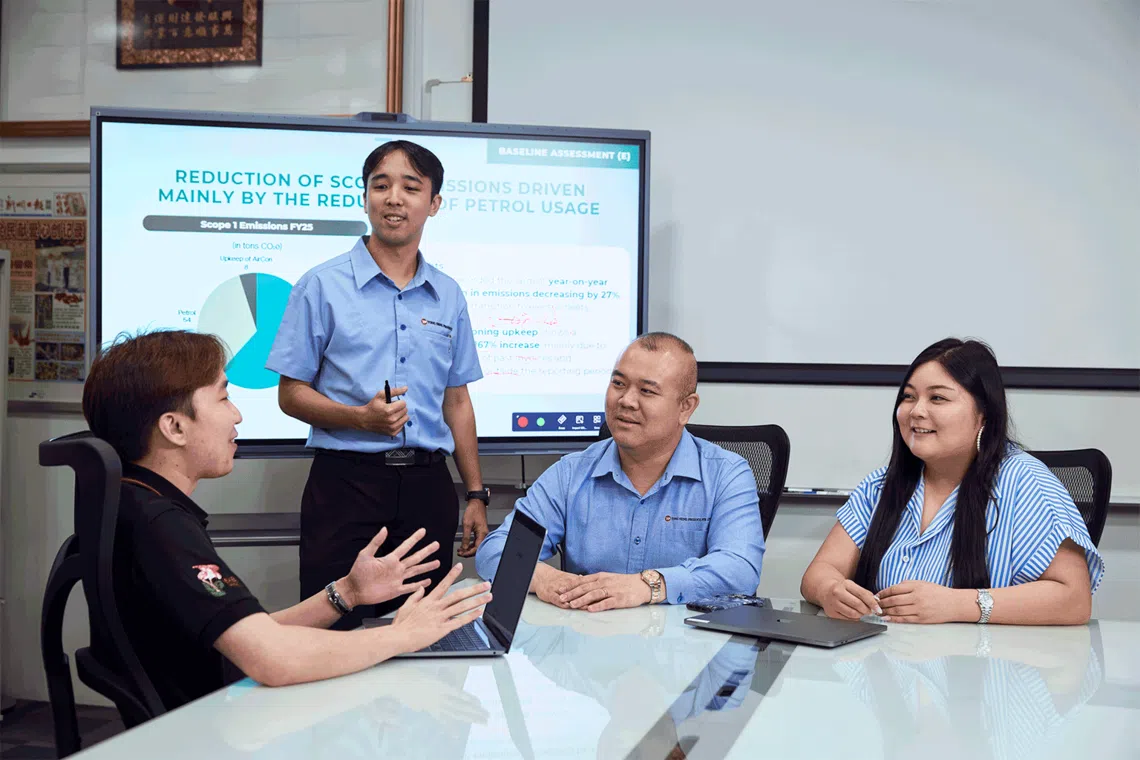
The agencies also helped Ng better understand what the company would need as its work processes evolved.
The goal is not to replace experience, but to give the next generation of staff the tools to make the relevant decisions.
“In the past, a lot of decision-making came down to gut,” Ng says. “With data, we hope to not make as many wrong decisions.”
As Tong Seng Produce modernises, Ng wants the business to rely less on memory, manual workflows and old habits – without losing the values that have shaped it since 1990.
“Change is the only constant. Learning will never stop,” he says. “Our working styles and processes can change. But our values cannot.”

Share with us your feedback on BT's products and services