FBM KLCI faces key test as near-term momentum improves
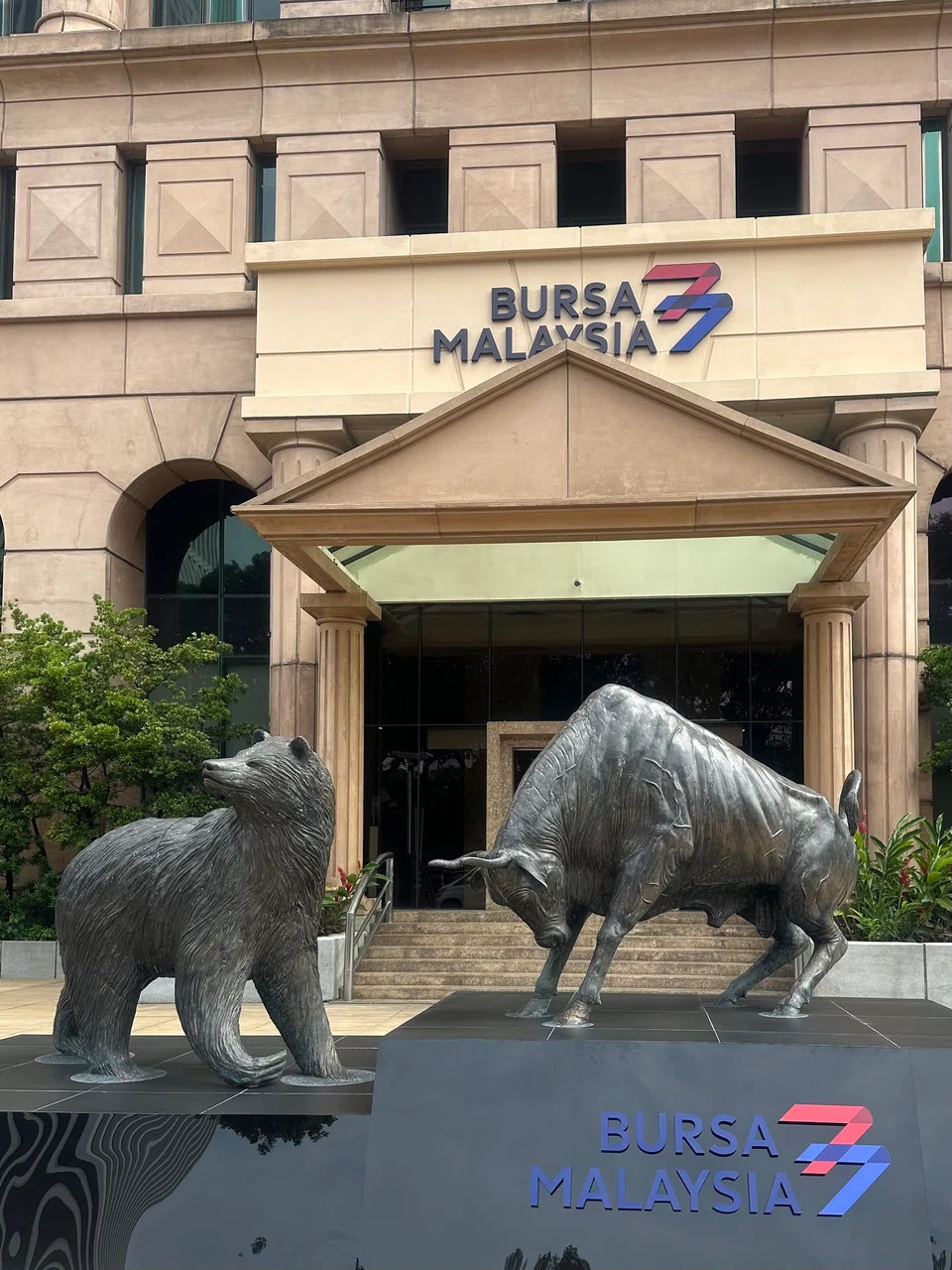
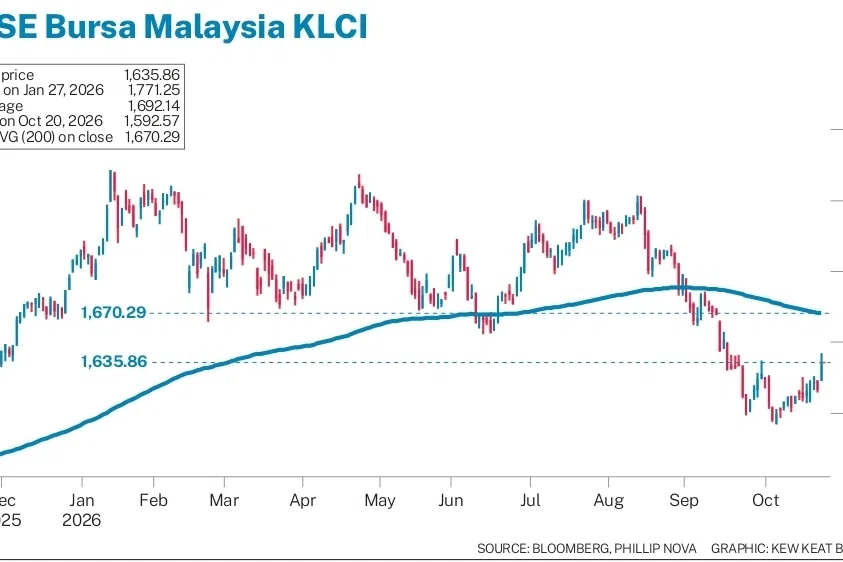
THE FTSE Bursa Malaysia KLCI has strengthened after recovering from its October lows, with the index closing at 1,635.86 on Nov 5 upon reaching an intraday high of 1,642.44. The move took the benchmark above its recent consolidation range and further away from the October low of 1,592.57.
The recovery comes against a relatively resilient Malaysian economic backdrop, with Bank Negara Malaysia maintaining its policy rate and remaining constructive on domestic growth. At the same time, tighter global financial conditions continue to present an external risk.
Malaysia’s economy continues to show resilience, supported by strong exports and sustained domestic demand. Bank Negara Malaysia expects the momentum to lift 2026 economic growth above 5 per cent, with stable labour market conditions and continued investment activity providing additional support.
At its Nov 5 meeting, Bank Negara Malaysia maintained the overnight policy rate at 2.75 per cent, extending the period of unchanged rates since the 25-basis-point reduction in July 2025.
Inflation has also remained relatively contained, with year-to-date headline and core inflation averaging 1.8 per cent and 1.9 per cent, respectively. However, Bank Negara Malaysia expects inflationary pressures to edge higher going into 2027 amid geopolitical developments, elevated commodity prices and adverse weather conditions.
External conditions remain a key variable

Despite relatively supportive domestic conditions, Malaysian equities continue to operate against a less certain global backdrop.
Higher global interest rates and bond yields can influence capital flows, currency movements and investor appetite for emerging-market assets. Bank Negara Malaysia also highlighted tighter global financial conditions arising from monetary-policy adjustments, geopolitical tensions and fiscal vulnerabilities as downside risks to the global outlook.
Foreign participation in Malaysian equities has shown some improvement since the start of November. Foreign investors recorded RM152 million of net purchases on Nov 3, extending net buying to six consecutive trading sessions. Nevertheless, cumulative foreign outflows for 2026 remained at RM6.75 billion, suggesting that the improvement in recent flows had yet to reverse the broader trend.
The FBM KLCI therefore remains positioned between two competing forces: resilient domestic fundamentals and stable monetary policy on one side, and tighter global financial conditions on the other.
Technical structure
On Nov 5, the FBM KLCI index closed at 1,635.86, taking it above the recent 1,600 to 1,625 consolidation zone. This suggests an improvement in near-term momentum. However, the broader technical structure has yet to fully turn, with the index still trading below its 200-day exponential moving average (EMA), currently around 1,670.
This makes the 200-day EMA an important technical area to monitor. A sustained break and consolidation above the moving average would provide stronger confirmation that the recovery from October’s lows is developing into a broader reversal. Beyond this level, attention could shift towards the 1,700 region, followed by the August high of around 1,753.
Conversely, failure to sustain the recent breakout could see the index retest the 1,600 to 1,625 region, which may now act as an initial support zone. A decisive move back below this area would weaken the recent recovery and bring the October low of around 1,593 back into focus.
The technical picture has therefore improved, but the FBM KLCI is approaching a more significant test. With the index above its recent consolidation zone but still below the 200-day EMA, price action around the 1,670 region could provide a clearer indication of whether the rebound develops into a broader recovery or remains a counter-trend move following the decline from the August highs.
The writer is business development manager at Phillip Nova
Decoding Asia newsletter: your guide to navigating Asia in a new global order. Sign up here to get Decoding Asia newsletter. Delivered to your inbox. Free.
Share with us your feedback on BT's products and services