

Fed impact on Singapore banks already priced in; dividend yields remain attractive: analysts
They add, however, that the cuts to come would have a negative effect on net interest margins

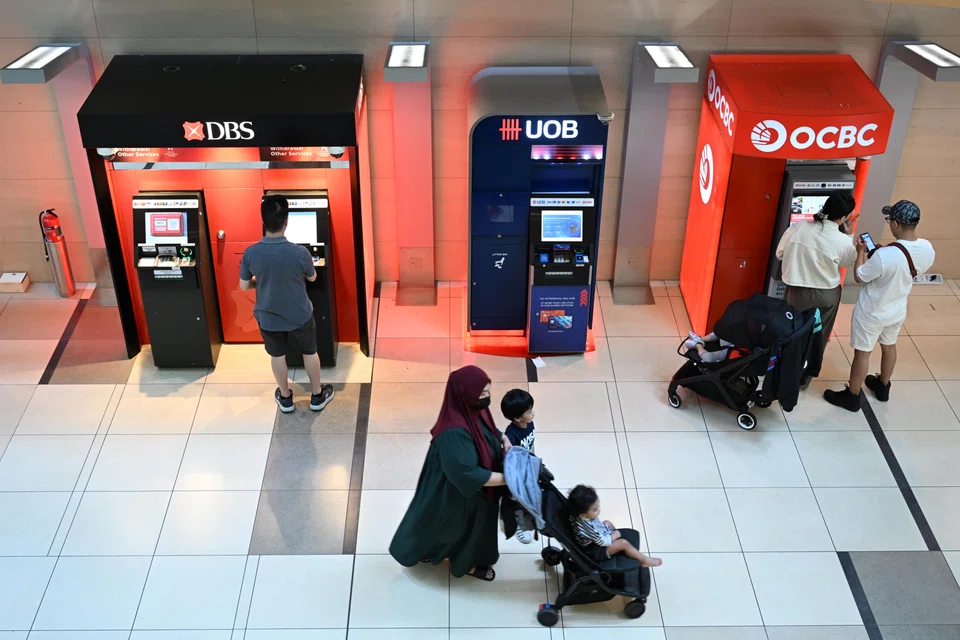
THE US Federal Reserve’s move to cut interest rates by 50 basis points (bps) was at the higher end of estimates, but is unlikely to have a significant impact on the Singapore banks, say analysts.
They say it is because the cut was within an expected range, and the negatives have already been largely priced in.
Thilan Wickramasinghe, head of research at Maybank Securities Singapore, said, however: “Over time, cuts would have a negative effect on net interest margins (NIMs).
“The latest cut may have only a marginal impact, given that the banks have been adding duration to their asset yields and hedging for this eventuality.”
Deeper cuts should also support stronger loan growth, which could help offset some of the weakness in margins, he added.
The Fed’s rate cuts on Wednesday (Sep 18) brought interest rates to between 4.75 and 5 per cent. The central bank also signalled further cuts this year and in the next two years.
Fed chairman Jerome Powell said the cut underscores the Fed’s “growing confidence” that it can maintain strength in the labour market, amid moderate growth and a 2 per cent inflation target.
Following the announcement, shares of the local banking trio rallied on Thursday. At the close, DBS rose 1.1 per cent to S$38.50, OCBC gained 0.8 per cent to S$15.46, and UOB was up 0.6 per cent at S$32.73.
Overall, the Straits Times Index gained 1.1 per cent to 3,633.18, hitting the highest levels since November 2007.
Jayden Vantarakis, head of Asean equity research at Macquarie Capital, noted that the share prices of the Singapore banks have already priced in eight to nine cuts of 25 bps each.
While the 50 bps cut was higher than initially planned, it had not altered the terminal rate, he said.
In fact, the Fed dot plot post-announcement is slightly higher at 2.875 per cent, from the initial 2.75 per cent, he noted.
“So it’s interesting that we’re seeing DBS, the market’s rate proxy, trade a little higher today.”
Vantarakis said in a report dated Aug 26 that the banks’ sensitivity to rates is non-linear. The first four cuts will likely lead to modest NIM compression, and should be mitigated by hedging and a shift to fixed-rate earning assets.
The banks themselves have also been preparing for rate cuts since the first half of 2024, said Glenn Thum, senior research analyst at Phillip Securities Research.
The banks have preemptively placed excess deposits into longer-tenure, interest-earning assets, to better protect their net interest margins (NIMs).
This should keep net interest income (NII) and NIMs stable for the rest of the year, with a possibility of earnings growth due to loans and fee income, particularly in wealth management, Thum said.
Furthermore, the rate cuts may uplift loan demand, especially with current economic conditions holding up well, said Yeap Jun Rong, market analyst at IG.
Lower rates may also be supportive of the broader economy, which may offer room for further recovery in the banks’ non-interest income, he said.
Dividend yields remain attractive
Meanwhile, analysts expect investors to remain invested in banks as they offer attractive dividend yields, even if earnings take an eventual hit from the cuts.
The local trio currently offer yields of between 5.2 to 5.6 per cent.
The rate cuts bring down the risk-free rate and hence result in a higher spread for dividends, which should support bank share prices in the near term, said Maybank’s Wickramasinghe.
“We believe there may still be a place in investors’ portfolios for banks that can offer attractive dividend yields and dividend per share growth,” said a research analyst at RHB.
Phillip’s Thum expects investors may feel “slightly wary” that the banks’ main source of income still comes from NII.
But the movement of deposits to protect NIMs, as well as the continued growth in fee income and recovery in loans growth, will more than offset this flattish movement of NII, he said.
While shares of the Singapore banks are up 14 to 16 per cent year to date, they are likely catching up to earnings growth, said Michael Makdad, senior equity strategist, Morningstar.
He said the market was likely cautious in 2023 despite strong earnings growth, due to concerns of a peak in the cycle.
“As we actually get to the peak and the vague concern in 2023 starts to become concrete fact, the share prices can catch up to the earnings growth,” he said.
In particular, he noted that DBS demonstrated strong fundamentals, with its return on equity far higher than any cyclical peak from the rate cycle. This reflects factors such as growth in wealth management fees and good cost control.
TRENDING NOW

Once staunchly pro-China, Malaysian Chinese businesses are now distancing themselves from Beijing

Britain’s mansion tax shows the difficulty of targeting wealth

Three hats, one goal: How Ng Kian Swan runs sustainability at NUHS

COE review: The gap between luxury and mass-market cars isn’t the only one worth bridging

