
FEHT eyes maiden overseas acquisitions, but Singapore will remain key focus
Gerald Lee, chief executive officer of the Reit’s manager, is bullish on Singapore’s hospitality rebound and sees it as a key growth engine

Paige Lim
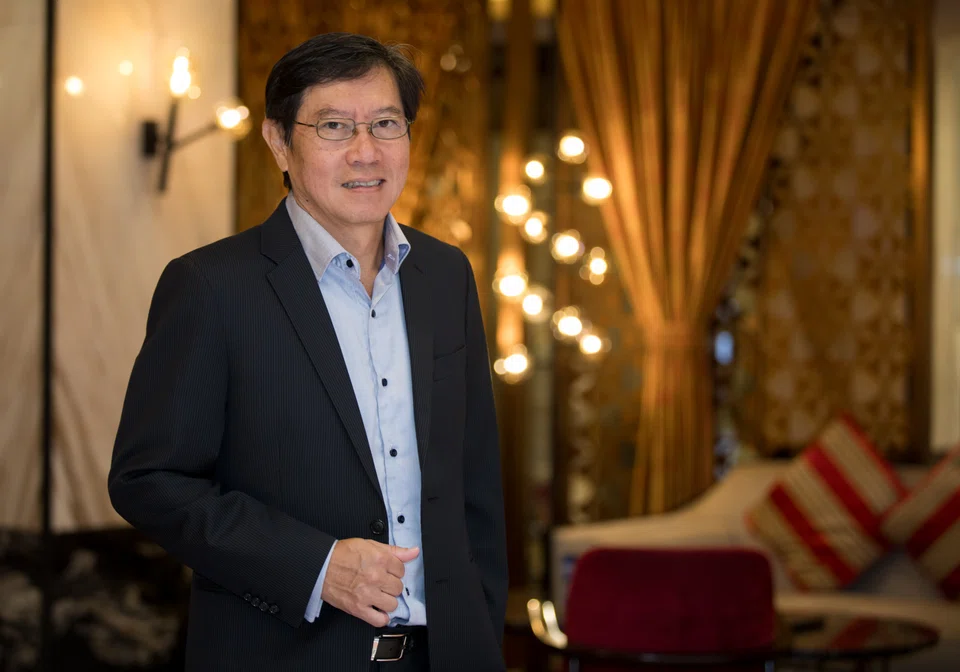
BUOYED by a strong hospitality rebound and a cleaner balance sheet, Far East Hospitality Trust (FEHT) is ready to look for overseas acquisitions – though it intends to stay grounded in Singapore.
For a start, it is eyeing assets in Australia, Japan and the United Kingdom, as these are developed markets with “clear rules, regulations and fairly mature hospitality sectors”, said Gerald Lee, chief executive officer of the real estate investment trust’s (Reit) manager.
Another chief consideration is that its sponsor Far East Organization (FEO) holds properties in all three countries.
Treading on familiar ground is part of FEHT’s “disciplined” approach towards overseas expansion, said Lee. The manager is looking for overseas assets that “more or less mirror” its existing portfolio, which consists of mid-tier and upscale hotels and serviced residences in Singapore.
In a recent report, CGS-CIMB analysts Natalie Ong and Lock Mun Yee highlighted that geographical diversification would be a key re-rating catalyst for the Reit, “increasing its investable market and allowing it to accelerate its inorganic growth.”
Even so, Lee emphasised that any overseas expansion efforts will be carried out in a measured manner: “If we go overseas and the shape of the entity changes too much, it may rattle (investors).”
“We will still be a very Singapore-centric Reit, but maybe with a small proportion of overseas assets,” he said. One possibility, he said, is an 80-20 split.
Lee also aims to grow the Reit’s market capitalisation from S$1.3 billion to S$2.5 billion, noting that its current size “is not optimal enough to be able to attract more institutional investors or the big funds.”
“If we can attract more institutional investors to invest in FEHT, that will improve the unit price, and narrow the gap between the price and the book value,” he said. Units of FEHT closed at S$0.635 on Friday (Sep 22), at a 30 per cent discount to its book value per unit of S$0.91 as at end-June.
Among hospitality Reits, FEHT recorded the biggest improvement in distribution for the first half ended June 2023. Its distribution per stapled security (DPS) rose 24.7 per cent to S$0.0192, from S$0.0154 the year before.
Gross revenue grew 26.9 per cent year on year to S$52 million from S$41 million, while net property income (NPI) rose 30.7 per cent to S$49 million from S$37.5 million. The latest figures are just shy of pre-pandemic levels – with the Reit recording a gross revenue of S$55.7 million and NPI of S$50.2 million in H1 FY2019.
Revenue per available room (RevPar) for the hotel segment grew 96.9 per cent to S$133, up from S$67 in the year-ago period. Meanwhile, revenue per available unit (RevPau) for serviced residences grew 22.8 per cent year on year to S$224, up from S$182.
“Our performance is a reflection of Singapore’s hospitality recovery and resilience,” said Lee.
“We’ve seen a lot of efforts being put in by the government to get Singapore up and running quickly, doing promotions to bring people back, restoring air connections and air links. So we are definitely a beneficiary of that.”
Stronger balance sheet to look for deals
A stronger balance sheet has placed FEHT in a better position to look for deals, said Lee, thanks to a S$133 million net gain from the divestment of Central Square in March 2022.
“We were able to crystallise it at the right time,” he explained, because “interest rates started moving up like crazy last year”.
This helped to bring the Reit’s gearing down to 33.4 per cent from 41.6 per cent in September 2021. Higher property valuations last year further lowered its gearing levels to 32 per cent, where it stood as at end-June.
In the past decade, FEHT has only made two acquisitions: Rendezvous Grand Hotel Singapore in 2013, followed by Oasia Hotel Downtown in 2018. The Reit currently has nine hotels and three serviced residences in its portfolio.
In 2014, it took up a 30 per cent stake in a joint venture with sponsor FEO to co-develop a S$443.8 million integrated development in Sentosa. The project saw the establishment of Village Hotel Sentosa, The Outpost Hotel and The Barracks Hotel.
Lee said the number of acquisitions by the Reit has been curtailed by the pandemic. “We were waiting for some assets that were being incubated by Far East, because some of them were new. But with Covid-19, their performances were not optimal.”
For now, the Reit has set its sight on two of FEO’s properties – The Clan Hotel Singapore and Oasia Residence at West Coast – which it has a right of first refusal to. It also intends to buy over FEO’s 70 per cent stake in the Sentosa project.
But the timeline for these plans, said Lee, will be dependent on which assets stabilise first in terms of performance and when interest rates normalise.
More room for growth in Singapore
In the meantime, the Reit hasn’t been sitting idle on its existing assets.
It used the Covid-19 downtime to spruce up The Elizabeth Hotel and the Regency House, so as to “speed up and get ready for the recovery”, said Lee. In 2022, they were rebranded to Vibe Hotel Singapore Orchard and Adina Serviced Apartment Singapore Orchard respectively.
Renovation works to The Elizabeth Hotel were particularly extensive, requiring it to be closed for six months. “The hotel was getting a bit tired-looking, to the point where many rooms had to be sold to tour groups and not at a very high rate,” Lee explained.
Post-rebranding, its room rates have gone up by at least 50 per cent, he said.
Noting that Chinese travellers are “not back in full force” yet, Lee is hopeful they will return to pre-pandemic levels by H2 2024 – providing a significant boost to the hospitality industry.
“If the hospitality sector is doing well with a good base of business, then hotel managers will be more confident to price higher, and we’ll get better yields,” he said.
He remains bullish on the overall outlook of Singapore’s hospitality sector, especially with new tourist attractions such as the Greater Southern Waterfront in the pipeline.
“As far as we can see, the prospects are very good in the short, medium and long term,” he said.
“There’s still a lot of room for us to grow, which is why we want to continue to stay focused more or less on Singapore. We do believe in it.”



