F&N bankrolls new food science lab in NTU tie-up

Annabeth Leow
Singapore
AS Singapore's public health "war on diabetes" rages on, mainboard-listed drinks maker Fraser and Neave (F&N) has uncorked plans to fund more studies on healthier libations.
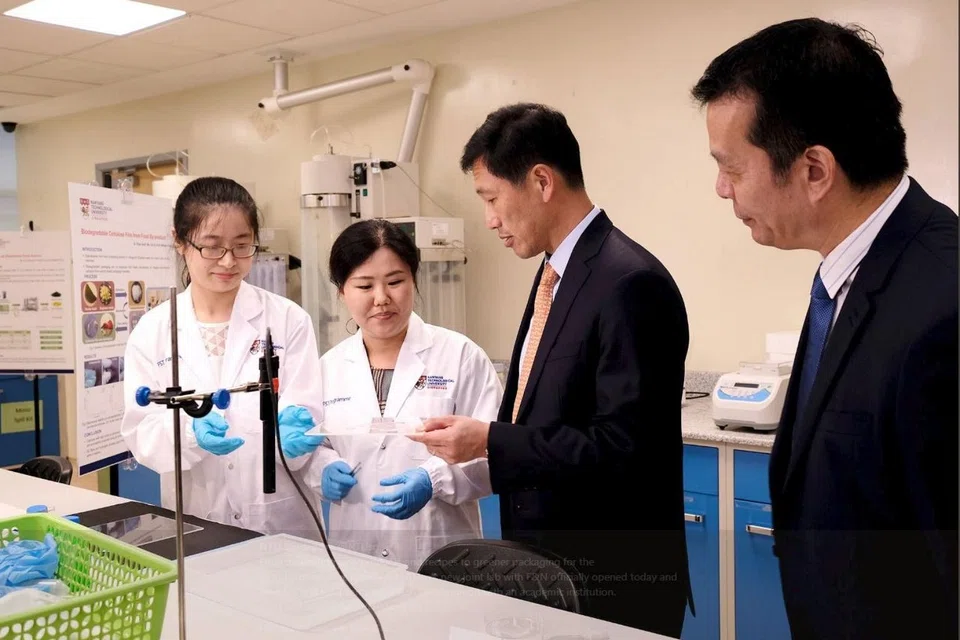
It opened a food lab at Nanyang Technological University (NTU) on Monday, in a four-year tie-up billed as its first long-term research arrangement with an academic institution.
No dollar value was given for the deal. But a university spokeswoman told The Business Times, when asked, that the F&N-NTU F&B Innovation Lab was fully funded by F&N with in-kind contributions from both partners.
Some 30 researchers will tackle projects with applications in the fast-moving consumer goods industry. Product freshness has already been singled out for study, alongside development of healthier drinks recipes.
NTU president Subra Suresh also hinted at other possible research outcomes, saying in a statement: "This collaboration will foster research that will result in better food products, greener packaging, and conversion of waste produced from food processing into valuable resources."
Lee Meng Tat, who heads F&N's non-alcoholic beverages division, said at the launch of the lab that "our collaboration with NTU will see the furthering of our green efforts as well as catering to the health and nutritional needs of our consumers".
Singapore-based F&N, which makes flavoured sodas and iced teas, among other drinks, is majority-owned by blue-chip brewer Thai Beverage.
In its latest full-year financial statements, released last November, F&N flagged the possible impact of government policies on consumer sentiment and cited Malaysia's upcoming "sugar tax" on sweetened drinks.
Other industry-supported food research tie-ups here include the National University of Singapore (NUS)'s Kikkoman Singapore R&D Lab, opened in 2005, and the S$110 million WIL@NUS Corporate Laboratory, launched last year and backed by agri-business Wilmar International.