

Ford cuts price of electric Mustang Mach-E in response to Tesla
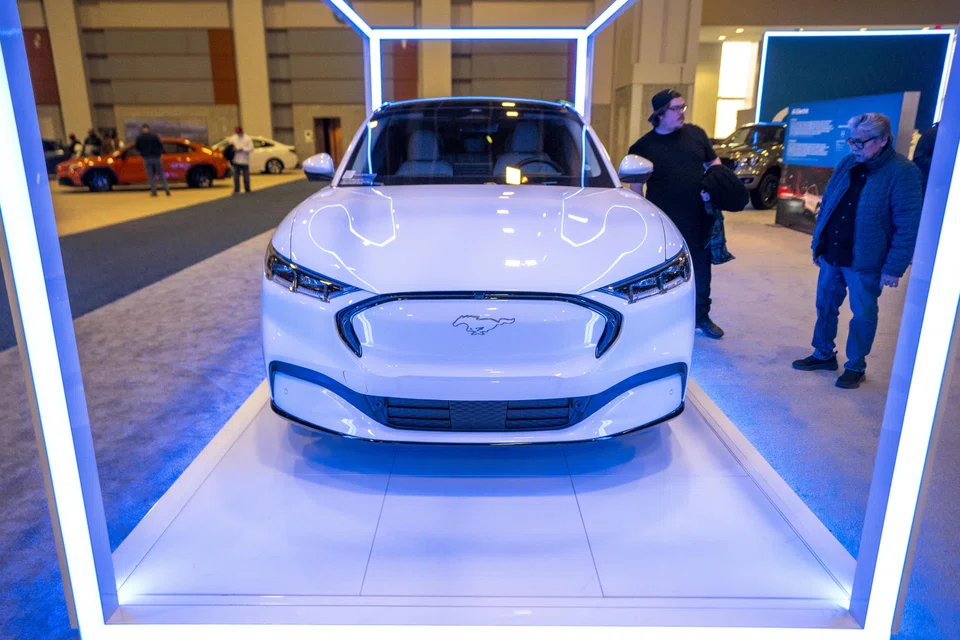
FORD Motor is slashing the price of its electric Mustang Mach-E by an average of US$4,500 following Tesla’s own recent cuts, stepping up the price wars in a slowing EV market.
The discount comes on a model that Ford has already described as unprofitable, but the automaker said it hopes to offset further margin deterioration by boosting production 67 per cent this year. The lowest priced Mach-E now starts at US$45,995, down US$900, while the largest cut comes in the GT Extended Range version, which falls US$5,900 to start at US$63,995.
The move, along with discounted financing rates as low as 5.3 per cent on the Mach-E, is meant to counter Tesla’s decision to cut prices across its lineup by as much as 20 per cent. It also brings the Mach-E in line with new caps on EV prices to qualify for federal tax credits of up to US$7,500 under the Inflation Reduction Act. The fight to win over buyers comes as analysts predict the pace of growth for EVs will slow this year.
“Our competitors are also adjusting their prices,” Marin Gjaja, chief customer officer for Model e, Ford’s EV unit, told reporters. “As we look and want to stay competitive in the marketplace, we’re having to respond.”
Chief financial officer John Lawler said in June that profits on the Mach-E had been “wiped out” by rising commodity costs. The automaker responded then by raising prices on the Mach-E to reduce losses, Lawler said.
“You’re going to see pressure on the bottom line when we launch our EVs, they’re not going to be positive,” Lawler said at the Deutsche Bank automotive conference.
Gjaja said Ford is working to improve margins on the Mach-E, but wouldn’t say if the model has become profitable.
“We absolutely want to make money,” Gjaja said. “We are re-engineering the vehicle on a perpetual basis to try to get cost out.”
Production Increase
The Mach-E’s business case also will improve by boosting production this year to 130,000 models from 78,000 last year, Gjaja said. The Mach-E factory in Cuautitlan, Mexico, is idled currently as the automaker retools it to expand capacity. It will come back online in February, Gjaja said.


“We’re seeing real improvements in our cost position as a result of scaling up our production and we’re seeing some relief on some commodities,” Gjaja said.
Ford is investing US$50 billion to develop and build electric vehicles and plans to produce 2 million a year by the end of 2026. The Dearborn, Michigan-based automaker was the No 2 seller of EVs in the US last year, well behind Tesla, which controls almost two-thirds of the market.
With a gross automotive margin of 25.9 per cent in the fourth quarter, Tesla can cut prices while still generating healthy profits. Ford lacks that breathing room, analysts say.
“Tesla has higher margins than other OEMs including GM and Ford, and cushion to lower prices even further,” John Murphy, a Bank of America analyst, said earlier this month. “Most OEMS are currently losing money on EVs, and these price cuts are likely to make business even more difficult, just as they are attempting to ramp production of EV offerings.” BLOOMBERG
Decoding Asia newsletter: your guide to navigating Asia in a new global order. Sign up here to get Decoding Asia newsletter. Delivered to your inbox. Free.
Share with us your feedback on BT's products and services
TRENDING NOW

Government to bring forward raising of retirement age, give employers more financial support to create flexi-load jobs

Indonesia stocks suffer worst plunge in nearly 30 years as MSCI proposes standalone status

If Europe goes to war, the fallout will be felt in East Asia

Natural gas to stay for the long haul beyond 2050: Singapore International Energy Week panellists

