

Foreign investors pull out US$50 billion from Asian equities in October on AI, cash burn woes
They include stocks in South Korea, Taiwan, India, Indonesia, Thailand, Vietnam and the Philippines
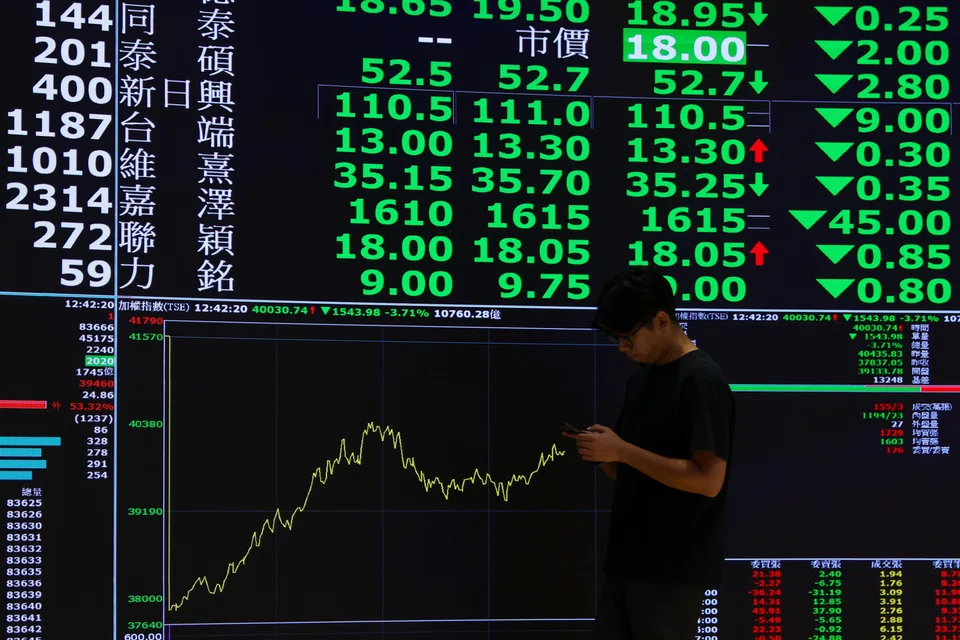
[BENGALURU] Foreign investors pulled nearly US$50 billion out of Asian equities, the largest monthly outflow in four months, in October as concerns over hyperscalers’ cash burn and fears of tougher artificial intelligence regulations ahead of US midterm elections triggered a sell-off in regional tech-linked stocks.
These investors withdrew a net US$49.8 billion from equities in South Korea, Taiwan, India, Indonesia, Thailand, Vietnam and the Philippines – the largest monthly net outflow since June – according to LSEG.
Democrats’ victories in last week’s US midterm elections, including in states where opposition to new data centres has grown, kept those concerns alive.
So far in November, foreigners have offloaded a further US$22.6 billion from these markets.
“The outflows reflect a retreat from AI-linked positions amid increased doubts about AI infrastructure spending and profitability,” said Wael Makarem, lead financial market strategist at brokerage Exness.
“Ahead of the US midterm elections, tighter environmental reviews and regulations were seen as hindering data centre construction and chip demand.”

Foreign investors sold a net US$30.7 billion of Taiwanese stocks last month, the most since at least January 2008, and a net US$14.6 billion of South Korean shares.
So far this month, the two markets have logged further foreign outflows of US$19.8 billion and US$8.3 billion, respectively.
Some analysts said foreign investors may be pulling money from Asia and reallocating it to developed markets, as the MSCI Asia Pacific ex-Japan index fell 6.9 per cent in October, compared with a 1.7 per cent decline in the MSCI All Country World Index.


“International investors may have been drawn to the relative resilience of the S&P 500 compared to the MSCI Asia ex-Japan during the month,” said Scarlett Liu, Asia-Pacific equity derivatives strategist at BNP Paribas.
“Additionally, some investors may have increased allocations to US Treasuries as the 10-year UST yield rose to 5.3 per cent in early October.”
Indian stocks also recorded a second consecutive monthly foreign outflow, totalling US$3.6 billion last month. However, cross-border investors have so far invested a net US$5.7 billion in local equities this month.
“We upgrade India to overweight as we think it now offers resilient earnings and more reasonable valuations,” said Herald van der Linde, head of equity strategy for Asia-Pacific at HSBC, in a note on Monday.
Meanwhile, Indonesian and Thai stocks saw outflows of US$938 million and US$199 million, respectively, while Vietnamese and Philippine stocks recorded inflows of US$122 million and US$109 million, respectively, last month. REUTERS
Decoding Asia newsletter: your guide to navigating Asia in a new global order. Sign up here to get Decoding Asia newsletter. Delivered to your inbox. Free.
Share with us your feedback on BT's products and services
TRENDING NOW

Higher rates, weaker spending: Is the Philippines entering stagflation?

Cabin fever: Airlines are rushing to refurbish plane interiors, but will their bets pay off?

Sheng Siong has fallen from its highs. Can its defensive appeal endure?

Nvidia heads for US$470 billion two-day wipeout as CEO affair fallout deepens

