
Foxconn ends most ‘closed-loop’ restrictions in iPhone city
 Add BT as a preferred source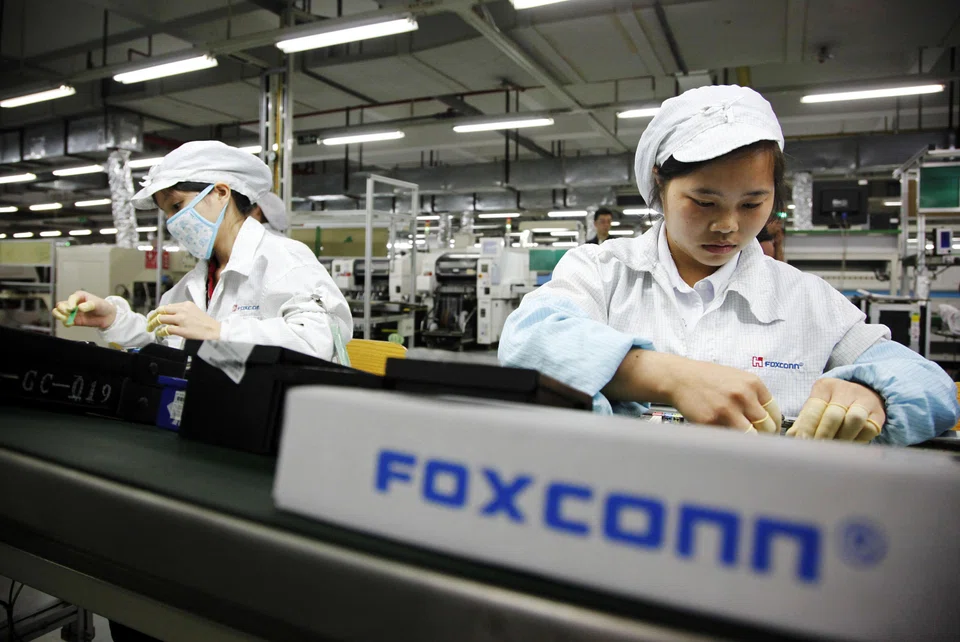
FOXCONN Technology Group, the primary assembler of iPhones for Apple, is easing most anti-Covid restrictions at its factory in Zhengzhou, China – a facility that had become a flashpoint in the country’s efforts to contain infections.
Foxconn, also known as Hon Hai Precision Industry, said it is ending its “point-to-point” system, in which employees had to restrict daily movements to between their dormitories and the campus, according to a statement on its official WeChat account on Wednesday (Dec 15) night.
China has been moving away from its long-standing Covid Zero approach, which had hurt economic activity and sparked widespread discontent. Foxconn’s move comes after local authorities lifted the “high-risk Covid” status on the area around the plant earlier this week. Zhengzhou had already relaxed its virus-elimination measures for most of the city, ending mandatory Covid testing to enter public areas.
Foxconn also reopened its on-site cafeterias and will no longer provide three free meals per day, it said. The lack of access to cafeterias in what’s known as iPhone City had become a significant hurdle to keeping workers fed during the pandemic, sparking an exodus of thousands of employees.
Restrictions at the Zhengzhou campus had reverberated throughout the country and beyond. Foxconn first shut its cafeterias and limited workers’ movements in October, attempting to limit an outbreak of Covid infections. That led to food shortages and trash-filled facilities, prompting workers to depart Zhengzhou by the thousands.
After Foxconn teamed up with local authorities to hire new staff, the workers revolted in November over compensation and safety practices. Violent protests broke out as hundreds of workers clashed with security personnel.
Navigate Asia in
a new global order
Get the insights delivered to your inbox.
Apple and Hon Hai warned that they would lose iPhone production because of the troubles in Zhengzhou, which makes all of Apple’s high-end Pro models. The shortfall is likely to be close to 6 million iPhone Pro units, Bloomberg News reported in November.
Meal expenses will now be deducted from staff wages, the company said, adding that it will provide 15 yuan per day of subsidies from Dec 16 to Dec 31 to those who work regularly.
The company will continue to provide free meals to Covid patients who choose to stay at company-appointed accommodations, it added. BLOOMBERG
Decoding Asia newsletter: your guide to navigating Asia in a new global order. Sign up here to get Decoding Asia newsletter. Delivered to your inbox. Free.
Share with us your feedback on BT's products and services

