A fresh bid to privatise Great Eastern unlikely: observers

Tan Nai Lun
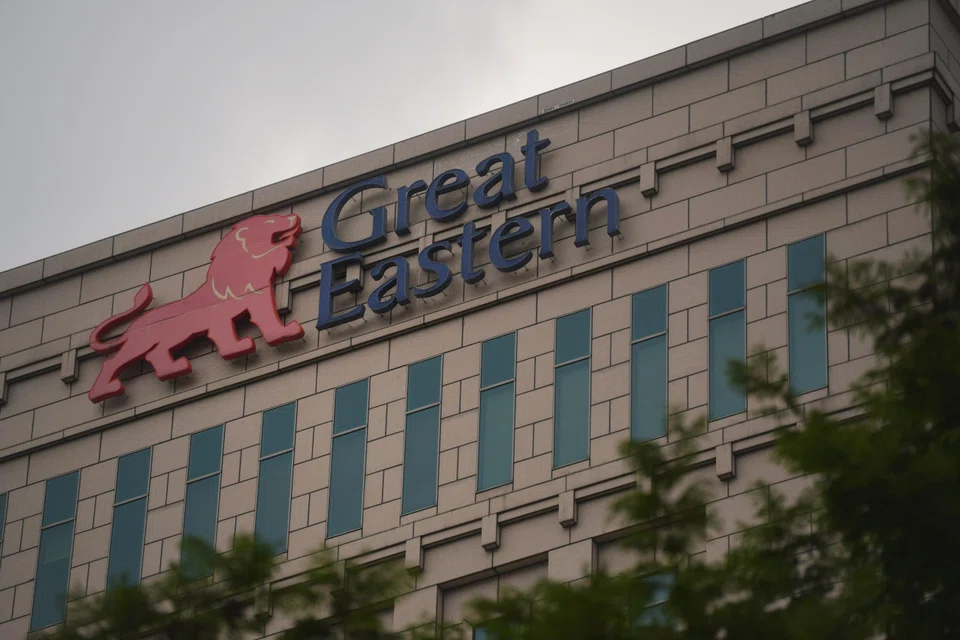
OCBC is unlikely to take its listed insurance arm Great Eastern private, although the bank might have bigger plans for the insurer, noted analysts.
On Monday (Jun 19), the lender said that it bought 2.3 million Great Eastern shares at S$16.99 each in cash or S$39.9 million in total, bringing its stake in the insurer to 88.4 per cent from 87.9 per cent.
The purchase was on “a willing buyer willing seller basis”, OCBC said in a bourse filing.
Glenn Thum, research analyst at Phillip Securities Research, noted that the move was “interesting” given that OCBC previously said that it would not actively trade Great Eastern.
During the bank’s annual general meeting (AGM) in April, OCBC said that Great Eastern is seen as a capability, and that it was not something that it trades, but rather something that it builds on.
Thum added: “There might be bigger plans in play by OCBC, and (this move) might just be on a ‘willing buyer, willing seller’ basis’.”
CGS-CIMB analyst Andrea Choong said that OCBC’s move to increase its stake reaffirms its commitment towards building the insurance franchise. “OCBC has often emphasised the value of the Great Eastern franchise to OCBC,” Choong noted.
But the analyst pointed out that the possibility of taking Great Eastern private has not been explicitly ruled out by the management, and thus remains on the table.
When answering a shareholders’ question during the April AGM on whether the bank will consider taking GE private, OCBC said that it was always open to possibilities for acquisitions, but that it would leave its stance “ambiguous”.
DBS Group Research analyst Lim Rui Wen also noted that there have been previous attempts by OCBC to take Great Eastern private, through a share swap and cash offer, though the bids have failed. OCBC last tried to take Great Eastern private in 2006 through a voluntary unconditional cash offer.
With Great Eastern trading at a discount to its embedded value per share, she expects that OCBC may continue acquiring Great Eastern shares as it had done in the latest transaction.
Given that OCBC already owns 88.4 per cent of Great Eastern shares, the bank would need to purchase just another 1.6 per cent – or 7.6 million shares – to trigger a compulsory delisting of the latter.
Based on Great Eastern’s closing price of S$17.55 per share on Wednesday, it would cost OCBC around S$963.3 million, before fees, to purchase all 54.9 million of the insurer’s shares it does not own at that price.
Analysts weighed the pros and cons of taking the insurer private. Phillip’s Thum noted that keeping Great Eastern listed would provide the company with access to additional capital and liquidity, as well as more brand visibility and a possibility to increase valuation.
Meanwhile, a privatisation would allow it to have more control over its operations, he said.
But having Great Eastern’s financials consolidated into OCBC’s results introduces heightened volatility and uncertainty to OCBC’s earnings, according to Maybank Securities head of research Thilan Wickramasinghe.
In a research note in March, Wickramasinghe noted that Great Eastern has high earnings volatility given multiple market shocks in the past five years.
The insurer had also been a drag on the bank’s performance in recent quarters – Great Eastern posted a 22 per cent fall in total weighted new sales to S$390.9 million for its fiscal first quarter ended Mar 31. For its second half of the year ended Dec 31, 2022, the insurer’s profit also declined 37 per cent amid the negative impact of financial market movements.
OCBC’s peers have mitigated this volatility through their bancassurance partnerships, which drive fee certainty without the downside of mark-to-market gyrations of insurance portfolios, Wickramasinghe said.
DBS’ Lim noted that each strategy has their own benefits – having a bancassurance deal is more asset-light, but owning an insurer provides organic synergies.
For Phillip’s Thum, he expects that keeping Great Eastern is a strategic option for OCBC, as this differentiates them from their local bank peers.
Even though the earnings may be more volatile, the bank will have a wider range of products and be able to provide more options to their customers, Thum said.
He added: “It may be beneficial short term and will directly impact earnings, but in the long term I would think holding on to Great Eastern would be the better option.”
In response to queries on the deal, OCBC group chief financial officer Goh Chin Yee said that increasing OCBC’s stake in Great Eastern is in line with its group’s strategy to be a leading financial services partner in Asia, with a broad geographical footprint in North and South-east Asia and a diversified business.
The bank will constantly evaluate ways to enhance its group’s franchise, and will take appropriate actions to create value for the group and its shareholders, she added.