

Fresh off student housing deal, Wee Hur keen on more partnerships with institutional investors

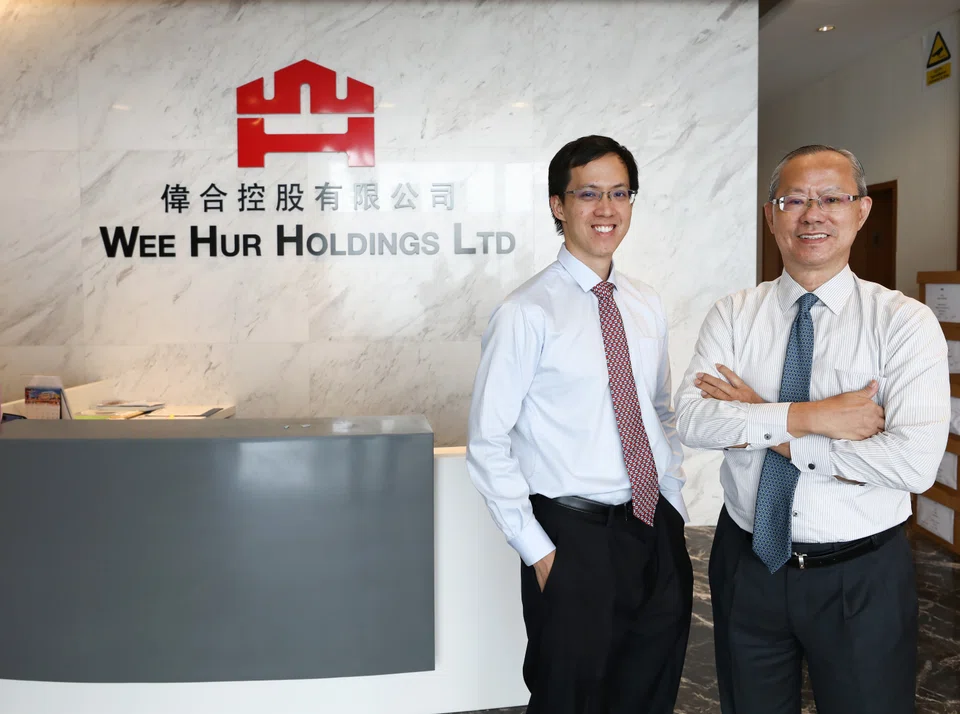
WEE Hur Holdings ’ recent sale of a chunk of its Australian purpose-built student accommodation (PBSA) portfolio could be described as something of a coup for the construction and real estate group.
The mainboard-listed company had announced in a bourse filing last month that it will be selling a 9.9 per cent stake in Wee Hur PBSA Master Trust (WHPMT) for A$112.7 million ($113.3 million).
Other shareholders of WHPMT holding a 40 per cent stake will also divest all of their interest in the property trust.
The deal values the fund’s properties at A$1.14 billion, with an equity value of A$551.1 million. The latter is 1.4 times’ its current value on the property developer and builder’s books.
The buyer, Reco Weather, is a Singapore-based investment holding company linked to state investment firm GIC.
Goh Wee Ping, chief executive officer of Wee Hur Capital, said Wee Hur had begun looking at various exit strategies a year and a half ago.
The trust was set up in 2016 to develop a portfolio of up to 5,000 beds in major cities in Australia. As manager of the trust, Wee Hur was required to prepare an exit strategy for unitholders of the trust before June 30.
“But by the time we got our act together, Covid had already happened; so it was not an easy time for us,” he said.
Many potential investors had already turned more cautious. Also, the trust had been priced on pre-pandemic rates. It was therefore more challenging to come to an agreement on pricing.
“We wanted our price, but potential investors and purchasers wanted some kind of rental guarantee,” said Goh.
Occupancies for Wee Hur’s 3 PBSAs in Australia were hovering at 30 per cent at the time, bringing in just enough to pay operating expenses
Given these difficulties, Wee Hur also wondered if it made sense to undertake a sale immediately instead of waiting for the market to recover.
“Throughout the whole negotiation and market process, we were always caught in a dilemma. Do we exit now? Or do we hold on until after (the pandemic) is done and try to sell again in 4 to 5 years?” Goh said.
“Ultimately, we chose to go through with the transaction now because it provides a lot of certainty for investors. That was the number one consideration behind this whole transaction.”
The scouting and negotiation exercise finally landed the company one potential buyer. But this deal later fell through as the potential investor was unable to meet the terms.
In the end, Goh was able to use his personal connections to find an investor and close a deal for partners in the trust.
Wee Hur kept a 50.1 per cent stake, after discussions with transaction advisers, market feedback and taking into account security requirements imposed by the banks financing the development of the assets.
Goh said the sale has cemented Wee Hur’s reputation among institutional investors, opening the door to future partnerships. In fact, the company is already in talks with a few of such investors, he added, though he did not disclose any names.
“With this transaction, we have demonstrated that institutional investors are comfortable with us and see us as a responsible entity that can manage their money,” he said.
Branching out
Wee Hur started out in 1980 as a construction company. It later underwent a restructuring exercise and was listed on the Singapore Exchange in 2018.
With the war chest afforded by its initial public offering, the mainboard-listed company went on to branch out into property development in 2019 and the workers’ dormitory business in 2013.
When a dip in the market threatened the business in 2014, the group looked overseas to diversify its revenue streams and identified a new growth avenue in the PBSA market in Australia.
Goh Yeow Lian, Goh Wee Ping’s father and Wee Hur’s executive chairman and managing director, believes the group was able to survive the pandemic in large part due to these moves.
The group posted a net profit of S$662,000 for the full year ended December 2021, a 97 per cent fall from the previous year’s net profit of S$21.9 million.
Wee Hur attributed the decline in profits to lower revenue contributions from most of its business segments and higher costs incurred by the construction business, among other things. These were offset by a fair value gain on its investment properties.
The group’s revenue rose to S$200.4 million, from S$189.9 million a year ago, while cost of sales went up 33 per cent to S$191.9 million year on year.
Waiting for a recovery
The road to recovery for the construction sector remains rocky, said Goh Yeow Lian. Industry players will likely spend the next 2 years working to complete projects delayed by the pandemic, he added.
Thereafter, the question is whether there will be enough new projects to support the industry: “Not only do we need a project, we need a good project to last through another few years.”
Wee Hur therefore intends to be more prudent in the near term: “Going forward, I think we’ll be more mindful about risk management. We may also trim or reduce our exposures to some businesses which are not really performing or making money,” said Goh.
The long-term vision for the company, however, will still be to seek out new avenues for diversification to ensure the group’s longevity.
“If you look at other countries, like Hong Kong and Thailand, how (the companies there) survive through the first to fourth generation is through diversification,” said Goh Wee Ping.
“That’s how you can weather the storm.”






