

Fundamentals and technical indicators point to measured recovery in Hang Seng Index
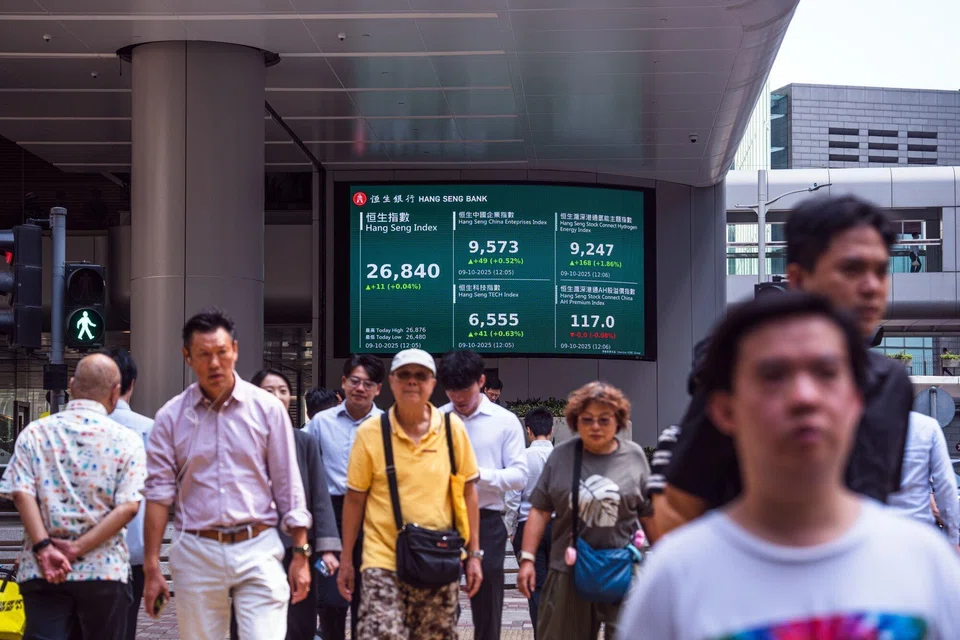
FOLLOWING structural reforms initiated in 2021, the Hang Seng Index (HSI), the primary barometer of the Hong Kong equity market, has undergone a meaningful transformation. The index has expanded its constituents and rebalanced its sectors to better align with China’s evolving economic landscape.
More recently, after the quarterly review in February 2026, the index expanded to 90 constituents, adding gold jeweller Laopu Gold, mining giant CMOC Group, and EV leader CATL. These additions signal a pivot in exposure towards premium consumption and industrial supply chains, enhancing the index’s ability to capture China’s multi-faceted recovery. The inclusion of advanced manufacturing and consumption-linked leaders also reflects Hong Kong’s evolving role as a capital market proxy for China’s industrial upgrading and technological self-sufficiency.
Despite these structural improvements, the heavyweight technology sector remains a volatility source. Alibaba and Tencent recently fell despite strong quarterly results, suggesting investors are prioritising macro risks over bottom-line growth.
Geopolitics also continue to dictate short-term price action. On Feb 20, the US Supreme Court struck down reciprocal tariffs, though President Donald Trump immediately countered with a new 10 per cent global levy, and later signalled a possible hike to 15 per cent. Paradoxically, the Hang Seng Index rose 2.53 per cent as markets priced in the legal limits of such executive trade actions. Sentiment was further bolstered by Beijing’s renewed commitment to artificial intelligence as a national priority.
Hang Seng Index: Year to date
Following a strong recovery in 2025, after a prolonged downturn in prior years, the Hang Seng Index has transitioned into a phase of measured consolidation year-to-date. While the index has maintained a positive trajectory, its performance remains modest relative to the aggressive growth seen in regional tech-heavy peers like Korea’s Kospi and Taiwan’s Taiex. This stabilisation is supported by a decisive shift in capital allocation; southbound flows from mainland investors remain resilient as domestic capital seeks diversification beyond property and onshore markets. Liquidity through the Stock Connect has provided a vital structural floor, with northbound interest picking up selectively in the technology and consumer sectors.
Fundamental analysis
China’s policy stance has become decisively supportive of growth, with targeted measures aimed at stabilising the property market, supporting domestic demand, and strengthening capital markets. Regulatory risks on technology firms, which drove de-ratings in previous years, have also largely stabilised and earnings visibility may improve. Structural growth drivers such as artificial intelligence, digital consumption, and cloud adoption continue to underpin selective sectors.
Valuation metrics remain modest. The HSI trades at a trailing P/E of around 13x, with a price-to-book ratio close to 1.5x. Dividend yields for broad Hang Seng exposure are around 2.7 per cent, providing a steady income component amid moderating global interest rate expectations. These factors, combined with policy support, position the index attractively relative to major global peers.

Financials remain a core driver, benefiting from stabilising credit conditions and property recovery measures. Technology and consumer discretionary stocks have regained momentum following regulatory clarity, while industrials and materials reflect renewed confidence in domestic demand and supply chain expansion.
Technical analysis
Technically, the HSI is exhibiting a bullish stack, where the index remains positioned above a tiered alignment of key moving averages. This structure suggests that the path of least resistance remains upward, provided the index holds its immediate support at the 20-day Simple Moving Average (26,981.72). A failure to maintain this level could see the index test its medium-term trend support at the 50-day SMA (26,440.34), while the 200-day SMA (25,451.61) serves as a formidable long-term structural floor.
Another factor in this constructive outlook is the Relative Strength Index (RSI). At 53.61, the RSI indicates that while momentum is positive, the index is far from overbought territory (typically above 70). This suggests some headroom for further upside before the market becomes over-extended. Coupled with strong market participation, evidenced by a 50-day average volume of 2.98 billion shares, the recent clearance of the 26,500-consolidation zone reinforces a stable technical base for the next leg of the recovery.
Conclusion
The HSI appears to be entering a more constructive phase. Policy support, stabilising earnings, and favourable technical positioning underpin current market trends. Valuation and dividend income provide additional layers of stability. While global rates, China’s growth trajectory, and geopolitical developments remain key considerations, the combination of fundamentals and technical indicators points to a measured recovery in Hong Kong equities.
The writer is strategist at Phillip Nova
Decoding Asia newsletter: your guide to navigating Asia in a new global order. Sign up here to get Decoding Asia newsletter. Delivered to your inbox. Free.
Share with us your feedback on BT's products and services
TRENDING NOW

Once staunchly pro-China, Malaysian Chinese businesses are now distancing themselves from Beijing

Looking beyond looming CEO succession, should UOB potentially pursue a transformative merger?

Could stablecoins be the future of money?

Grab CEO’s wife Chloe Tong on life with Anthony Tan and finding her purpose

