G-20 panel urges reset of global financial system to better tackle challenges
DPM Tharman, who leads the group, says international governance has to be done differently
Bali
WIDE-RANGING reforms are needed to reset the global financial system and make it work amid turbulent times, an international panel of top economists and leaders said on Friday.
The Group of 20 (G-20) Eminent Persons Group on Global Financial Governance, in a report issued at the annual meetings of the International Monetary Fund and World Bank, underlined that the open and competitive world order of the past 70 years has lifted many out of poverty and fostered unprecedented peace. But the system of international governance and cooperation that underpins it is fraying, and there is a real risk of drift into a fragmented world, in which all nations would end up losing, it said.
"There is no going back to the old multilateralism. There is no single conductor. There are already many more orchestras in play," said the panel. "The world needs a new harmony."
There must arise a new, cooperative international order that will help nations achieve stronger, more inclusive and more sustainable growth, it urged.
The panel's proposed reforms cover a range of areas, and include strengthening public finances and encouraging greater private investment, as well as tapping the networks of non-governmental organisations and philanthropic groups to help developing economies level up.
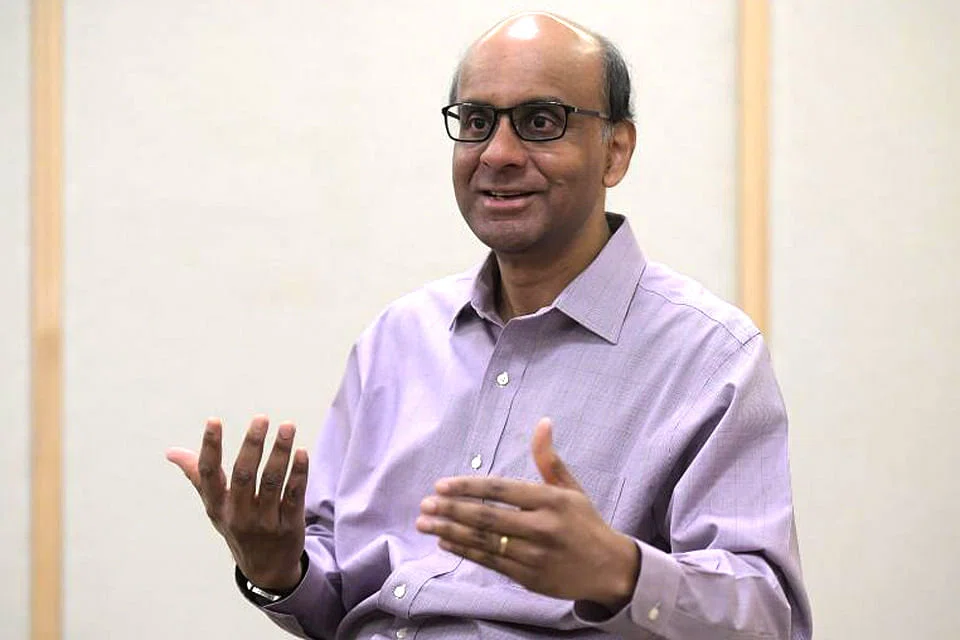
Globalisation has changed the world tremendously, noted Singapore's Deputy Prime Minister Tharman Shanmugaratnam, who chairs the eminent persons group.
"Because we've succeeded in lifting large parts of humanity out of poverty, because China has succeeded, we now have a more multi-polar world," he said at a discussion on the group's recommendations at the annual membership meeting of the Institute of International Finance, a global finance industry association, in Bali.
"We now have to reset international governance for a multi-polar world - not because we've been failing, but because we've succeeded."
The next 10 years will pose an immense challenge, with more people poised to reach working age in the developing world than in any past decade, Mr Tharman added.
The group called for bold and urgent reforms in development policies and financing to achieve the major step-up in growth, job opportunities and sustainability that the world needs in the coming decade.
"The current pace of reforms will not get us there," it said.
While reforms to tackle challenges such as conflict and weak infrastructure and maximise the potential of technologies and markets are needed in every country, the group stressed: "To bend the arc of history, we must succeed in Africa, where the poverty, demographic and environmental challenges are the largest - and so too the opportunities to contribute to world growth and the global commons."
This, said Mr Tharman, is a huge challenge, and the world is not prepared.
"We are not prepared in terms of job creation. We are not prepared in terms of financing. This requires a new form of public-private partnership," he said, citing possibilities such as organising development agencies differently and diversifying risk to attract institutional investors.
"There is tremendous untapped potential, but we've got to take it. If we fail, the consequences are not merely going to be economic consequences."
He also noted that, maligned as they may be, current account deficits are fine - and even necessary - for developing economies.
Singapore itself ran a deficit till the mid-80s, well above 5 per cent of GDP, he said. "How can we make it possible for a country to run current account deficits, where it is fundamentally required, at that stage of growth to invest ahead and to create growth while savings are being built up?" he said.
"How can it be reliably financed and how can the international monetary and financial system be one where capital flows downhill once again and is invested in the right areas? That's what motivates a lot of our report: Strengthening development finance and long-term finance, but also strengthening the resilience of the financial system."