

GE Aerospace aims for the sky on Asia-Pacific’s aviation updraught
Aircraft engine maker rakes in orders from regional airlines; ploughs in US$120 million of investment

[SINGAPORE] GE Aerospace has its eye on cresting the continuing growth of the global aerospace and aviation industry – and it is preparing for much of that thrust to come from the Asia-Pacific (Apac).
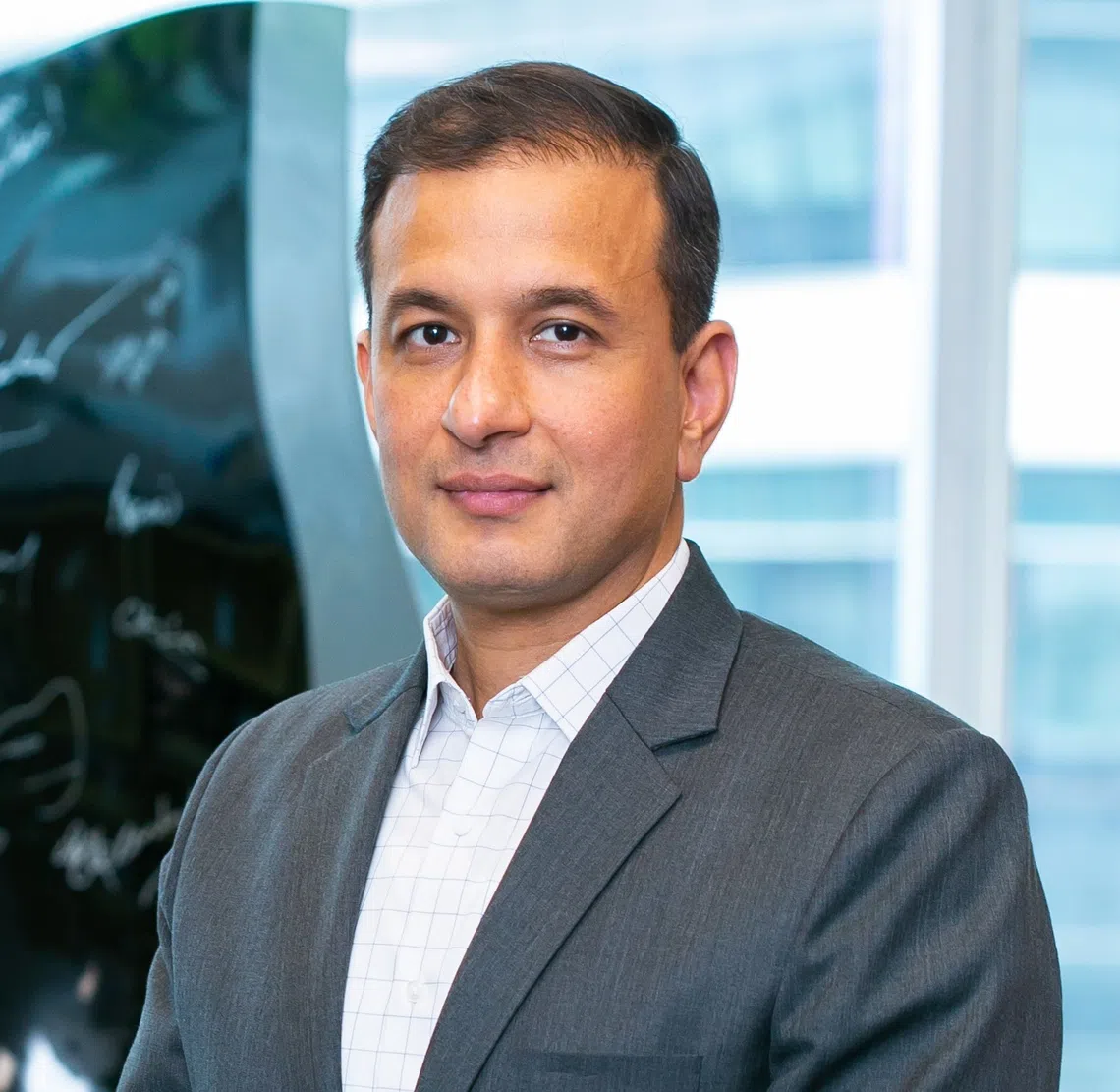
Nakul Gupta, GE Aerospace vice-president of sales and general manager for Apac, told The Business Times: “Asia-Pacific is one of the fastest-growing markets in the world, and it is poised to become one of the largest in the next 15 years.
“The region is emerging as a defining region for the future of flight.”
The company aims to capitalise on that by providing not just the engines that power airliners, but also the maintenance, repair and overhaul (MRO) of these powerplants.
In fact, parts and services for engines – which include disassembly, reassembly, maintenance, repair, inspection and testing – make up more than 70 per cent of the company’s business.
It has backed up what Gupta describes as a “tremendous opportunity” by investing around US$120 million in the region over the past two years.
The US-headquartered company, which is listed on the New York Stock Exchange, is one of the largest aircraft engine makers in the world and a major aerospace supplier.
According to industry estimates, it holds around 40 per cent market share through sales of its own engines and through CFM International, a joint venture with French aerospace company Safran, which GE Aerospace holds 50 per cent of.
Originally part of the General Electric Company conglomerate, the aircraft engine business was launched as an independent public company in April 2024.
Wide and narrow
Global aviation, and the aerospace industry that supports it, is expected to continue growing in the coming years and Apac will be at the centre of that expansion.
Industry consultancy Alton Aviation predicts that the region will be the largest and fastest-growing market in the next decade, with an annual growth rate of 5.1 per cent outstripping the global average of 4 per cent until 2034.
Gupta said that the region’s aircraft fleets are also expected to grow faster than those of the rest of the world, increasing by 4 per cent for the next 15 years, compared with 3 per cent for the globe, and reach around 6,000 aircraft up from roughly 3,500 now.
Recent performance is already reflecting this expansion.
In July this year, the company raised its 2025 guidance with revenue growth in the mid-teens from low double-digits, and a higher operating profit of up to US$8.5 billion – from US$8.2 billion previously.
Its 2028 outlook was also revised upwards to a double-digit compound annual growth rate from 2025 to 2028, up from a high single-digit, thanks to an increase in expected services volume.
While Gupta did not offer an estimate on engine sales in the near term, he did highlight recent engine sales in the region as evidence of the company’s strong position.
GE Aerospace dominates engine supply for narrow-body aircraft, the most popular type of airliner, which make up more than 60 per cent of global airliner fleets. These are jets that have a single aisle and serve short to medium-haul flights, typically less than seven hours in duration. Wide-body airliners have two aisles and fly medium to long-haul routes.
The company operates around 3,800 engines for the different types of aircraft in the region.
“In Asia-Pacific, narrow-bodies (make up) more than 50 per cent of the total aircraft flying. We are the preferred engine choice on both major platforms, the Airbus A320 and Boeing 737 Max, and the new Chinese aircraft, the Comac C919,” noted Gupta.
In 2025, regional airlines have signed agreements to purchase at least 230 GE Aerospace or CFM engines for more than 100 aircraft. These deals with entities such as ANA Holdings, Malaysia Aviation Group (the parent company of Malaysia Airlines) and Korean Air involve both narrow-body and wide-body aircraft.
“Clearly, airlines across Asia-Pacific are realising that they need to order ahead for the boom that’s coming,” he added.
The company’s engines could even make narrow-bodies more popular by expanding their performance capability.
Gupta noted that with the company’s engines, narrow-body aircraft can now fly for longer and deliver similar levels of comfort as larger aircraft, but at a lower cost to airlines and consumers.
For example, the Airbus A321LR – which can be equipped with CFM engines – now takes on routes of more than eight hours.
“Our calling card has been (the) fuel efficiency and reliability (of) our engines. Because they are more fuel-efficient, the aircraft can fly much longer… I do think that that’s going to be a key growth driver for Asia-Pacific and that feeds demand for our services as well.”
High service
But selling engines is just one part of the equation, as MRO is a major business segment for GE Aerospace.
In 2024, the company announced a US$1 billion multi-year programme to invest in expanding its MRO capabilities worldwide. That year, it earmarked US$45 million for Apac and, in September this year, a further US$75 million.
“Recognising that our customers are growing rapidly, we have to make sure that we fulfil their parts and MRO requirements equally fast as well. And that’s where the investments that we are putting into this region come in,” said Gupta.
The sum will be used to upgrade facilities in South Korea and Malaysia, but a significant part will go into improving the company’s three facilities in Singapore – two in Loyang and one in Seletar.
By location, the Republic is the single biggest contributor to the company’s global MRO capacity and an anchor for the region.
“We have five MRO sites in Asia-Pacific, and Singapore is the largest MRO site for GE Aerospace. Globally, 60 per cent of our repairs are performed here,” said Gupta.
Also under development is a research facility for advanced repair technology in Seletar. Expected to be finished in 2026, it will further technology such as automated inspection and additive repair that will be used at other sites.
The improvements are not just technical, but philosophical as well.
Since its independence, GE Aerospace has adopted a new, lean operating philosophy it calls Flight Deck, which incorporates, among other things, “kaizen” or continuous improvement and work-flow principles from the automotive industry.
In Singapore, this has already allowed it to reduce the footprint of its facilities and increase their efficiency, while moving towards continuous-flow manufacturing, as opposed to batch manufacturing.
This approach and new technology could help GE Aerospace overcome a major industry stumbling block: supply-chain woes. These problems have slowed engine deliveries for GE Aerospace and CFM since the pandemic.
Gupta said that with Flight Deck, the company has begun closer collaboration with suppliers to solve problems together.
For example, in 2024, GE Aerospace worked with one of its US suppliers to implement Flight Deck principles to increase deliveries of parts by more than 80 per cent.
“(Through Flight Deck) we form stronger partnerships with our suppliers. It’s a small industry, a long-cycle industry, and partnerships are important. When you problem-solve together, it actually brings you closer. And our suppliers really appreciate that,” he said.






