

Genting Hong Kong sinks on funding spat over 'Made in Germany' cruise dream

GAMING and leisure juggernaut Genting Group, led and controlled by one of Asia's richest men Lim Kok Thay, has for decades withstood Malaysia's testy and volatile politics. That's a feat given the tight nexus of politics and business in the South-east Asian nation, and the flak its gambling business has drawn from conservative Islamic groups - which Malaysian politicians occasionally pander to for votes.
So, it must come across as ironic that the Lim family's business dynasty would instead be dealt one of its biggest blows by German politicians under a new post-Merkel regime.
Last week, Hong Kong-listed Genting Hong Kong filed to wind up.
One of Asia's largest cruise operators, Genting HK has been in business for nearly 3 decades. Its collapse would be the largest in the cruise industry since the pandemic began.
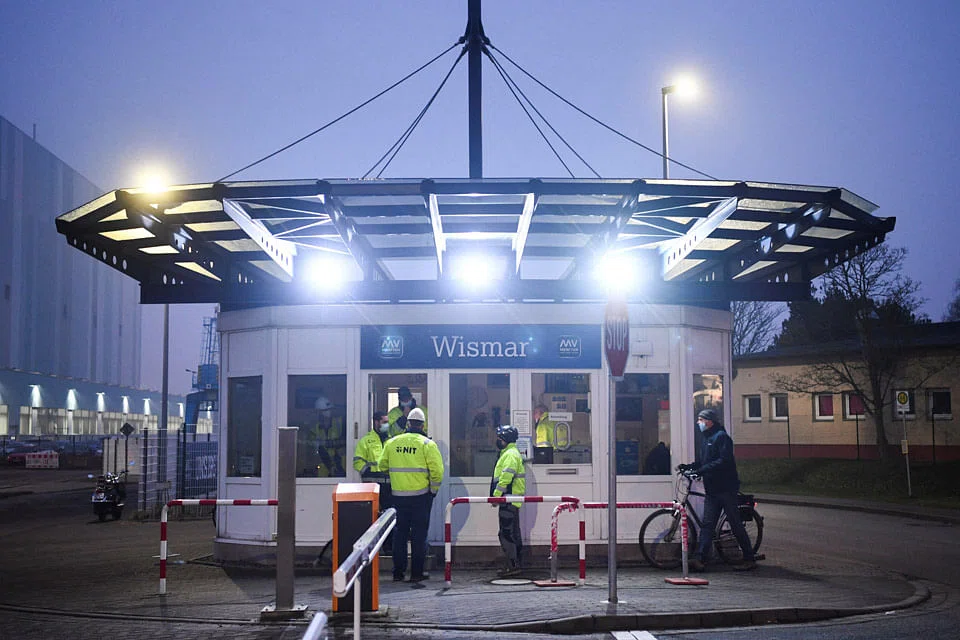
The company's breaking point came after its German shipbuilder MV Werften (MVW), hard up for cash to build its "Made in Germany" cruise vessel, went bust as funding was choked by the German government.
The episode has since sparked a finger-pointing backlash over who is responsible for what has been called a "black day for shipbuilding in Germany".
But there is also a sense that Genting HK may have been sacrificed for the good of the greater Genting group.
Pioneering brand
Genting HK, which first entered the cruise market under the brand Star Cruises, was among the pioneers of South-east Asia's cruise industry.
It boasted a uniquely designed fleet, allowing guests to run around a jogging track or do a few laps in a swimming pool and enjoy diverse dining options on board - all on a versatile schedule.
Although the company bears the Genting name, it has no cross share ownership with the mammoth Genting conglomerate. The latter owns and operates several casinos: on a "cool hill station" in Malaysia, on Singapore's Sentosa island, in New York and Las Vegas in the United States, in Birmingham and London in the United Kingdom, as well as in the Bahamas, and Egypt. The empire also counts entertainment, hospitality, oil palm plantations, power generation and real estate as key businesses.
Genting HK had a secondary listing on the Singapore Exchange for 4 years, but pulled out in 2018 as it pivoted to tap the rising rich and middle class in China and their penchant to splurge on ocean voyages.
It is 75 per cent owned by the Lim family and billionaire Lim Kok Thay - known in close circles by his initials KT. He was, until the appointment of joint provisional liquidators last Friday (Jan 21), the cruise operator's chairman, chief executive officer and executive director.
The 'G' factor
Genting HK's German shipyard MVW was born 6 years ago out of Genting HK's desire to expand into the building of mega-ships to capitalise on booming demand for new builds as well as save on expenses for vessels.
It has been hit hard by the pandemic, however, and was recently trying to tap an emergency loan from the government to finance its operations and finish building an already-delayed 208,000 gross ton cruise ship - dubbed Global Dream - scheduled for delivery mid-2022.
Protracted talks to release the funds fell through soon after a new coalition government was installed in Germany in early December. Genting HK has gone to court and accused the German government of turning back on its promises, but failed to win approval for funds.
Already reeling from late payments - including for staff wages - the cash-strapped shipbuilder had few options left to it. But its decision to file for liquidation has reportedly put some 1,900 jobs in peril. And there is the possibility of cross defaults on nearly US$2.8 billion of debt.
German officials said the government had done all it could to prevent the shipbuilder's bankruptcy, but Genting HK had rejected its aid.
An offered package was said to have been tied to conditions requiring Lim to raise Genting's own contribution to the rescue package to US$68 million, while Lim was only willing to put up US$12 million. One senior minister called Genting's negotiating stance "incomprehensible".
Lim, meanwhile, attributed the outcome to the "relevant counterparties' failure to perform their binding contractual obligations". This failure, he said, created an "immediate and significant gap" in the group's liquidity resources. He added that the cruise operator has "exhausted" all efforts to negotiate with the counterparties under its financing arrangements.
His criticism is quite a shift from his tone in Genting HK's latest annual report, for FY2020, in which he thanked the German federal and state governments for their support of the shipbuilding sector and for funding that enabled a holistic restructuring of the group amid rough waters.
Sailing in a storm
The liquidation must be massively disappointing, not least for Genting HK's shareholders. The stock plunged more than 50 per cent last week when trading resumed after a four-day halt. It has since been suspended until further notice.
After enduring 2 brutal years of the pandemic, 2022 was expected to bring smoother seas. As travel jump starts and social curbs are eased owing to mass vaccination, there have been signs that seafaring travellers are making a comeback - albeit at a relatively less robust pace in the group's key markets of China and Hong Kong than in the US and Europe.
That's not to say the business was hunky dory pre-pandemic.
Genting HK has been in the red since 2016, when it made losses of half a billion US dollars.
The losses narrowed in ensuing years, but the pandemic upended that as passenger cruises across the group's 3 brands - Dream Cruises, Crystal Cruises and Star Cruises - were halted and ship building suspended.
Genting HK suffered its deepest cut in 2020 with a record loss of US$1.7 billion versus a loss of US$159 million in 2019.
FY2021 is unlikely to be different; although the losses, going by the first half report card, could be significantly less on the back of cruise resumption in Taiwan and Singapore and lower impairment losses.
The decision by the Lim family not to lend their financial heft to rescue Genting HK when push came to shove could be a reflection of the company's prospects.
Genting HK's collapse carries little risk to the rest of the group. S&P Global Ratings said in a note last year that the Genting group does not have a cross share ownership with the cruise operator, nor does it have any cross-default clause, guarantee, or keepwell structures.
Even so, it's hard to shake off the niggling question - was Genting HK sacrificed for the greater good of the rest of the giant pandemic-roiled Genting empire?






