

Genting Singapore expected to stand firm amid regional casino competition
The integrated resort operator posted positive earnings growth for Q1 following tourism boost, mirroring peer Marina Bay Sands

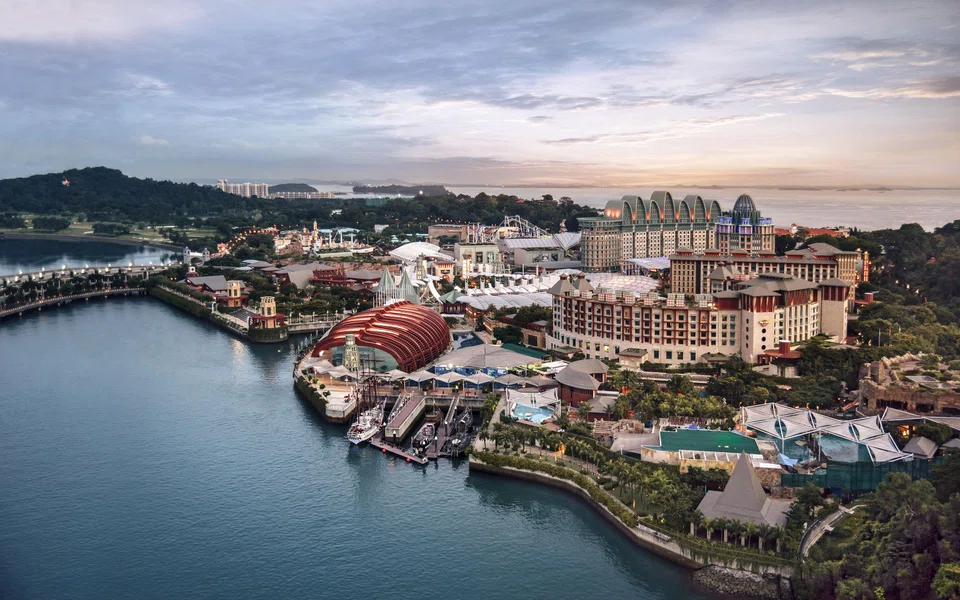
PLANS are afoot for new casinos to open in South-east Asia, but analysts say Singapore-listed casino and integrated resort (IR) operator Genting Singapore is unlikely to be badly hit by the increased competition.
They note that the group has consistently booked healthy gaming and non-gaming revenue, and that Singapore’s tourism industry has been robust.
But competition among casinos in the region is expected to intensify, as countries mull plans to beef up their gaming segments; gaming plays in Thailand are likely to emerge as the main competitor to Singapore casinos.
Casinos in the Philippines are also expected to pose a threat, with the opening of a new IR by Bloomberry Resorts Corp in Manila this year. Up to eight other casino projects are in the pipeline.
Philippine gaming regulator chief executive Alejandro Tengco said in an interview in March that he believes the country can overtake Singapore as Asia’s second-largest gambling destination after Macau – and that this leapfrogging could happen as soon as 2025.
But Maybank Securities analyst Yin Shao Yang said that the target audience of the casinos in the Philippines differs from Singapore’s: Those in the Philippines tend to cater to local gamers, along with Japanese and South Korean visitors, whereas Singapore casinos mostly attract gamers from China and neighbouring countries such as Malaysia and Indonesia.
CGS International analyst Tay Wee Kuang noted that Singapore’s casinos largely attract wealthier tourists.
Thailand a ‘meaningful competitor’
Meanwhile, Thailand is considering offering gaming facilities as a way to attract tourism and investment; in March, the country’s lawmakers voted in support of a study that proposes to allow casinos to be set up if they are housed in large entertainment complexes. The study will be forwarded to the Cabinet for a decision on whether legalising casinos is “suitable for the nation”.
Most types of betting are now illegal in the kingdom.
UOB Kay Hian analyst Jack Goh remarked that if Thailand legislates casinos, the country would be a “meaningful competitor” to the IRs in Singapore. He said this is because of Thailand’s similarly strong tourism industry, which was pulling in more tourists than Singapore’s in 2019, before the pandemic.
Maybank’s Yin noted that Thailand could be attractive to travellers, particularly those from China, who visit the country with their families.
He estimated that the Chinese market makes up about a third of Singapore’s gaming consumers, but does not believe the segment will “evaporate overnight” even if the Thai casinos get the green light to open.
CGS’ Tay noted that countries which do not yet have IRs “tend to be more conservative”, and look to Singapore for a model on how the gaming industry can be regulated.
In this vein, Genting Singapore, which runs Resorts World Sentosa (RWS), is in a better position to bid for licences on the back of it having operated under Singapore’s regulations for a long time, he said.
The IR operator has yet to find a suitable location to expand overseas since its plans in South Korea and Japan fell through. That said, analysts noted that the company’s management had previously indicated interest in bidding for a Thailand licence, if such a tender is called.
Tay added: “This could augur well for Genting Singapore as an opportunity for organic growth, although we expect the timeline for actual operations to be around 10 years for the entire process to be completed.”
In response to queries from The Business Times after the release of its first-quarter earnings, the group’s chief executive Tan Hee Teck said: “We will evaluate the opportunity when more information becomes available.”
Closer to home, Malaysian Prime Minister Anwar Ibrahim and Berjaya Corp founder Vincent Tan have rubbished reports of discussions among the government, Berjaya and the Genting Group to build a casino in Johor’s Forest City, envisioned as a smart, green city near the Second Link between Singapore and Malaysia.
UOBKH’s Goh said it is “very unlikely” that a casino will materialise there; in any case, he noted that the customer pool in Genting Singapore’s RWS would be different from the one in Forest City – even if it is built.
Tourism uplift
Other neighbours with existing casinos, such as Malaysia and Vietnam, have also not posed a significant threat to RWS and Las Vegas Sands-operated Marina Bay Sands (MBS).
Goh said: “Singapore’s tourism industry continues to be robust, thanks to several government initiatives, such as the bilateral visa-free policy with China, and exclusive mega entertainment events.
“These initiatives enable the tourism industry to chart good growth and benefit the integrated resorts,” he added.
CGS’ Tay said: “Given that both MBS and RWS have already started their rejuvenation project as part of their licence renewal process, I think that Singapore is ahead of the curve in terms of building more attractions for tourists.”
Within Singapore, the two IRs are largely considered complementary, drawing different crowds.
However, Genting’s share price performance has been “relatively muted”, noted CGS’ Tay, likely due to investors viewing RWS as a laggard to MBS.
The recent move by the Chinese government to warn its citizens against overseas gaming also worked against Genting, he said.
That said, Genting Singapore’s shares rose as much as 6.2 per cent in early trade on May 10, after it nearly doubled its Q1 earnings on higher tourism arrivals, more relaxed Singapore-China visa requirements, and the Chinese New Year festive season.
This mirrored MBS’ Q1 51.5 per cent profit surge, which was attributed to the tourism boost and higher spending from US singer Taylor Swift’s blockbuster Eras Tour, which played six shows in March.
At Genting Singapore’s annual general meeting in April, Genting Group chairman Lim Kok Thay said the conglomerate could pursue the development of integrated casino resorts in the United Arab Emirates, which is looking into legalising gambling.
While an international tender for a casino-only development in the Middle East region is unlikely, he said Genting Singapore “would be happy to work on an IR development in the Middle East, leveraging the company’s experience in non-gaming offerings”.
Genting’s possible interest comes after the UAE established a federal body last year to regulate the gaming industry.
A May 14 report by Bloomberg Intelligence said the UAE’s casino market could surpass that of Singapore in terms of revenue.
Shares of mainboard-listed Genting Singapore closed on Monday at S$0.91, up S$0.01 or 1.1 per cent.
TRENDING NOW

Once staunchly pro-China, Malaysian Chinese businesses are now distancing themselves from Beijing

Stocks to watch: HPL, Aims Apac Reit, Zico, Advanced Systems Automation, ComfortDelGro

‘How many will survive?’: Bubble fears arise as China’s humanoid robotics face reality check

Smaller board lots can’t fix a market run by three banks

